
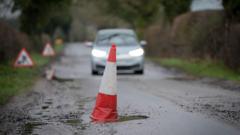
£18bn needed to fix England and Wales potholes, road surfacing experts estimate
#potholes #road maintenance #funding gap #England #Wales #infrastructure #safety risks
📌 Key Takeaways
- Road surfacing experts estimate £18 billion is needed to repair potholes in England and Wales.
- The funding gap highlights severe underinvestment in road maintenance infrastructure.
- Potholes pose safety risks to drivers and cyclists, increasing accident potential.
- The estimate underscores the scale of the problem facing local and national authorities.
📖 Full Retelling
🏷️ Themes
Infrastructure Funding, Road Safety
📚 Related People & Topics

England
Country within the United Kingdom
England is a country that is part of the United Kingdom. It is located on the island of Great Britain, of which it covers about 62%, and more than 100 smaller adjacent islands. England shares a land border with Scotland to the north and another land border with Wales to the west, and is otherwise su...

Wales
Country within the United Kingdom
Wales (Welsh: Cymru [ˈkəmrɨ] ) is a country that is part of the United Kingdom. Located on the island of Great Britain, it is bordered by the Irish Sea to the north and west, England to the east, the Bristol Channel to the south, and the Celtic Sea to the south-west. As of 2021, it had a population ...
Entity Intersection Graph
Connections for England:
View full profileMentioned Entities
Deep Analysis
Why It Matters
This £18 billion pothole repair estimate highlights a critical infrastructure crisis affecting millions of daily commuters, businesses, and local governments across England and Wales. Poor road conditions directly impact public safety by increasing accident risks, damage vehicles costing drivers hundreds annually, and disrupt economic activity through transportation delays. The massive funding gap reveals systemic underinvestment in maintenance that affects every road user and strains local authority budgets already facing financial pressures.
Context & Background
- The UK has faced a persistent pothole problem for over a decade, with the Asphalt Industry Alliance reporting worsening conditions annually
- Government funding for road maintenance has fluctuated significantly, with a £2.5 billion Potholes Fund announced in 2020 but widely criticized as insufficient
- Local authorities in England and Wales have statutory responsibility for maintaining most roads but face budget constraints limiting repair capabilities
- The RAC reports pothole-related breakdowns reached record levels in recent years, with callouts increasing dramatically during winter months
- Previous estimates suggested a £12 billion backlog in 2022, indicating the problem has worsened substantially in just two years
What Happens Next
Local authorities will likely intensify pressure on the next government for increased dedicated road maintenance funding following the July 2024 general election. Expect increased public reporting of potholes through council websites and apps, with temporary patch repairs continuing as stopgap measures. The Department for Transport may announce new funding allocations in the autumn spending review, but the £18 billion gap suggests comprehensive repairs will require multi-year investment programs.
Frequently Asked Questions
Most repairs are temporary 'patch' fixes rather than complete road resurfacing due to budget constraints. These temporary repairs degrade quickly, especially under heavy traffic and winter weather conditions, creating a cycle of recurring damage that costs more long-term than proper reconstruction.
Local councils maintain most roads, while National Highways manages motorways and major A-roads. Residents typically report potholes to their local council, which has legal obligations to maintain safe highways but may prioritize repairs based on severity assessments and available funding.
Yes, drivers can file claims with the responsible authority for vehicle damage caused by potholes. Success requires proving the authority knew about the defect and failed to repair it within reasonable timeframes, with compensation rates varying significantly between local authorities.
Freeze-thaw cycles are primary culprits, where water seeps into cracks, freezes and expands, then thaws and contracts, breaking apart road surfaces. Heavy rainfall also weakens road foundations, while increased traffic on damaged areas accelerates deterioration throughout winter months.
Patching involves filling individual potholes temporarily, typically lasting months, while resurfacing replaces the entire road layer providing 10-15 years of durability. Resurfacing costs 5-10 times more per area but proves more economical long-term by preventing recurring repairs and associated traffic disruptions.