
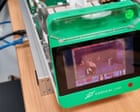
A petri dish of human brain cells is currently playing Doom. Should we be worried?
#human brain cells #Doom #petri dish #biological computing #neural networks #ethics #consciousness #AI
📌 Key Takeaways
- Researchers have connected human brain cells in a petri dish to play the video game Doom.
- The experiment demonstrates the potential for biological computing using neural networks.
- Ethical concerns arise regarding consciousness and the treatment of lab-grown brain tissue.
- This development could lead to advancements in AI and understanding of brain function.
📖 Full Retelling
🏷️ Themes
Bio-computing, Ethics
Entity Intersection Graph
No entity connections available yet for this article.
Deep Analysis
Why It Matters
This development is important because it represents a significant leap in bio-computing and artificial intelligence, potentially leading to more efficient and brain-like computing systems. It affects researchers in neuroscience and AI, ethicists concerned with the moral status of lab-grown brain tissue, and the tech industry seeking next-generation computing solutions. The news also raises public awareness about the ethical boundaries of biological experimentation and the future integration of human cells with machines.
Context & Background
- Brain organoids, or 'mini-brains,' are lab-grown clusters of human brain cells used to study neurological diseases and development without using actual human brains.
- Bio-computing research has explored using biological neurons for tasks like pattern recognition, with previous experiments involving simpler organisms or animal cells.
- The video game Doom, released in 1993, is often used as a benchmark in computing and AI due to its straightforward mechanics and iconic status in tech culture.
- Ethical debates around brain organoids include concerns about consciousness, sentience, and the moral implications of creating potentially aware biological systems.
What Happens Next
Researchers will likely refine these systems to improve performance and explore applications in drug testing, AI training, or brain-computer interfaces. Ethical guidelines may be developed or updated by scientific bodies to address the use of human brain cells in computing. Public and regulatory scrutiny could increase, potentially influencing funding and research directions in bio-computing.
Frequently Asked Questions
Researchers connect a petri dish of brain organoids to a computer interface that translates the game's inputs and outputs, allowing the cells to process information and control the game through electrical stimulation and recording. This demonstrates basic learning and response capabilities in a biological system. It's a simplified model of how neurons can interact with digital environments.
Yes, it's considered a type of biological or wetware AI, using living human cells to perform computational tasks instead of traditional silicon-based hardware. It mimics aspects of natural intelligence through neural networks. This approach could lead to more energy-efficient and adaptive computing systems in the future.
Ethical concerns include whether brain organoids could develop consciousness or sentience, raising questions about their moral status and treatment. There are also issues around consent for using human-derived cells and potential misuse in surveillance or military applications. Researchers must balance scientific progress with responsible oversight to avoid unintended consequences.
Potentially, yes—this research explores using biological neurons for specialized computing tasks, possibly leading to hybrid bio-digital systems. Such systems might offer advantages in speed, efficiency, or learning capabilities. However, technical and ethical hurdles must be addressed before widespread adoption.
This work is typically led by interdisciplinary teams in neuroscience, bioengineering, and computer science at universities or research institutes. It builds on earlier studies with simpler biological systems. Funding often comes from scientific grants aimed at advancing basic research or medical applications.