
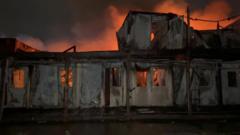
Afghanistan accuses Pakistan of killing hundreds in hospital strike
#Afghanistan #Pakistan #hospital strike #casualties #military attack #tensions #humanitarian crisis
📌 Key Takeaways
- Afghanistan accuses Pakistan of conducting a military strike on a hospital
- The attack reportedly resulted in hundreds of casualties
- The incident escalates tensions between the two neighboring countries
- The strike targeted a medical facility, raising humanitarian concerns
📖 Full Retelling
🏷️ Themes
Military Conflict, Diplomatic Tensions
📚 Related People & Topics

Pakistan
Country in South Asia
Pakistan, officially the Islamic Republic of Pakistan, is a country in South Asia. It is the fifth-most populous country, with a population of over 241.5 million, having the second-largest Muslim population as of 2023. Islamabad is the nation's capital, while Karachi is its largest city and financia...

Afghanistan
Country in Central and South Asia
Afghanistan, officially the Islamic Emirate of Afghanistan, is a landlocked country located at the crossroads of Central and South Asia. It is bordered by Pakistan to the east and south, Iran to the west, Turkmenistan to the northwest, Uzbekistan to the north, Tajikistan to the northeast, and China ...
Entity Intersection Graph
Connections for Pakistan:
Mentioned Entities
Deep Analysis
Why It Matters
This incident represents a severe escalation in cross-border tensions between Afghanistan and Pakistan, potentially destabilizing regional security. It affects civilians caught in conflict zones, diplomatic relations between the two neighboring countries, and international humanitarian organizations operating in the region. The allegations could trigger retaliatory actions, complicate peace efforts in Afghanistan, and draw international condemnation against Pakistan if verified.
Context & Background
- Afghanistan and Pakistan share a 2,670 km border known as the Durand Line, established in 1893 but never formally recognized by Afghanistan
- Pakistan has conducted cross-border military operations against militant groups in Afghanistan for years, citing security concerns
- Relations have been strained since the Taliban takeover in 2021, with Pakistan accusing Afghanistan of harboring anti-Pakistan militants
- Both countries have engaged in border skirmishes and diplomatic disputes over territorial sovereignty and security issues
- The hospital strike allegation follows recent increased tensions including border closures and expulsion of Afghan refugees from Pakistan
What Happens Next
Afghanistan will likely file formal complaints with international bodies like the UN Security Council and OIC. Pakistan will probably deny the allegations or claim it targeted militant positions. Independent verification attempts by humanitarian organizations may follow. The incident could lead to further border restrictions, reduced diplomatic engagement, and potential retaliatory measures from Afghanistan's Taliban government.
Frequently Asked Questions
Pakistan might claim it was targeting militant positions mistakenly located near or within the hospital facility, a common justification in conflict zones. Alternatively, it could deny the attack entirely and attribute it to other armed groups or accidental causes.
Relations will likely deteriorate significantly, potentially leading to border closures, reduced trade, and suspension of diplomatic dialogue. The Taliban government may feel pressured to respond forcefully to maintain domestic credibility.
UN agencies and humanitarian groups will likely call for investigations and protection of medical facilities. The International Committee of the Red Cross may mediate access for verification and emphasize international humanitarian law violations.
While full-scale war is unlikely, increased cross-border attacks and proxy conflicts through militant groups are probable. Neighboring countries like Iran and China may attempt mediation to prevent regional destabilization.
Initial reports from conflict zones often contain discrepancies. Verification requires independent investigation of physical evidence, satellite imagery, and witness accounts—all challenging in Afghanistan's current security environment.