
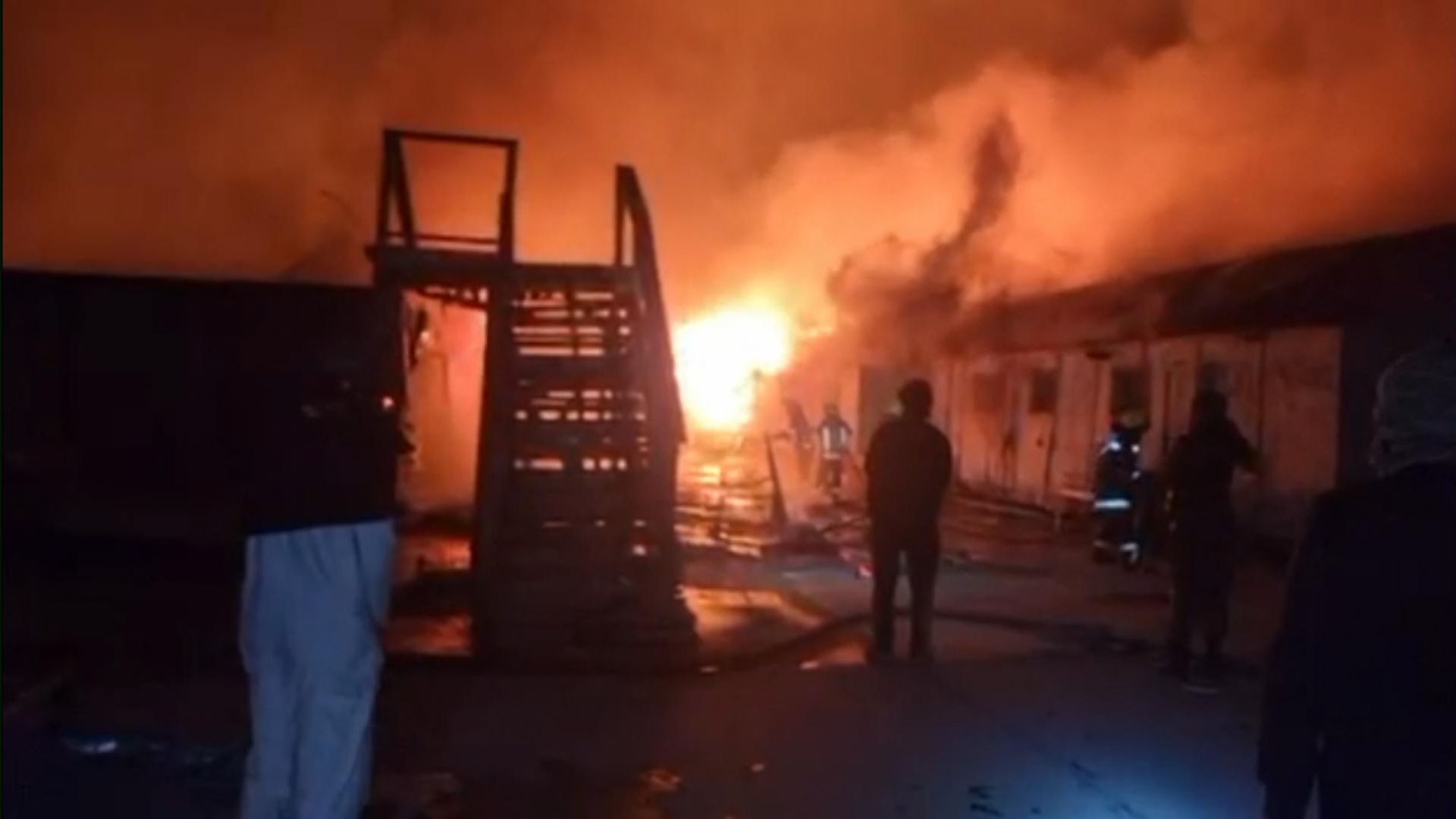
Afghanistan claims 400 killed by Pakistan in strike on Kabul 'drug treatment hospital'
#Afghanistan #Pakistan #Kabul #airstrike #drug treatment hospital #civilian deaths #cross-border tensions
📌 Key Takeaways
- Afghanistan accuses Pakistan of conducting a strike on a Kabul facility described as a drug treatment hospital
- The reported attack allegedly resulted in approximately 400 fatalities
- The incident highlights escalating cross-border tensions between Afghanistan and Pakistan
- The nature of the targeted facility is disputed, with Afghanistan labeling it a medical center
📖 Full Retelling
🏷️ Themes
Cross-border conflict, Civilian casualties
📚 Related People & Topics

Kabul
Capital and the largest city of Afghanistan
Kabul is the capital and largest city of Afghanistan. It is within the jurisdiction of Kabul District and has an estimated population of 5,333,284 people. Located in the eastern half of the country, forming part of the Kabul Province, the city is administratively divided into five zones and 22 munic...

Pakistan
Country in South Asia
Pakistan, officially the Islamic Republic of Pakistan, is a country in South Asia. It is the fifth-most populous country, with a population of over 241.5 million, having the second-largest Muslim population as of 2023. Islamabad is the nation's capital, while Karachi is its largest city and financia...

Afghanistan
Country in Central and South Asia
Afghanistan, officially the Islamic Emirate of Afghanistan, is a landlocked country located at the crossroads of Central and South Asia. It is bordered by Pakistan to the east and south, Iran to the west, Turkmenistan to the northwest, Uzbekistan to the north, Tajikistan to the northeast, and China ...
Entity Intersection Graph
Connections for Kabul:
View full profileMentioned Entities
Deep Analysis
Why It Matters
This news is critically important as it alleges a severe cross-border military strike by Pakistan on Afghan territory, potentially killing hundreds of civilians at a facility labeled as a drug treatment hospital. It directly affects bilateral relations between Afghanistan and Pakistan, which have long been strained over issues like terrorism, border disputes, and refugee movements. The high casualty claim, if verified, could provoke international condemnation, escalate regional tensions, and impact humanitarian operations in Afghanistan. It also raises urgent questions about the protection of medical facilities and civilians in conflict zones under international law.
Context & Background
- Afghanistan and Pakistan share a historically tense border, the Durand Line, disputed since 1893, with frequent cross-border militant attacks and accusations of state support for insurgents.
- Pakistan has conducted military operations in border regions for years, citing threats from groups like the Pakistani Taliban (TTP), which it alleges find sanctuary in Afghanistan.
- Afghanistan has faced a severe drug epidemic, with opium production being a major issue; drug treatment centers are humanitarian facilities often supported by international aid.
- Relations have deteriorated since the Taliban's return to power in Afghanistan in 2021, with Pakistan accusing the Taliban of harboring anti-Pakistan militants and carrying out deportations of Afghan refugees.
- International law, including the Geneva Conventions, prohibits attacks on medical facilities during conflicts, making such allegations particularly grave if proven true.
What Happens Next
Afghanistan will likely seek international intervention through bodies like the UN to investigate the strike and condemn Pakistan, potentially leading to diplomatic isolation or sanctions against Pakistan if evidence supports the claims. Pakistan may deny the allegations or justify the strike as targeting militant hideouts, possibly escalating retaliatory attacks along the border. Humanitarian organizations might suspend operations in affected areas due to safety concerns, worsening Afghanistan's healthcare crisis. Regional powers like China and Iran could mediate to prevent further conflict, while long-term impacts may include increased refugee flows and destabilization in South Asia.
Frequently Asked Questions
The Durand Line is the 2,640-km border between Afghanistan and Pakistan, established in 1893 but never fully accepted by Afghanistan, leading to ongoing disputes. Its relevance lies in frequent cross-border tensions, military incursions, and accusations of territorial violations that fuel conflicts like this alleged strike.
Pakistan might claim the facility was being used as a cover for militant activities or drug trafficking operations linked to anti-Pakistan groups. Alternatively, it could be a case of mistaken intelligence or a deliberate escalation to pressure the Taliban government in Afghanistan over security concerns.
Civilians face increased risks from potential retaliatory violence, displacement, and reduced access to healthcare if humanitarian groups withdraw. The strike could exacerbate Afghanistan's humanitarian crisis, already severe due to economic collapse and drug addiction issues, undermining trust in medical facilities.
The UN and human rights organizations will likely call for an independent investigation to verify the casualties and assess violations of international law. Countries like the U.S. and China may exert diplomatic pressure to de-escalate tensions, but responses could be limited by geopolitical interests and recognition challenges with the Taliban government.
While full-scale war is unlikely due to Pakistan's nuclear deterrence and economic constraints, it could spark prolonged border clashes, proxy warfare, and increased militant attacks. Regional stability is at risk, with implications for neighboring countries like Iran and India, which have vested interests in Afghanistan.
Initial claims from conflict zones often lack independent verification and may be inflated for political effect. Reliable assessment requires on-ground investigations by neutral parties, which are challenging in Afghanistan due to security and access issues, so the true toll might remain disputed.