
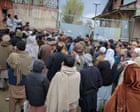
Afghans search for loved ones at Kabul rehab centre hit by Pakistani airstrike
#Afghanistan #Pakistan #airstrike #Kabul #rehabilitation center #civilian casualties #search operation
📌 Key Takeaways
- Pakistani airstrike targeted a rehabilitation center in Kabul, Afghanistan.
- Afghan civilians are searching for missing family members following the attack.
- The incident highlights cross-border tensions between Afghanistan and Pakistan.
- The strike raises concerns about civilian casualties and regional stability.
📖 Full Retelling
🏷️ Themes
Cross-border conflict, Civilian impact
📚 Related People & Topics

Kabul
Capital and the largest city of Afghanistan
Kabul is the capital and largest city of Afghanistan. It is within the jurisdiction of Kabul District and has an estimated population of 5,333,284 people. Located in the eastern half of the country, forming part of the Kabul Province, the city is administratively divided into five zones and 22 munic...

Pakistan
Country in South Asia
Pakistan, officially the Islamic Republic of Pakistan, is a country in South Asia. It is the fifth-most populous country, with a population of over 241.5 million, having the second-largest Muslim population as of 2023. Islamabad is the nation's capital, while Karachi is its largest city and financia...

Afghanistan
Country in Central and South Asia
Afghanistan, officially the Islamic Emirate of Afghanistan, is a landlocked country located at the crossroads of Central and South Asia. It is bordered by Pakistan to the east and south, Iran to the west, Turkmenistan to the northwest, Uzbekistan to the north, Tajikistan to the northeast, and China ...
Entity Intersection Graph
Connections for Kabul:
View full profileMentioned Entities
Deep Analysis
Why It Matters
This incident represents a significant escalation in cross-border tensions between Pakistan and Afghanistan, potentially destabilizing regional security. It directly affects Afghan civilians who become collateral damage in counter-terrorism operations, raising serious humanitarian concerns. The attack on a rehabilitation center specifically targets vulnerable populations seeking treatment, violating international norms about protected civilian spaces. This development could strain diplomatic relations between the two neighboring countries and complicate ongoing efforts to address shared security challenges in the region.
Context & Background
- Pakistan and Afghanistan share a 2,670 km border known as the Durand Line, established in 1893 but never formally recognized by Afghanistan
- Cross-border militant attacks have been a persistent issue, with Pakistan accusing Afghanistan of harboring groups like the Pakistani Taliban (TTP)
- The Taliban returned to power in Afghanistan in August 2021 after US withdrawal, creating new dynamics in regional security relationships
- Pakistan has conducted occasional cross-border strikes before, but attacks on civilian facilities represent an escalation in tactics
What Happens Next
Afghanistan will likely file formal diplomatic protests through channels like the UN Security Council. Pakistan may face international condemnation for targeting civilian infrastructure. The Taliban government will probably increase border security measures and potentially retaliate against Pakistani interests. Regional powers including China and Iran may attempt mediation to prevent further escalation. Humanitarian organizations will investigate the attack on the rehabilitation center and document civilian casualties.
Frequently Asked Questions
Pakistan claims it targets militant groups operating from Afghan territory who launch attacks against Pakistani security forces. The Pakistani government alleges Afghanistan's Taliban rulers haven't done enough to curb these cross-border militant activities despite repeated requests.
Attacking a rehabilitation facility violates international humanitarian law that protects medical and humanitarian spaces. This suggests either poor intelligence about the target or a deliberate escalation in tactics, both of which would increase civilian casualties and international condemnation.
Relations will likely deteriorate significantly, potentially leading to border closures, reduced trade, and increased military posturing. The Taliban government faces domestic pressure to respond forcefully while balancing their limited international recognition and economic dependence on regional neighbors.
The attack potentially violates the Geneva Conventions regarding protection of civilians and civilian infrastructure, particularly Common Article 3 and Additional Protocol I. Targeting a rehabilitation center may constitute a war crime if proven to be a deliberate attack on a protected facility.
Cross-border counter-terrorism cooperation will likely freeze or deteriorate, making regional security coordination more difficult. Both countries may pursue unilateral actions that increase instability, while militant groups could exploit the tensions to strengthen their positions in border areas.