
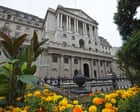
Bank of England expected to leave interest rates on hold as oil and gas prices surge; UK pay growth hits five-year low– business live
#Bank of England #interest rates #oil prices #gas prices #pay growth #inflation #UK economy #monetary policy
📌 Key Takeaways
- Bank of England likely to maintain current interest rates amid economic uncertainty
- Surge in oil and gas prices adding inflationary pressure
- UK pay growth falls to its lowest level in five years
- Economic indicators suggest mixed signals for monetary policy decisions
📖 Full Retelling
🏷️ Themes
Monetary Policy, Economic Indicators
📚 Related People & Topics

Economy of the United Kingdom
The United Kingdom has a highly developed social market economy. From 2017 to 2025 it has been the sixth-largest national economy in the world measured by nominal gross domestic product (GDP), tenth-largest by purchasing power parity (PPP), and about 21st by nominal GDP per capita, constituting 3.38...

Bank of England
Central bank of the United Kingdom
The Bank of England is the central bank of the United Kingdom and the model on which most modern central banks have been based. Established in 1694 to act as the English Government's banker and debt manager, and still one of the bankers for the government of the United Kingdom, it is the world's sec...
Entity Intersection Graph
Connections for Economy of the United Kingdom:
Mentioned Entities
Deep Analysis
Why It Matters
This news matters because it reveals conflicting economic pressures facing the Bank of England. Surging oil and gas prices threaten to reignite inflation, while slowing pay growth suggests weakening consumer demand and potential economic cooling. This creates a policy dilemma for the BoE, affecting millions through mortgage rates, business borrowing costs, and household budgets. The outcome influences everything from inflation control to employment stability across the UK economy.
Context & Background
- The Bank of England has raised interest rates 14 consecutive times since December 2021 to combat inflation that peaked above 11%
- UK inflation has fallen from its peak but remains above the BoE's 2% target, creating ongoing pressure for restrictive monetary policy
- Global energy markets have been volatile since Russia's invasion of Ukraine, with Brent crude oil prices recently climbing above $90 per barrel
- The UK labor market has shown signs of cooling with unemployment rising to 4.3% in recent months, the highest level since late 2021
What Happens Next
The Bank of England's Monetary Policy Committee will announce its interest rate decision on Thursday, with markets pricing in a high probability of rates remaining at 5.25%. Attention will shift to the voting split among MPC members and forward guidance about future rate cuts. Economists will watch for signals about whether the first rate cut might come in June, August, or later in 2024, depending on inflation and wage data trends.
Frequently Asked Questions
The BoE faces conflicting signals - energy price surges suggest inflationary pressure, but slowing wage growth indicates weakening demand. Holding rates allows them to assess whether recent inflation improvements are sustainable without risking unnecessary economic damage from overtightening.
Slower pay growth means workers' real incomes may continue struggling against inflation, reducing purchasing power. This could lead to decreased consumer spending, potentially slowing economic growth while making it harder for households to manage rising living costs.
Higher energy costs directly increase transportation and heating expenses while raising production costs across industries. This creates upward pressure on the Consumer Price Index, potentially delaying the BoE's ability to cut interest rates as they monitor second-round effects on wages and prices.
Most economists expect the first rate cut in summer or autumn 2024, contingent on inflation moving sustainably toward the 2% target. The exact timing depends on upcoming data on wage growth, services inflation, and whether energy price increases prove temporary or persistent.
Current homeowners with variable-rate mortgages face immediate changes in monthly payments when rates change. Those coming off fixed-rate deals will face significantly higher borrowing costs than when they originally secured their mortgages, potentially creating payment shock for millions of households.