
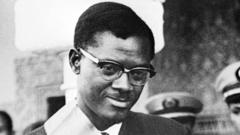
Belgian court clears way for trial over 1961 killing of Congo PM Lumumba
#Belgium #Congo #Patrice Lumumba #assassination #1961 #trial #colonialism #Cold War
📌 Key Takeaways
- A Belgian court has authorized a trial regarding the 1961 assassination of Congolese Prime Minister Patrice Lumumba.
- The case involves allegations of Belgian involvement in Lumumba's death.
- This legal action addresses a significant historical event in Congo's independence and Cold War history.
- The trial could have implications for Belgium's colonial legacy and historical accountability.
📖 Full Retelling
🏷️ Themes
Historical Justice, Colonial Legacy
📚 Related People & Topics

Belgium
Country in Northwestern Europe
Belgium, officially the Kingdom of Belgium, is a country in Northwestern Europe. Situated in a coastal lowland region known as the Low Countries, it is bordered by the Netherlands to the north, Germany to the east, Luxembourg to the southeast, France to the south, and the North Sea to the west. Belg...


Patrice Lumumba
Congolese politician and independence leader (1925–1961)
Patrice Émery Lumumba ( pə-TREESS luu-MUUM-bə; born Isaïe Tasumbu Tawosa; 2 July 1925 – 17 January 1961) was a Congolese politician and independence leader who served as the first prime minister of the First Congolese Republic (which is today the Democratic Republic of the Congo) from June until Se...

Cold War
1947–1991 geopolitical rivalry between US and USSR
The Cold War was a period of international geopolitical rivalry between the United States (US) and the Soviet Union (USSR) and their respective allies, the capitalist Western Bloc and communist Eastern Bloc, which began in the aftermath of the Second World War and ended with the dissolution of the S...
Entity Intersection Graph
Connections for Belgium:
Mentioned Entities
Deep Analysis
Why It Matters
This development matters because it represents a potential breakthrough in addressing one of Africa's most significant post-colonial injustices, with implications for Belgium-Congo relations and historical accountability. It affects the families of Patrice Lumumba and other victims of colonial-era violence seeking closure, as well as Belgium's reckoning with its colonial past. The case could set legal precedents for prosecuting historical crimes from the colonial era and influence how former colonial powers address their legacies. Additionally, it resonates across former colonies where demands for reparations and acknowledgment of colonial crimes are growing.
Context & Background
- Patrice Lumumba was the first democratically elected Prime Minister of the Democratic Republic of Congo (then Republic of the Congo) after independence from Belgium in 1960.
- Lumumba was assassinated in January 1961, just months after taking office, during the Congo Crisis—a period of political upheaval and foreign intervention following independence.
- A Belgian parliamentary inquiry in 2001 concluded that Belgium bore 'moral responsibility' for Lumumba's death, though it stopped short of acknowledging direct state involvement.
- Lumumba's killing has long been shrouded in controversy, with allegations of involvement by Belgian authorities, the CIA, and Congolese political rivals.
- The case has been a persistent source of tension between Belgium and the DRC, symbolizing unresolved grievances from the colonial era.
What Happens Next
The next steps will involve formal indictment of the suspects, likely followed by pre-trial hearings and evidence gathering, which may take several months. The trial itself could begin in 2025, potentially lasting years given the historical complexity and international attention. Key developments to watch include whether high-profile witnesses testify, if new evidence emerges, and how the Belgian government responds to the proceedings. The outcome may also influence pending reparations claims and other historical justice cases in Belgium and beyond.
Frequently Asked Questions
The suspects include former Belgian officials and possibly others allegedly involved in Lumumba's death. While names haven't been fully disclosed in recent reports, past investigations have pointed to Belgian police, military, and political figures from the era.
Delays stem from political sensitivities, evidentiary challenges due to the passage of time, and Belgium's historical reluctance to confront its colonial past. Legal hurdles regarding jurisdiction and statutes of limitation for historical crimes also contributed to the prolonged timeline.
Possible outcomes include convictions, acquittals, or a symbolic ruling that acknowledges responsibility without criminal penalties. The trial may also lead to official apologies, reparations, or renewed calls for broader restitution for colonial-era crimes.
In the DRC, Lumumba remains a national hero and martyr, with his killing seen as a foundational injustice. Many Congolese view the trial as a long-overdue step toward accountability, though some are skeptical about whether it will deliver meaningful justice.
Yes, it could inspire similar legal actions in other former colonies and set precedents for prosecuting historical international crimes. It also adds momentum to global movements addressing colonial legacies and reparations.