
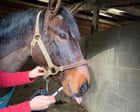
Country diary: A saliva test for George the pony, and a rethink on worm control | Kate Blincoe
#pony #saliva test #worm control #deworming #veterinary #sustainability #animal care
📌 Key Takeaways
- George the pony underwent a saliva test to assess worm burden, reducing unnecessary deworming.
- The test revealed a low worm count, challenging traditional routine deworming practices.
- This approach promotes targeted treatment, minimizing chemical use and environmental impact.
- It reflects a shift toward sustainable, evidence-based animal care in veterinary medicine.
📖 Full Retelling
🏷️ Themes
Animal Health, Sustainable Practices
Entity Intersection Graph
No entity connections available yet for this article.
Deep Analysis
Why It Matters
This article highlights a significant shift in equine parasite management that affects horse owners, veterinarians, and animal welfare advocates. The introduction of saliva testing for worm burdens represents a move away from routine chemical deworming, which has led to widespread drug resistance in parasites. This matters because it promotes more sustainable, targeted treatment approaches that preserve medication effectiveness while reducing environmental contamination from anthelmintic chemicals. The change affects anyone involved in horse care, from small-scale pony owners to large equestrian facilities.
Context & Background
- Traditional equine parasite control has relied on rotational chemical deworming programs since the 1960s
- Widespread overuse of anthelmintics has led to drug-resistant parasite strains worldwide, particularly in small strongyles (cyathostomins)
- Fecal egg count tests have been the primary diagnostic tool but require laboratory analysis and don't detect all parasite stages
- The 'test-and-treat' approach has gained traction in recent years as resistance concerns have grown
- Saliva testing represents a newer, less invasive diagnostic method that may detect different aspects of parasite burden
What Happens Next
Veterinary practices will likely adopt saliva testing more widely as validation studies continue, with commercial test kits becoming available to horse owners. Equine welfare organizations will update their parasite control guidelines to incorporate targeted treatment approaches. Research will expand to compare saliva test accuracy against traditional fecal egg counts and clinical outcomes. Within 2-3 years, saliva testing may become standard in routine equine health management, potentially reducing anthelmintic use by 50-70% in well-managed herds.
Frequently Asked Questions
Routine deworming without testing has created widespread drug resistance in parasites, making medications less effective over time. It also unnecessarily exposes horses to chemicals and disrupts the natural parasite ecology in grazing environments. This approach is increasingly seen as unsustainable for long-term equine health.
Saliva testing detects antibodies against parasites rather than parasite eggs themselves, potentially identifying different stages of infection. It's less invasive than fecal collection and may provide earlier warning of parasite burdens. However, it measures immune response rather than direct parasite presence, requiring different interpretation.
Owners should work with veterinarians to implement targeted parasite control based on regular testing rather than calendar-based deworming. This involves testing individual horses, treating only those with significant burdens, and rotating pastures strategically. Good manure management and pasture rotation remain essential components of integrated parasite control.
Yes, if not managed carefully, reduced deworming could allow parasite burdens to reach harmful levels in susceptible animals. Young horses, older horses, and immunocompromised animals need closer monitoring. The key is replacing routine treatment with informed treatment based on regular testing and individual risk assessment.
Resistance to benzimidazole dewormers exceeds 90% in some regions, with growing resistance to other classes like pyrantel and ivermectin. This global problem affects both small strongyles and some roundworm species. The development of new drug classes has slowed, making preservation of existing medications crucial.