
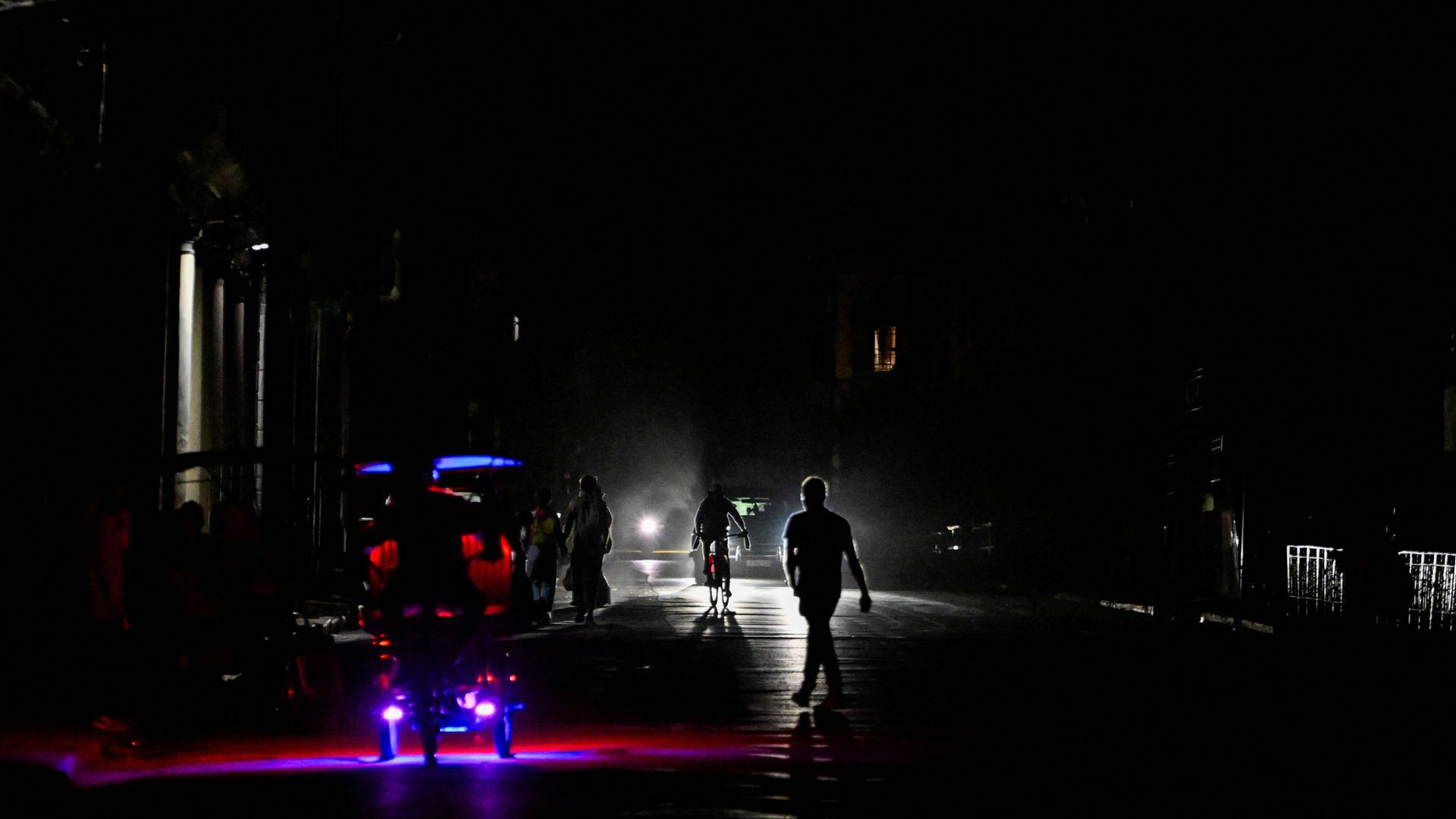
Cuba left in darkness after third power cuts in a month
#Cuba #power outage #blackout #energy infrastructure #electricity #power cuts #national grid
📌 Key Takeaways
- Cuba experienced a nationwide blackout, the third major power outage in a month.
- The outage left much of the country without electricity, disrupting daily life and services.
- The repeated failures highlight severe and ongoing issues within Cuba's aging energy infrastructure.
- The power cuts exacerbate existing economic and social challenges for the Cuban population.
📖 Full Retelling
🏷️ Themes
Infrastructure Crisis, Energy Security
📚 Related People & Topics

Cuba
Country in the Caribbean
Cuba, officially the Republic of Cuba, is an island country in the Caribbean. It comprises the eponymous main island as well as 4,195 islands, islets, and cays. Situated at the convergence of the Caribbean Sea, Gulf of Mexico, and Atlantic Ocean, Cuba is located east of the Yucatán Peninsula, south ...
Entity Intersection Graph
Connections for Cuba:
Mentioned Entities
Deep Analysis
Why It Matters
This news matters because Cuba's repeated power outages disrupt daily life for 11 million residents, affecting everything from healthcare and refrigeration to education and work. The blackouts highlight the country's deteriorating infrastructure and economic crisis, which could lead to social unrest and increased migration pressures. The situation also impacts Cuba's ability to maintain basic services and could strain diplomatic relations with countries that provide energy assistance.
Context & Background
- Cuba has faced chronic energy shortages since the collapse of the Soviet Union in 1991, which previously supplied subsidized oil
- The country's power grid is aging and heavily reliant on inefficient thermoelectric plants, many of which are over 40 years old
- U.S. sanctions since 1962 have restricted Cuba's access to financing and equipment needed for infrastructure upgrades
- Cuba has experienced periodic blackouts for decades, but frequency increased dramatically after 2020 due to economic crisis and reduced Venezuelan oil shipments
- The government has implemented energy rationing programs multiple times throughout its history, most notably during the 'Special Period' in the 1990s
What Happens Next
The Cuban government will likely implement stricter energy rationing schedules and appeal for international assistance, possibly from Russia or China. Expect increased protests in affected areas, similar to July 2021 demonstrations that spread nationwide. The government may accelerate planned renewable energy projects, though implementation will be slow due to economic constraints. Tourism could be further impacted if blackouts continue, worsening the economic crisis.
Frequently Asked Questions
Cuba's power grid suffers from aging infrastructure, lack of maintenance, and fuel shortages due to economic constraints and U.S. sanctions. Most power plants are decades old and frequently break down, while the country struggles to import sufficient fuel for electricity generation.
Blackouts disrupt daily life by cutting refrigeration for food and medicine, shutting down water pumps, interrupting work and education, and creating safety concerns at night. Hospitals often rely on backup generators, but many essential services become unavailable during extended outages.
The government implements rolling blackouts to manage limited supply and has sought international assistance for fuel and equipment. Long-term plans include developing renewable energy sources, but economic limitations and sanctions hinder rapid infrastructure improvements.
U.S. sanctions restrict Cuba's access to international financing, spare parts, and modern energy technology, making infrastructure maintenance and upgrades difficult. The embargo also complicates fuel imports, though humanitarian exceptions exist for some energy-related transactions.
Several Caribbean nations face energy challenges due to small grids and reliance on imported fuel, but Cuba's situation is particularly severe due to its larger population, aging infrastructure, and economic constraints. Countries like Puerto Rico and Haiti have also experienced major grid failures in recent years.