
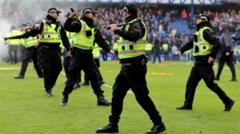
'Disgraceful scenes as toxicity spills over in Old Firm cup tie'
#Old Firm #cup tie #toxicity #disgraceful scenes #fan violence #condemnation #safety measures
📌 Key Takeaways
- The Old Firm cup match was marred by disgraceful and toxic behavior from fans.
- Incidents of violence and disorder occurred during the match, escalating tensions.
- The scenes have sparked widespread condemnation from officials and the public.
- Calls for stricter measures to prevent future occurrences are being made.
📖 Full Retelling
🏷️ Themes
Football Violence, Fan Behavior
📚 Related People & Topics

Old Firm
Prominent rivalry in Scottish football
The Old Firm is a collective term for the Scottish football clubs Celtic and Rangers, which are both based in Glasgow. The two clubs are the most successful and popular in Scotland, and the rivalry between them has become deeply embedded in Scottish culture. It has reflected and contributed to polit...
Entity Intersection Graph
Connections for Old Firm:
Mentioned Entities
Deep Analysis
Why It Matters
This incident matters because it highlights the dangerous escalation of sectarian tensions in Scottish football, which affects public safety, community relations, and the reputation of Scottish sports internationally. The violence and toxicity endanger fans, players, and officials while undermining efforts to promote inclusive sporting environments. It also impacts local businesses, emergency services, and families in communities divided by longstanding rivalries.
Context & Background
- The Old Firm derby refers to matches between Celtic and Rangers, Scotland's two most successful football clubs with deep-rooted sectarian divisions dating back over a century.
- Celtic has historically been associated with Irish Catholic identity, while Rangers has been linked with Protestant Unionist traditions, creating a rivalry that extends beyond sports into cultural and political identity.
- Previous Old Firm matches have seen numerous incidents of violence, pitch invasions, and sectarian chanting, leading to fines, sanctions, and ongoing efforts by authorities to address the problem.
- The Scottish Cup is one of the country's premier knockout competitions, adding high stakes to this particular fixture and intensifying emotions among supporters.
- Recent years have seen increased police presence and strict regulations at Old Firm matches, yet tensions continue to periodically erupt into public disorder.
What Happens Next
Police and football authorities will likely launch investigations into the specific incidents, potentially resulting in fines, stadium bans, or points deductions for the clubs involved. Increased security measures may be implemented for future fixtures, and community outreach programs could be intensified to address underlying sectarian issues. The Scottish FA may schedule disciplinary hearings within weeks, and both clubs will face pressure to condemn the behavior and implement stricter fan controls.
Frequently Asked Questions
The article references 'disgraceful scenes' and 'toxicity spilling over,' indicating serious incidents of fan violence, disorder, or sectarian abuse that disrupted the match. Specific details aren't provided, but such language typically describes pitch invasions, fights, or widespread offensive chanting that forced security interventions.
The Celtic-Rangers rivalry transcends football, reflecting centuries of religious, political, and cultural divisions between Irish Catholic and Scottish Protestant communities in Glasgow. This historical baggage means matches often become flashpoints for sectarian tensions that have proven resistant to modern reconciliation efforts.
Police Scotland handles criminal aspects like assaults or vandalism, while the Scottish Football Association investigates breaches of football regulations. Both organizations collaborate with club security teams and may review CCTV footage, witness statements, and social media evidence to identify perpetrators and assign responsibility.
Yes, recurring disorder at high-profile matches damages Scotland's reputation as a safe host for events. UEFA and FIFA monitor such incidents closely, and persistent problems could jeopardize future tournament bids or lead to requirements for neutral venues during European competitions.
Clubs may face financial penalties, forced stadium closures for future matches, or points deductions in league competitions. They're also often required to implement improved security protocols and fund community programs addressing sectarianism, with repeated offenses leading to escalating sanctions.