
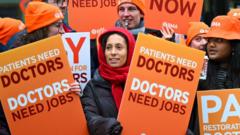
Doctors announce six-day strike in England as talks break down
#junior doctors #NHS #strike #pay negotiations #England #British Medical Association #hospital services
📌 Key Takeaways
- Junior doctors in England announce a six-day strike starting January 3.
- The strike is due to a breakdown in pay negotiations with the government.
- This is the longest strike in NHS history, affecting hospital services.
- The British Medical Association demands pay restoration to address real-terms cuts.
📖 Full Retelling
🏷️ Themes
Healthcare Strikes, Labor Disputes
📚 Related People & Topics

National Health Service
Publicly-funded healthcare systems in the United Kingdom
The National Health Service (NHS) is the collective term for the four separate publicly funded healthcare systems of the United Kingdom: the National Health Service (England), NHS Scotland, NHS Wales, and Health and Social Care (Northern Ireland) which was created separately and is often referred to...

England
Country within the United Kingdom
England is a country that is part of the United Kingdom. It is located on the island of Great Britain, of which it covers about 62%, and more than 100 smaller adjacent islands. England shares a land border with Scotland to the north and another land border with Wales to the west, and is otherwise su...
British Medical Association
Registered trade union for doctors
The British Medical Association (BMA) is a registered trade union and professional body for doctors in the United Kingdom. It does not regulate or certify doctors, a responsibility which lies with the General Medical Council. The BMA has a range of representative and scientific committees and is rec...
Entity Intersection Graph
Connections for National Health Service:
Mentioned Entities
Deep Analysis
Why It Matters
This news is important because it signals a major escalation in the ongoing dispute between junior doctors and the UK government over pay and working conditions, directly impacting healthcare delivery across England. It affects millions of patients who may face postponed appointments, cancelled surgeries, and reduced access to emergency care during the strike period. The breakdown in talks also highlights deep-seated issues within the National Health Service (NHS), including staff burnout, recruitment challenges, and funding pressures, which could have long-term consequences for public health and the sustainability of the healthcare system.
Context & Background
- Junior doctors in England have undertaken multiple rounds of strike action since 2023, demanding pay restoration to address real-terms cuts over the past decade.
- The NHS has faced chronic underfunding and staffing shortages, exacerbated by the COVID-19 pandemic, leading to record waiting lists and operational strain.
- Previous negotiations between the British Medical Association (BMA) and the UK government have repeatedly stalled, with both sides citing irreconcilable differences on pay offers and working conditions.
What Happens Next
The six-day strike is likely to proceed as announced, causing significant disruption to NHS services, with hospitals implementing contingency plans and prioritizing emergency care. Following the strike, pressure may mount on the government to re-enter negotiations or face further industrial action, potentially involving other healthcare unions. If unresolved, this could lead to a prolonged crisis, affecting NHS performance targets and patient outcomes well into 2025.
Frequently Asked Questions
Junior doctors are striking primarily over pay, arguing that their salaries have fallen by over 25% in real terms since 2008 due to inflation and below-inflation pay rises. They also cite poor working conditions, including long hours and high burnout rates, as key grievances driving the industrial action.
Patients can expect widespread cancellations of non-urgent appointments, elective surgeries, and routine procedures during the strike. Emergency services will remain operational but may be under significant strain, leading to longer wait times and reduced capacity for critical care in some areas.
The government has previously offered pay increases below the inflation rate, which junior doctors have rejected as insufficient. Recent talks broke down over disagreements on the scale of pay restoration and long-term commitments to improve working conditions within the NHS.
While this strike is specifically by junior doctors, other groups like consultants and specialty doctors have taken separate industrial action in the past. Further coordination is possible if the dispute escalates, but currently, the BMA is leading this action independently.