
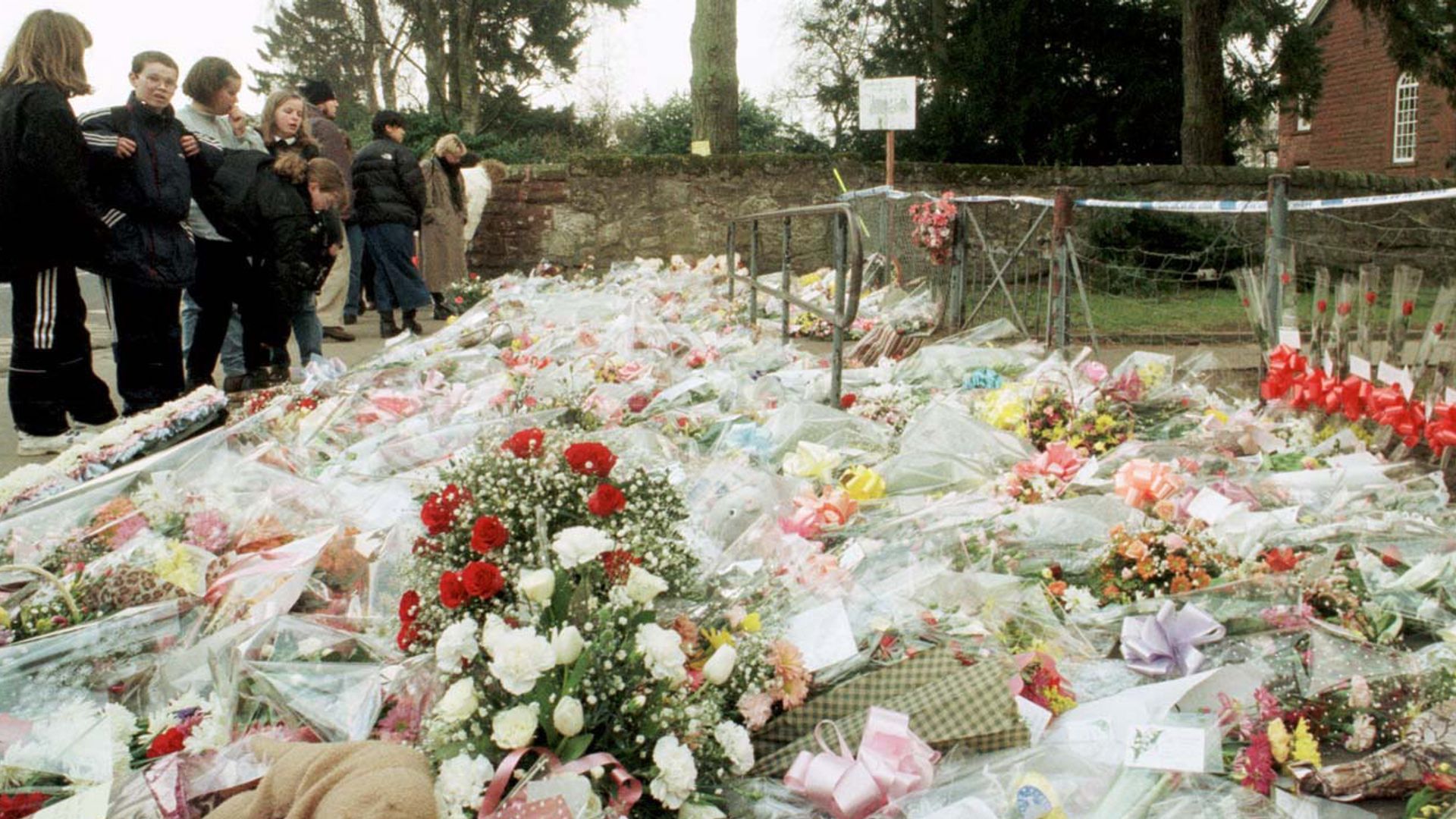
Dunblane 30 years on: UK's deadliest mass shooting 'still haunts many'
#Dunblane #mass shooting #UK #anniversary #gun laws #trauma #commemoration
📌 Key Takeaways
- The Dunblane school shooting remains the deadliest mass shooting in UK history, 30 years later.
- The 1996 tragedy continues to have a profound and lasting psychological impact on survivors and the community.
- The event led to significant changes in UK gun laws, including a near-total ban on private handgun ownership.
- Commemorations highlight the ongoing grief and the need for continued support for those affected.
📖 Full Retelling
🏷️ Themes
Gun Control, Trauma, Commemoration
📚 Related People & Topics

United Kingdom
Country in northwestern Europe
The United Kingdom of Great Britain and Northern Ireland, commonly known as the United Kingdom (UK) or Britain, is a country in northwestern Europe, off the coast of the continental mainland. It comprises England, Scotland, Wales and Northern Ireland, with a population of over 69 million in 2024. Th...

Dunblane
Town in Scotland
Dunblane (, Scottish Gaelic: Dùn Bhlàthain) is a town in the council area of Stirling, in central Scotland; it is inside the historic boundaries of the county of Perthshire. It is a commuter town, with many residents making use of good transport links to much of the Central Belt, including Glasgow a...
Entity Intersection Graph
Connections for United Kingdom:
View full profileMentioned Entities
Deep Analysis
Why It Matters
This news matters because it marks the 30th anniversary of the deadliest mass shooting in UK history, which fundamentally changed British gun laws and continues to impact survivors, families, and national policy. The Dunblane tragedy led to the near-total ban on private handgun ownership in the UK, creating one of the strictest firearm control regimes in the world. The ongoing trauma experienced by survivors and community members highlights the long-term psychological consequences of mass violence. This anniversary serves as a reminder of how a single event can reshape national legislation and collective memory for generations.
Context & Background
- The Dunblane massacre occurred on March 13, 1996, when Thomas Hamilton entered Dunblane Primary School in Scotland and killed 16 children and one teacher before taking his own life.
- The tragedy prompted the Snowdrop Campaign, a grassroots movement that successfully pushed for stricter gun control legislation in the UK.
- In response to Dunblane, the UK government passed the Firearms (Amendment) Act 1997, which banned private ownership of most handguns, followed by further restrictions in the Firearms (Amendment) (No. 2) Act 1997.
- The UK has not experienced a similar mass school shooting since Dunblane, which is often attributed to the strict gun laws implemented afterward.
- The incident led to significant changes in school security protocols across the UK, including improved access control and emergency response planning.
What Happens Next
In the coming weeks, memorial services and vigils will be held in Dunblane and across the UK to honor the victims. Survivors and families may continue advocacy for mental health support and trauma-informed care for those affected by mass violence. The anniversary will likely renew public discussion about gun control policies and their effectiveness in preventing similar tragedies. Future developments may include educational programs in schools about the event's legacy and continued research into long-term community recovery from mass shootings.
Frequently Asked Questions
The immediate consequences included a public outcry leading to the Snowdrop Campaign, which collected over 750,000 signatures demanding stricter gun control. This resulted in the UK government banning private ownership of most handguns through the Firearms (Amendment) Acts of 1997.
Dunblane led to the Firearms (Amendment) Act 1997, which prohibited private ownership of handguns above .22 caliber, and the Firearms (Amendment) (No. 2) Act 1997, which extended the ban to all handguns except in rare circumstances. This made the UK's gun laws among the strictest in the world.
The tragedy directly affected the families of the 16 children and one teacher killed, as well as the survivors, school staff, and the entire Dunblane community. Indirectly, it impacted the entire UK through changes in legislation and heightened awareness of school security.
Dunblane is remembered because it was the deadliest mass shooting in UK history and led to transformative gun control laws. The trauma experienced by survivors and the community has lasting effects, and the event serves as a benchmark for discussions on violence prevention and public safety.
The Snowdrop Campaign was a grassroots movement formed after Dunblane, named after the snowdrop flowers that bloom in March. It successfully advocated for stricter gun control by collecting signatures and lobbying Parliament, leading to the handgun bans of 1997.