
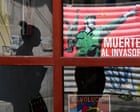
Five arrested in Cuba after protest at local Communist party office
#Cuba #arrests #protest #Communist Party #political dissent #demonstration #government crackdown
📌 Key Takeaways
- Five individuals were arrested in Cuba following a protest at a local Communist Party office.
- The protest targeted a local branch of Cuba's ruling Communist Party, indicating political dissent.
- The incident highlights ongoing tensions and public dissatisfaction within Cuba's political system.
- Authorities responded with arrests, reflecting the government's strict stance on public demonstrations.
📖 Full Retelling
🏷️ Themes
Political Protest, Government Response
Entity Intersection Graph
No entity connections available yet for this article.
Deep Analysis
Why It Matters
This news matters because it highlights ongoing political tensions in Cuba, where public dissent against the Communist Party remains rare and heavily controlled. It affects Cuban citizens who face severe consequences for protesting, international human rights organizations monitoring Cuba, and the Cuban government's international reputation. The arrests demonstrate the government's continued intolerance of political opposition despite recent economic reforms, potentially signaling to other would-be protesters the risks of challenging the single-party system.
Context & Background
- Cuba has been governed by the Communist Party since the 1959 revolution, with Fidel Castro leading until 2008 followed by his brother Raúl Castro until 2018
- Current President Miguel Díaz-Canel has maintained the one-party system while implementing limited economic reforms amid severe shortages and inflation
- Previous protests in July 2021 were the largest in decades, resulting in hundreds of arrests and sentences up to 30 years for some participants
- Cuba's penal code criminalizes 'unauthorized' public gatherings and dissent against the government under various charges including 'disorderly conduct' and 'contempt'
What Happens Next
The arrested individuals will likely face closed-door trials with predetermined outcomes, possibly resulting in prison sentences intended to deter future protests. International human rights groups will probably issue condemnations, while the Cuban government will characterize the protest as foreign-inspired destabilization. This incident may embolden some dissidents while frightening others, potentially affecting the frequency and scale of future demonstrations as Cuba continues facing economic hardships.
Frequently Asked Questions
Protests are significant because Cuba has severely restricted political dissent for decades under its one-party system. Even small demonstrations challenge the government's control and can inspire broader movements, as seen during the 2021 nationwide protests that were unprecedented in recent Cuban history.
They could face charges like 'public disorder,' 'disrespect,' 'resistance,' or 'incitement to commit a crime' under Cuba's penal code. These charges often carry prison sentences ranging from months to years, depending on how the government characterizes the protest's severity and organization.
The government typically responds with rapid arrests, internet shutdowns to prevent organization and documentation, and state media portraying protesters as criminals or foreign agents. Security forces are deployed quickly to disperse gatherings before they can grow, followed by prosecutions meant to deter future dissent.
Economic hardships like food shortages, power outages, and inflation frequently trigger protests, though participants often voice political demands once gathered. The government's inability to solve chronic economic problems despite recent reforms has increased public frustration that sometimes spills into political dissent.