
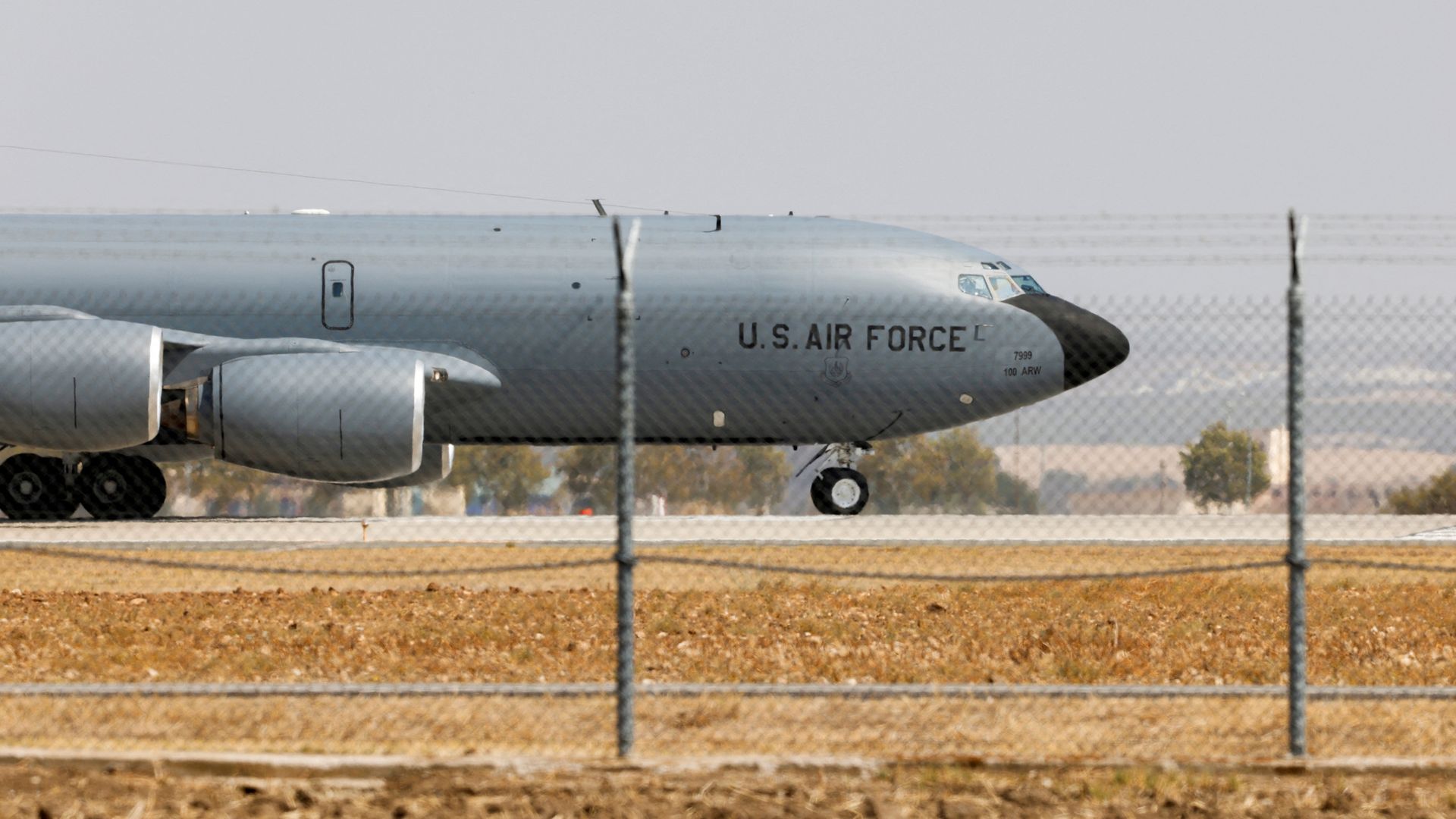
Four crew members killed in US refuelling plane crash in Iraq
#US military #plane crash #Iraq #KC-130 Hercules #aerial refueling #crew fatalities #aviation incident
📌 Key Takeaways
- Four crew members died in a US military refueling plane crash in Iraq.
- The incident involved a KC-130 Hercules aircraft, a tanker variant used for aerial refueling.
- The crash occurred in Iraq, though the exact location and cause are not specified in the article.
- The event highlights operational risks for US military aviation in the region.
📖 Full Retelling
🏷️ Themes
Military Accident, Aviation Safety
📚 Related People & Topics

Iraq
Country in West Asia
Iraq, officially the Republic of Iraq, is a country in West Asia. Located within the geo-political region of the Middle East, it is bordered by Saudi Arabia to the south, Turkey to the north, Iran to the east, the Persian Gulf and Kuwait to the southeast, Jordan to the southwest, and Syria to the we...
United States Armed Forces
Combined military forces of the United States
The United States Armed Forces are the military forces of the United States. U.S. federal law names six armed forces: the Army, Marine Corps, Navy, Air Force, Space Force, and Coast Guard, each assigned their role and domain. From their inception during the American Revolutionary War, the Army and...
Entity Intersection Graph
Connections for Iraq:
Mentioned Entities
Deep Analysis
Why It Matters
This incident matters because it represents a significant loss of life for U.S. military personnel in a region where American forces maintain a presence to counter ISIS remnants and Iranian-backed militias. It affects the families of the deceased service members, U.S. military operations in Iraq, and diplomatic relations between the U.S. and Iraqi governments. The crash also raises questions about operational safety and potential hostile action in a volatile region where U.S. forces have faced increasing attacks in recent months.
Context & Background
- The U.S. has maintained a military presence in Iraq since 2003, with current forces primarily focused on training Iraqi security forces and counterterrorism operations against ISIS remnants.
- U.S. aerial refueling operations are critical for maintaining air superiority and extended mission capabilities across the Middle East, supporting both U.S. and coalition aircraft.
- Iraq has become an increasingly dangerous environment for U.S. forces, with Iranian-backed militias conducting regular drone and rocket attacks against American positions since 2019.
- The U.S. military presence in Iraq operates under a Status of Forces Agreement with the Iraqi government, which has faced political pressure to demand U.S. withdrawal.
- Previous aircraft crashes in Iraq include a 2020 U.S. Air Force E-11A surveillance plane crash in Afghanistan and multiple helicopter incidents during the Iraq War era.
What Happens Next
The U.S. military will conduct a formal investigation to determine the cause of the crash, with initial findings expected within 30-60 days. Iraqi authorities will likely participate in or monitor the investigation. The incident may prompt temporary operational pauses or safety reviews for similar aircraft. Diplomatic discussions may occur regarding force protection measures, and the families of the deceased will receive notification and support through military casualty assistance programs.
Frequently Asked Questions
The specific aircraft type wasn't identified in the brief report, but U.S. forces in Iraq typically operate KC-135 Stratotankers or KC-10 Extenders for aerial refueling missions. The investigation will confirm the exact model and provide details about the aircraft's age and maintenance history.
While the initial report doesn't indicate hostile fire, investigators will examine all possibilities including mechanical failure, human error, or potential attack. The region has seen increased militia drone attacks, making hostile action a consideration despite no immediate claims of responsibility.
The crash will likely prompt temporary operational adjustments and safety reviews, but long-term mission continuity is expected. The incident may increase scrutiny of the U.S. presence from both American and Iraqi political circles, potentially affecting future force posture decisions.
The families will receive comprehensive support including casualty assistance officers, death benefits, counseling services, and military honors. The Department of Defense follows established protocols for casualty notification and family support that include financial assistance and ongoing communication about investigation findings.
While less frequent than during peak combat operations, aircraft incidents still occur periodically. Since the official combat mission ended, crashes have become less common but remain a risk given the operational tempo and challenging environment of the region.