
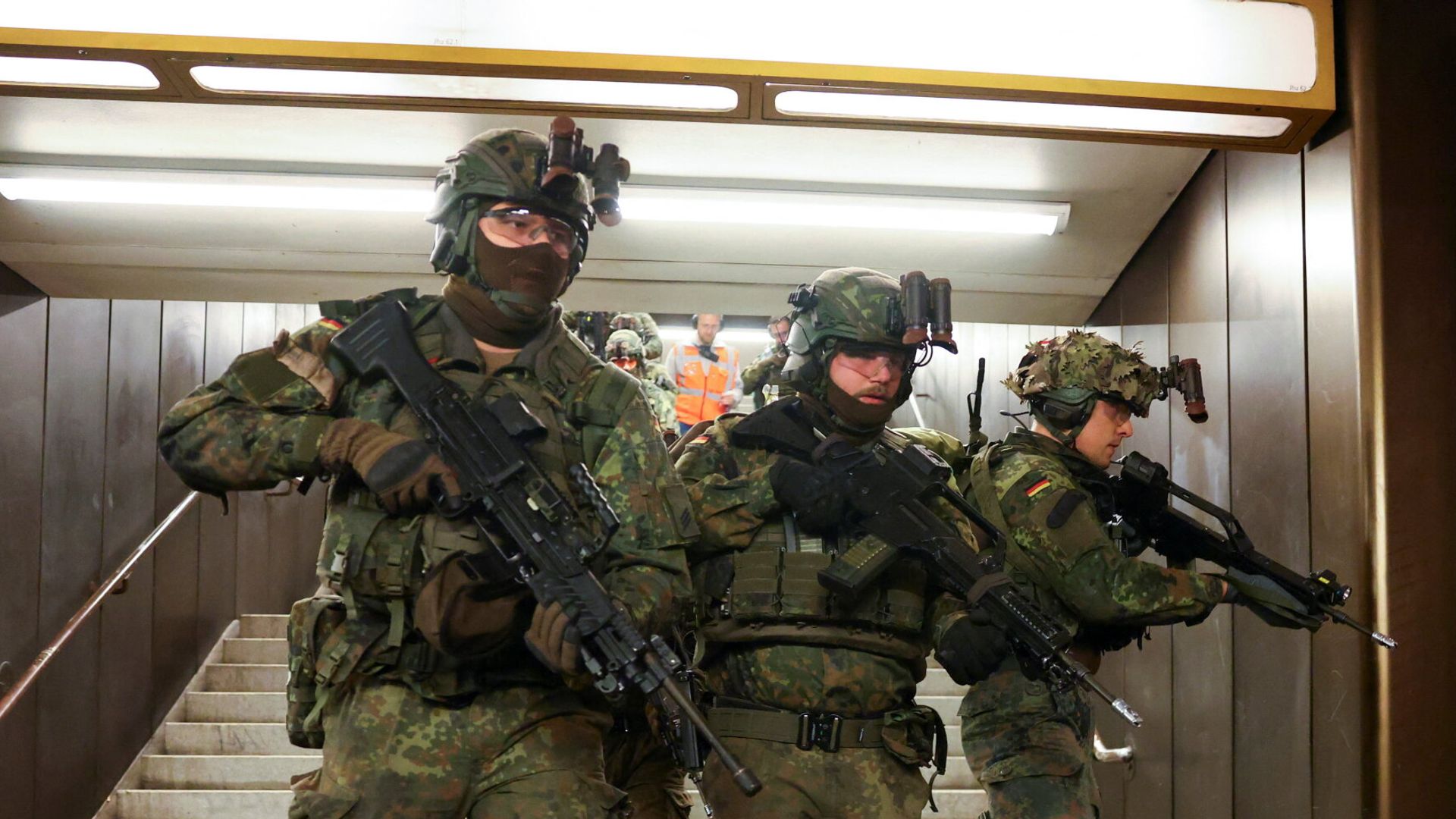
German men could require military permission to leave country for more than three months
#Germany #military permission #travel restrictions #conscription #national defense #men #three months
📌 Key Takeaways
- Germany is considering a policy requiring men to obtain military permission for extended stays abroad.
- The proposed rule would apply to absences exceeding three months.
- This measure aims to ensure military service obligations are met.
- It reflects a shift in Germany's approach to national defense and conscription.
📖 Full Retelling
🏷️ Themes
Military Policy, Travel Restrictions
📚 Related People & Topics

Germany
Country in Western and Central Europe
Germany, officially the Federal Republic of Germany, is a country in Western and Central Europe. It lies between the Baltic Sea and the North Sea to the north with the Alps to the south. Its sixteen constituent states have a total population of over 82 million, making it the most populous member sta...
Entity Intersection Graph
Connections for Germany:
Mentioned Entities
Deep Analysis
Why It Matters
This policy would significantly impact German men's freedom of movement and could affect their career opportunities, education abroad, and family planning. It represents a major shift in Germany's approach to national security and military readiness, potentially affecting hundreds of thousands of citizens. The measure could also strain Germany's relations with EU neighbors and raise constitutional questions about personal liberties versus state security needs.
Context & Background
- Germany suspended compulsory military service in 2011 after 55 years of conscription
- The German military (Bundeswehr) has faced recruitment challenges and personnel shortages in recent years
- Germany's Basic Law (constitution) includes provisions for military service obligations during times of tension
- Germany has maintained a registry of potential conscripts despite suspending active conscription
- European security concerns have increased significantly since Russia's invasion of Ukraine in 2022
What Happens Next
The proposal will likely face parliamentary debate and constitutional review in coming months. If implemented, the policy could take effect in early 2025, potentially coinciding with increased NATO military exercises. Legal challenges from civil liberties organizations are almost certain, and the government may need to establish new bureaucratic systems to process exit permission requests.
Frequently Asked Questions
The policy would primarily affect German men of military age (typically 18-45) who are registered as potential conscripts. It would not apply to women under current German military law, though this could potentially change with future legislation.
Germany is responding to heightened security concerns in Europe following Russia's invasion of Ukraine. The government believes it needs better control over military-aged personnel to ensure rapid mobilization capability if needed for national defense.
German men already living abroad would likely need to register with German authorities and potentially obtain permission to remain overseas. Those planning extended stays would face new bureaucratic hurdles before departure.
Exceptions would likely be made for students, essential workers, humanitarian cases, and those with family emergencies. The government would need to establish clear criteria for what constitutes 'essential' travel or residence abroad.
Several European countries maintain similar exit controls for military-aged citizens, including Switzerland, Finland, and Austria. However, Germany's proposal is notable given its size and previous suspension of conscription.