
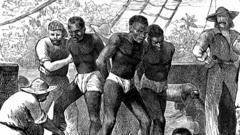
Ghana demands compensation for slavery in landmark UN vote
#Ghana #slavery #compensation #UN vote #reparations #transatlantic slave trade #historical accountability
📌 Key Takeaways
- Ghana leads a UN resolution calling for reparations for historical slavery.
- The resolution marks a significant international push for addressing slavery's legacy.
- It seeks compensation from nations involved in the transatlantic slave trade.
- The vote highlights ongoing global debates on justice and historical accountability.
🏷️ Themes
Reparations, Historical Justice
📚 Related People & Topics

Ghana
Country in West Africa
Ghana, officially the Republic of Ghana, is a country in West Africa. It is situated with the Gulf of Guinea and the Atlantic Ocean to the south, and shares borders with Côte d'Ivoire to the west, Burkina Faso to the north, and Togo to the east. Ghana covers an area of 239,567 km2 (92,497 sq mi), sp...
Entity Intersection Graph
Connections for Ghana:
Mentioned Entities
Deep Analysis
Why It Matters
This news matters because it represents a significant escalation in the global movement for reparations for historical injustices, potentially setting a precedent for other nations to follow. It directly affects descendants of enslaved Africans who have long sought acknowledgment and compensation for centuries of exploitation. The demand also impacts former colonial powers who may face increasing international pressure and financial claims. This development could reshape international relations and discussions about historical accountability in multilateral forums like the United Nations.
Context & Background
- The transatlantic slave trade operated from the 16th to 19th centuries, forcibly transporting approximately 12-15 million Africans to the Americas
- Ghana was a major departure point for enslaved Africans during the slave trade, with coastal forts like Elmina and Cape Coast serving as holding centers
- Previous reparations discussions have included Caribbean nations' CARICOM Reparations Commission established in 2013 seeking compensation from European nations
- The UN has previously addressed slavery through declarations like the 2001 Durban Declaration which acknowledged slavery as a crime against humanity
What Happens Next
The UN will likely establish a working group or special rapporteur to study Ghana's compensation demand and develop recommendations. Former colonial powers including Britain, Portugal, France and the Netherlands will need to formulate official responses to the compensation claim. Additional African and Caribbean nations may join Ghana's initiative or file similar claims in coming months. The issue will probably be discussed at the next UN General Assembly session in September 2024.
Frequently Asked Questions
While the article doesn't specify exact amounts, Ghana is likely seeking financial reparations for the human and economic losses suffered during the slave trade era, potentially including development aid, debt relief, and direct payments. The demand may also include formal apologies and educational initiatives about slavery's legacy.
Primary responsibility would fall on European nations that participated in the transatlantic slave trade, particularly Britain, Portugal, France, the Netherlands, Spain, and Denmark. Private companies and institutions that benefited from slavery might also face pressure to contribute to compensation funds.
This represents a formal, state-level demand through UN channels rather than civil society advocacy, giving it greater diplomatic weight. Ghana's action creates a precedent for using international institutions to pursue historical justice claims systematically.
Proponents cite international human rights law, transitional justice principles, and precedents like Holocaust reparations. However, legal challenges include statutes of limitations and questions about state succession for historical wrongs committed centuries ago.
This could strain relations with former colonial powers while strengthening ties with other African and Caribbean nations. Ghana may gain moral authority in global south forums but potentially face diplomatic pushback from European allies and trading partners.