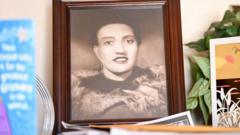
Henrietta Lacks: Family of woman whose cells were 'stolen' settles second lawsuit
#Henrietta Lacks#HeLa cells#Novartis settlement#Biotechnology ethics#Medical research consent#Cell line litigation#Scientific exploitation#Johns Hopkins Hospital
📌 Key Takeaways
Henrietta Lacks' family settled with Novartis over unauthorized use of her 'immortal' cells
Lacks' cells were harvested without consent in 1951 and have enabled countless medical breakthroughs
HeLa cells have been instrumental in developing the polio vaccine and advancing cancer, HIV and infertility research
This is the second settlement for the family, with undisclosed terms, and other lawsuits remain pending
📖 Full Retelling
Nearly 70 years after her death, the family of Henrietta Lacks has reached a settlement with Swiss-based pharmaceutical company Novartis in Maryland, resolving a lawsuit over the unauthorized use of her 'immortal' cells that have enabled countless medical breakthroughs. Henrietta Lacks, a 31-year-old mother from Baltimore, Maryland, sought medical treatment in 1951 for abdominal pain and abnormal bleeding at Johns Hopkins Hospital, where doctors discovered a large mass on her cervix. Without her knowledge or consent, doctors harvested samples of her tumor cells before treating her aggressive cervical cancer, which ultimately claimed her life just months later. The cells, later named 'HeLa' after her initials, proved extraordinary in their ability to multiply indefinitely without aging, becoming the first 'immortal' human cell line and revolutionizing medical research worldwide. These cells have been instrumental in developing the polio vaccine and advancing research on HIV, cancer, and infertility, among numerous other scientific achievements, while generating billions of dollars for pharmaceutical companies without any compensation to Lacks' family. The lawsuit, filed nearly 70 years after her death, accused Novartis of profiting from the 'stolen' cells, following a previous settlement with Massachusetts-based Thermo Fisher Scientific Inc three years ago for undisclosed terms. The family, represented by attorney Ben Crump, expressed satisfaction with the confidential settlement, describing it as 'some measure of justice, to offer respect and dignity to the life that was taken' and emphasizing that multiple lawsuits against other pharmaceutical companies remain ongoing.
🏷️ Themes
Medical Ethics, Racial Justice, Informed Consent, Scientific Advancement
HeLa () is an immortalized cell line used in scientific research. It is the oldest human cell line and one of the most commonly used. HeLa cells are durable and prolific, allowing for extensive applications in scientific study.
African-American woman (1920–1951), source of HeLa immortal cell line
Henrietta Lacks (née Loretta Pleasant; August 1, 1920 – October 4, 1951) was an African American woman whose cancer cells are the source of the HeLa cell line, the first immortalized human cell line and one of the most important cell lines in medical research. An immortalized cell line reproduces in...
Henrietta Lacks: Family of woman whose cells were 'stolen' settles second lawsuit 2 hours ago Share Save Max Matza Share Save The family of a black woman whose cervical cells were harvested in 1951 without her knowledge and replicated infinitely ever since has reached a settlement with a second biotech company. The Switzerland-based company Novartis was accused in a lawsuit of profiting from Henrietta Lacks' cells, which were taken without consent but have enabled huge advances in medical science. Lacks' family never received any compensation, and have fought for years to get justice for the "stolen" cells. Nearly three years ago, the family settled with another biotech company, Massachusetts-based Thermo Fisher Scientific Inc, for undisclosed terms. Lacks, a 31-year-old mother from Baltimore, Maryland, began experiencing pain in her abdomen and abnormal bleeding in 1951. She was examined by gynaecologists at Johns Hopkins Hospital, who discovered a large mass on her cervix. Without informing her or asking for permission, doctors sent a sample of her tumour to a lab for medical research before treating her for aggressive cervical cancer. But, while nearly all cell cultures died quickly in the lab, those taken from Ms Lacks continued to multiply and didn't age, making them "immortal". This meant that scientists all over the world could replicate experiments using identical cells. The cell line, called "HeLa" after the patient's first and last name, was sent to research labs around the world. According to the World Health Organization , HeLa cells have led to the creation of the polio vaccine and advancements in HIV, cancer and infertility research. But the same properties that made the cells a scientific miracle also made them lethal. Months after her diagnosis, Lack died from cancer at just 31 and was buried in an unmarked grave. Seventy years after her death, her family filed a lawsuit against Novartis in the state of Maryland. Several other lawsuits against other ...