NASA may delay Artemis II moon mission due to rocket helium fault
Four astronauts planned for historic flight around moon on March 6, 2026
Mission would be first human moon journey since 1972 and farthest human flight ever
Artemis program is part of NASA's strategy for future Mars exploration
📖 Full Retelling
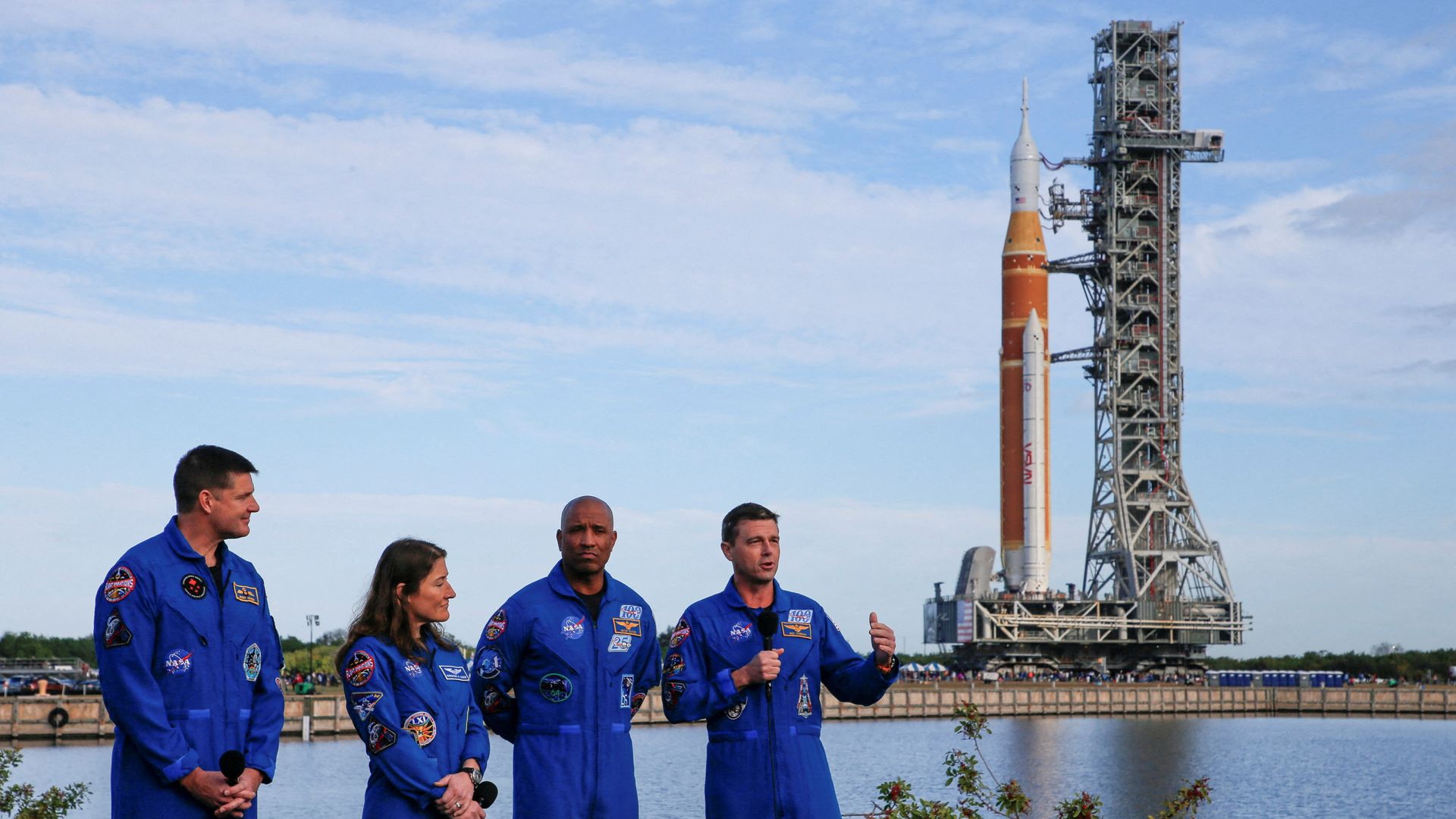
NASA may delay its Artemis II mission to send astronauts around the moon for the first time in more than half a century after discovering a fault with the rocket's helium flow system at Kennedy Space Center in Florida, with the planned March 6, 2026 launch now in jeopardy following the discovery made on Friday night. The Artemis II mission represents a significant milestone in space exploration, aiming to send four astronauts—Reid Wiseman, Victor Glover, Christina Koch from the US, and Jeremy Hansen from Canada—on a journey around the moon and back. If successful, they would become the first humans to fly to the moon since Apollo 17 in 1972 and would make the farthest human flight into space ever. The mission, however, is not planned to include a lunar landing, serving instead as a precursor to NASA's planned Artemis III astronaut moon landing scheduled for 2028. The recent technical setback involves an interruption in the helium flow to the rocket during a critical preparation phase, with a NASA spokesperson noting that 'this will almost assuredly impact the March launch window.' This issue follows a previous disruption during a launch rehearsal earlier this month when a hydrogen leak was discovered. While a second test completed on Thursday without leaks after technicians replaced two seals—described by launch director Charlie Blackwell-Thompson as 'a big step in us earning our right to fly'—the helium issue presents a new challenge. When the mission does launch, it will involve a 10-day journey testing life support, navigation, and communication systems in deep space. The Orion capsule will enter Earth's high orbit where the crew will manually pilot the spacecraft before control is handed back to NASA's Johnson Space Center in Houston. The astronauts will then spend four days circling the moon, traveling approximately 4,600 miles beyond its far side before returning to Earth with a splashdown in the Pacific Ocean. The Artemis missions are part of NASA's long-term strategy to build the Lunar Gateway space station, which will serve as a habitat for astronauts preparing for future missions to Mars.
🏷️ Themes
Space exploration, Technical challenges, Human spaceflight
Artemis II is a planned lunar spaceflight mission under the Artemis program, led by NASA. It is intended to be the second flight of the Space Launch System (SLS), and the first crewed mission of the Orion spacecraft. It is the first crewed mission around the Moon, and beyond low Earth orbit, since A...
The John F. Kennedy Space Center (KSC, originally known as the NASA Launch Operations Center), located on Merritt Island, Florida, is one of the ten field centers of NASA. Since 1968, KSC has been NASA's primary launch center of American spaceflight, research, and technology. Launch operations for t...
NASA says moon mission could be delayed after discovering rocket fault Before the setback, the agency had announced that it was targeting 6 March to launch four astronauts around the moon and back. Saturday 21 February 2026 22:25, UK Why you can trust Sky News NASA may delay its mission to send astronauts to the moon for the first time in more than half a century after discovering a fault with its rocket. Artemis II has been due to blast off from Florida's Kennedy Space Center from as early as March. On Friday night, however, NASA discovered that the flow of helium - which is required for launch - to the rocket had been interrupted during a key part of the preparation process. A NASA spokesperson said: "This will almost assuredly impact the March launch window." Before the setback, the agency had announced that it was targeting 6 March to launch four astronauts around the moon and back. The crew includes three US astronauts - Reid Wiseman, Victor Glover and Christina Koch - and Canadian Jeremy Hansen. They would become the first astronauts to fly to the moon since Apollo 17 in 1972 and make the farthest human flight into space ever. Read more: Everything to know about Artemis II There are no plans for the mission to land on its surface, however. Artemis II is a precursor to NASA's planned astronaut moon landing with Artemis III, which is scheduled for 2028. The Artemis missions are part of NASA's long-term plans to build a space station - called Lunar Gateway - where astronauts will be able to live and work and prepare for missions to Mars. A first rehearsal for the launch earlier this month was disrupted after a hydrogen leak was discovered. 1:56 Share NASA forced to delay Moon mission But a second test was completed on Thursday without any leaks identified after technicians replaced two seals, which launch director Charlie Blackwell-Thompson described as "a big step in us earning our right to fly". When the 10-day mission is able to go ahead, it will see the...