
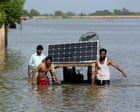
How Pakistan’s people-led solar boom is easing impact of Middle East energy crisis
#Pakistan #solar energy #energy crisis #Middle East #renewable adoption #power grid #fossil fuels
📌 Key Takeaways
- Pakistan is experiencing a grassroots surge in solar energy adoption driven by citizens and businesses.
- This solar boom is helping mitigate the economic impact of the Middle East energy crisis on Pakistan.
- The shift reduces reliance on expensive imported fossil fuels and eases pressure on the national grid.
- The movement is largely people-led, with individuals and companies investing in solar to combat power shortages and high costs.
📖 Full Retelling
🏷️ Themes
Renewable Energy, Economic Resilience
📚 Related People & Topics

Middle East
Transcontinental geopolitical region
The Middle East is a geopolitical region encompassing the Arabian Peninsula, Egypt, Iran, Iraq, the Levant, and Turkey. The term came into widespread usage by Western European nations in the early 20th century as a replacement of the term Near East (both were in contrast to the Far East). The term ...

Pakistan
Country in South Asia
Pakistan, officially the Islamic Republic of Pakistan, is a country in South Asia. It is the fifth-most populous country, with a population of over 241.5 million, having the second-largest Muslim population as of 2023. Islamabad is the nation's capital, while Karachi is its largest city and financia...
Entity Intersection Graph
Connections for Middle East:
Mentioned Entities
Deep Analysis
Why It Matters
This news is important because it highlights how grassroots adoption of solar energy in Pakistan is mitigating the effects of the Middle East energy crisis, reducing reliance on imported fossil fuels and stabilizing local power supplies. It affects Pakistani citizens by lowering electricity costs and improving energy security, while also serving as a model for other developing nations facing similar energy challenges. The shift supports environmental goals by cutting carbon emissions and demonstrates community-driven solutions to global energy instability.
Context & Background
- Pakistan has historically faced chronic electricity shortages and load-shedding, with frequent blackouts affecting homes and businesses.
- The country relies heavily on imported oil and gas, making it vulnerable to global price shocks, such as those triggered by the Middle East energy crisis.
- Government initiatives, like net metering policies introduced in recent years, have encouraged solar adoption by allowing users to sell excess power back to the grid.
- Solar panel costs have dropped globally, making renewable energy more accessible to households and small enterprises in Pakistan.
- The Middle East energy crisis, driven by geopolitical tensions and supply disruptions, has increased fuel prices worldwide, straining economies dependent on imports.
What Happens Next
Increased solar installations are expected to continue, potentially leading to policy enhancements like subsidies or expanded net metering. Upcoming developments may include government or international funding for larger solar projects, with possible announcements in the next 6-12 months. This could reduce Pakistan's energy import bills and inspire similar movements in neighboring countries facing energy crises.
Frequently Asked Questions
The solar boom is primarily driven by individuals and businesses seeking to avoid high electricity costs and unreliable grid power, exacerbated by the Middle East energy crisis. Government policies like net metering and falling solar panel prices have made installations more affordable and attractive.
It enhances energy security by diversifying power sources and reducing dependence on imported fossil fuels, which are subject to price volatility. This leads to more stable and predictable electricity supply for homes and industries.
Yes, other developing nations with similar energy challenges can adopt this model by implementing supportive policies and leveraging decreasing solar costs. Community-led initiatives show that bottom-up approaches can complement government efforts in transitioning to renewables.
The solar boom reduces carbon emissions by displacing fossil fuel-based electricity generation, contributing to climate change mitigation. It also decreases air pollution, improving public health and environmental quality in urban and rural areas.