
SP
BravenNow
How photography helped the British empire classify India
| United Kingdom | world | ✓ Verified - bbc.com

How photography helped the British empire classify India

#British Empire #Photography #Colonial India #Ethnographic photography #Cultural classification #Delhi exhibition #Typecasting #Social documentation

📌 Key Takeaways

  • Exhibition showcases 200 rare photographs revealing British colonial classification of Indian communities
  • Collection spans diverse social groups across India from 1855-1920
  • Photographs actively shaped colonial perceptions by translating fluid realities into fixed categories
  • Exhibition centers on 'The People of India' survey and works by notable colonial-era photographers

📖 Full Retelling

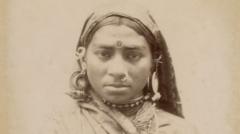
A new exhibition titled 'Typecasting: Photographing the Peoples of India, 1855-1920' recently opened in Delhi, showcasing nearly 200 rare photographs that reveal how the British Empire used photography as a tool to classify and document India's diverse communities during colonial rule. The exhibition, organized by Delhi-based art gallery DAG and curated by historian Sudeshna Guha, spans 65 years of photographic history from 1855 to 1920, bringing together images that capture a wide range of communities across India, from Lepcha and Bhutia people in the northeast to Afridis in the northwest, and from Todas in the Nilgiris to Parsi and Gujarati elites in western India. These photographs did more than just document India's diversity; they actively shaped colonial perceptions by translating fluid social realities into fixed, categorized 'types,' with the collection centering on folios from 'The People of India,' an influential eight-volume photographic survey published between 1868 and 1875, and including works by notable photographers such as Samuel Bourne, Lala Deen Dayal, John Burke, and the studio Shepherd & Robertson, whose images helped define the visual language of colonial India.

🏷️ Themes

Colonialism, Photography, Cultural identity

📚 Related People & Topics

British Empire

British Empire

Territories ruled by the United Kingdom

The British Empire comprised the dominions, colonies, protectorates, mandates, and other territories ruled or administered by the United Kingdom and its predecessor states. It began with the overseas possessions and trading posts established by England in the late 16th and early 17th centuries, and ...

View Profile → Wikipedia ↗
Colonial India

Colonial India

Period of Indian history characterised by European colonial rule

Colonial India was the part of the Indian subcontinent that was occupied by European colonial powers during and after the Age of Discovery. European power was exerted both by conquest and trade, especially in spices. Near the end of the 15th century, Portuguese sailor Vasco da Gama became the first ...

View Profile → Wikipedia ↗
Photography

Photography

Art and practice of creating images by recording light

Photography is the art, application, and practice of creating images by recording light, either electronically by means of an image sensor, or chemically by means of a light-sensitive material such as photographic film. It is employed in many fields of science, manufacturing (e.g., photolithography)...

View Profile → Wikipedia ↗

Entity Intersection Graph

No entity connections available yet for this article.

Deep Analysis

Why It Matters

Photography was used by the British to classify and control India, turning fluid identities into fixed categories that shaped colonial policy and social hierarchies. The exhibition reveals how images were not just records but instruments of governance, influencing how communities were perceived and governed.

Context & Background

  • 19th century colonial photography
  • The People of India survey
  • Visual classification of ethnic groups
  • Impact on administrative policies

What Happens Next

The exhibition will run until next month, drawing scholars and the public to reassess colonial visual archives. It may inspire new research into how photography shaped colonial governance and inform contemporary discussions on representation. Further exhibitions are planned in other Indian cities.

Frequently Asked Questions

What is the main focus of the exhibition?

It showcases nearly 200 rare photographs that illustrate how the British used photography to classify communities in India during 1855-1920.

Who curated the exhibition?

Historian Sudeshna Guha curated the exhibition, focusing on the influential photographic survey The People of India.

Why are these photographs significant?

They demonstrate how visual documentation was used to create stable, knowable 'types' that influenced colonial administration and social hierarchies.

Will the exhibition be available elsewhere?

Yes, plans are underway to host similar exhibitions in other Indian cities to broaden public engagement.

Original Source
How photography helped the British empire classify India 8 minutes ago Share Save Sudha G Tilak Share Save In the second half of the 19th Century, photography became one of the British Empire's most persuasive instruments for knowing - and classifying - India. A new exhibition - called Typecasting: Photographing the Peoples of India, 1855-1920, and organised by DAG, the Delhi-based art gallery - brings together nearly 200 rare photographs from a period when the camera was deployed to classify communities, fix identities and make India's complex social differences legible to the colonial government. Spanning 65 years, the exhibition maps an expansive human geography: from Lepcha and Bhutia communities in the north-east to Afridis in the north-west; from Todas in the Nilgiris to Parsi and Gujarati elites in western India. It also turns its gaze to those assigned to the lower rungs of the colonial social order - dancing girls, agricultural labourers, barbers and snake charmers. These images did not merely document India's diversity; they actively shaped it, translating fluid, lived realities into apparently stable and knowable "types". Curated by historian Sudeshna Guha, the exhibition centres on folios from The People of India, the influential eight-volume photographic survey published between 1868 and 1875. From this core, it expands outward to include albumen and silver-gelatin prints by photographers such as Samuel Bourne, Lala Deen Dayal, John Burke and the studio Shepherd & Robertson - practitioners whose images helped define the visual language of that time. "Taken together, this material tells the history of ethnographic photography and its effect on the British administration and the Indian population, in a project which in size and depth has never before been seen in India," says Ashish Anand, CEO of DAG. Here's a selection of images from the exhibition: Asia Colonialism Photography Mumbai India
Read full article at source

Source

bbc.com

More from United Kingdom

News from Other Countries

🇺🇸 USA

🇺🇦 Ukraine