
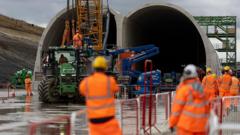
HS2 train speeds could be cut to save money
#HS2 #train speeds #cost savings #high-speed rail #budget #transport #infrastructure #efficiency
📌 Key Takeaways
- HS2 train speeds may be reduced to cut costs
- The proposal aims to lower the project's financial burden
- Speed reductions could impact travel time efficiency
- Cost-saving measures are being considered for HS2
📖 Full Retelling
🏷️ Themes
Transportation, Budget Cuts
Entity Intersection Graph
No entity connections available yet for this article.
Deep Analysis
Why It Matters
This news matters because HS2 is the UK's largest infrastructure project, costing over £100 billion, and speed reductions would significantly impact its economic justification and passenger benefits. It affects taxpayers funding the project, future passengers expecting reduced travel times, and northern communities hoping for improved connectivity. The decision reflects ongoing debates about infrastructure priorities and fiscal responsibility during economic challenges.
Context & Background
- HS2 (High Speed 2) is a planned high-speed railway linking London with Birmingham, Manchester, and Leeds, first proposed in 2009
- The project has faced massive cost overruns, with original estimates of £33 billion ballooning to over £100 billion
- Phase 1 (London-Birmingham) is under construction, while Phase 2 (to Manchester and Leeds) has faced repeated delays and uncertainty
- The UK government has already scaled back the eastern leg to Leeds and delayed the Manchester section due to budget concerns
- High-speed rail typically operates at 186-224 mph (300-360 km/h), with HS2 designed for 225 mph (360 km/h) speeds
What Happens Next
The government will likely conduct cost-benefit analyses of speed reductions versus economic impacts, with decisions expected in the 2024 spending review. If implemented, design modifications would be needed for existing contracts, potentially causing further delays. Parliamentary scrutiny and potential legal challenges from affected regions could follow any formal announcement of reduced specifications.
Frequently Asked Questions
Exact savings aren't specified, but would come from reduced construction costs for gentler curves, shorter tunnels, and less powerful trains. Operational savings would also accrue from lower energy consumption and maintenance costs over decades of service.
Yes, trains operating at 160-200 mph would still qualify as high-speed rail, though at the lower end of international standards. The current design targets 225 mph, matching some of Europe's fastest services.
London-Birmingham journey times might increase from the planned 49 minutes to 55-60 minutes. Manchester-London trips could take 75-85 minutes instead of the planned 67 minutes, reducing the project's time-saving benefits.
Yes, cost-saving compromises are common in major projects. California's high-speed rail reduced speeds in some sections, while the UK's original high-speed line (HS1) maintained its design speeds but faced budget pressures during construction.
Alternatives include further delaying construction, reducing station amenities, cutting additional route sections, or increasing taxpayer funding. Some suggest private investment partnerships, though these have proven challenging for UK rail projects.