
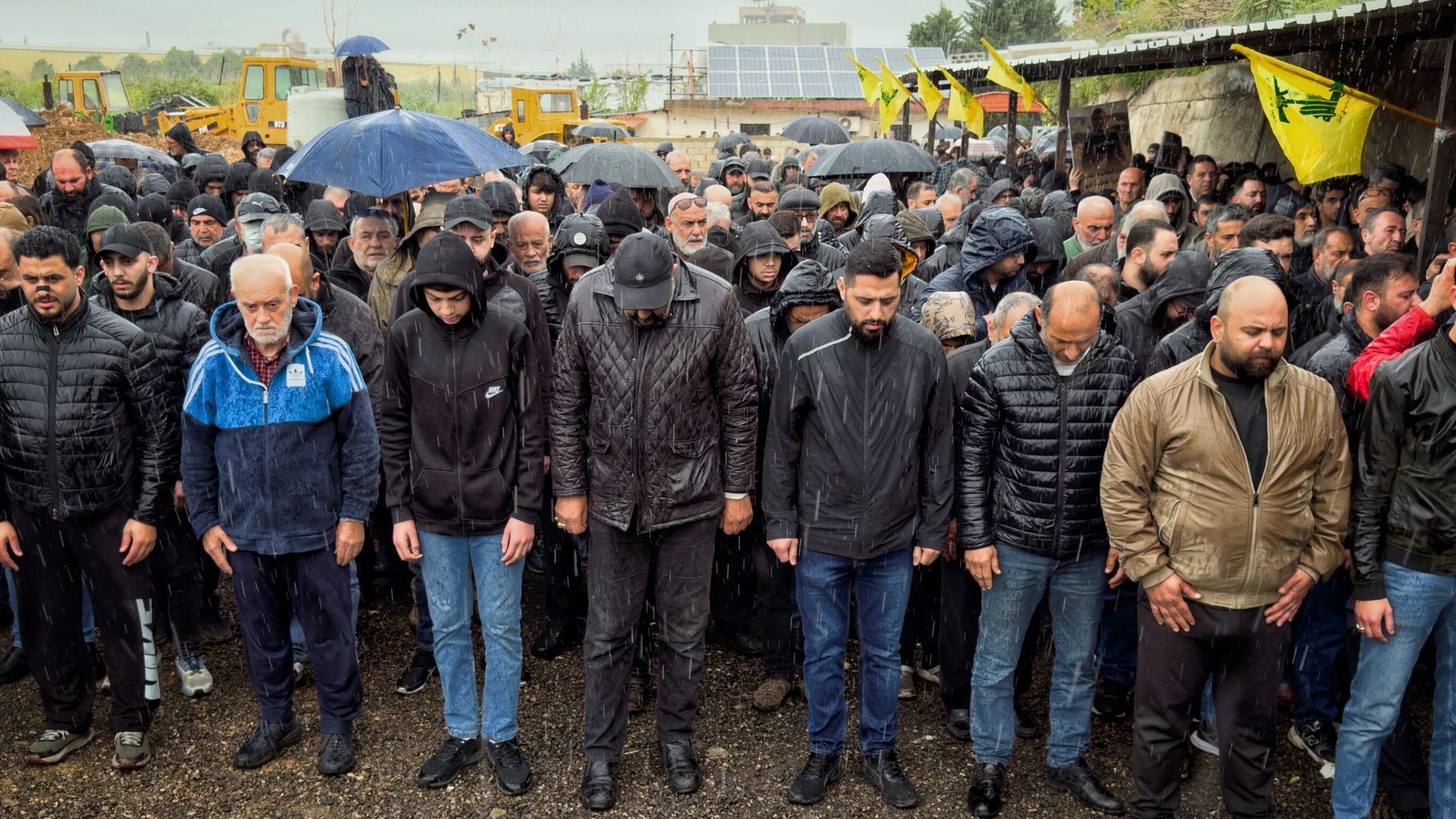
Hundreds of mourners gather in pouring rain for funerals of Lebanon journalists
#Lebanese journalists #Israeli strikes #Beirut funerals #Southern Lebanon conflict #Press freedom #Media casualties #Middle East tensions
📌 Key Takeaways
- Three journalists killed in Israeli strikes in southern Lebanon
- Hundreds attended funerals in Beirut despite heavy rain
- Incident highlights dangers for journalists in conflict zones
- Escalating tensions between Israel and Lebanon
📖 Full Retelling
🏷️ Themes
Conflict Journalism, Civilian Casualties, International Relations
📚 Related People & Topics
Freedom of the press
Freedom of communication and expression through various media
Freedom of the press or freedom of the media is the fundamental principle that communication and expression through various media, including printed and electronic media, especially published materials, should be considered a right to be exercised freely. Such freedom implies no or minimal censorshi...

Israeli Air Force
Aerial and space service branch of the Israel Defense Forces
The Israeli Air Force (IAF; Hebrew: זְרוֹעַ הָאֲוִיר וְהֶחָלָל, romanized: Zroa HaAvir VeHahalal, lit. 'Air and Space Arm', commonly known as חֵיל הָאֲוִיר, Kheil HaAvir, "Air Corps") operates as the aerial and space warfare branch of the Israel Defense Forces (IDF). It was founded on May 28, 1948,...
Entity Intersection Graph
Connections for Freedom of the press:
Mentioned Entities
Deep Analysis
Why It Matters
This incident matters as it highlights the escalating dangers faced by journalists in conflict zones, particularly in the volatile Israel-Lebanon border region. The deaths of these media workers represent not only a tragic loss of life but also a direct threat to press freedom and the public's right to information from conflict areas. This affects not only the families and colleagues of the journalists but also the global community's understanding of the conflict as independent voices documenting events are increasingly targeted.
Context & Background
- Israel and Lebanon have a long history of conflict, including the 2006 Lebanon War which caused significant destruction
- The border region between Israel and Lebanon has remained volatile for decades with periodic exchanges of fire
- Journalists in conflict zones face significant risks, with Reporters Without Borders consistently ranking conflict regions poorly for press freedom
- Southern Lebanon is largely controlled by Hezbollah, which has fought multiple conflicts with Israel since the 1990s
- The Israeli military has previously been criticized for strikes resulting in civilian casualties, including media workers
- Lebanon has been facing severe economic and political crises since 2019, exacerbating regional tensions
What Happens Next
We can expect increased international attention on the safety of journalists in conflict zones, with investigations likely by international media organizations and human rights groups. The incident may lead to diplomatic pressure on Israel regarding its rules of engagement in border areas. Media organizations will likely implement enhanced safety protocols for journalists covering the Israel-Lebanon border, and the funerals may serve as a rallying point for protests against Israeli military actions in Lebanon.
Frequently Asked Questions
The article does not release the identities of the journalists, indicating that their names may not have been officially confirmed or released at the time of reporting.
According to the report, the journalists were covering events in the volatile border region between Israel and Lebanon when they became victims of the Israeli military action.
This incident highlights the extreme dangers journalists face in conflict zones, potentially deterring media organizations from sending reporters to such areas and limiting the world's understanding of events on the ground.
Israel and Lebanon have a history of conflict dating back to the 1982 Lebanon War, with ongoing tensions particularly along the border region and involving the Lebanese militant group Hezbollah.
International media and human rights organizations may condemn the attacks, call for investigations, and pressure both Israel and Lebanon to ensure the safety of journalists operating in the conflict zone.
Journalists in this region face risks from both Israeli military operations and potential actions by armed groups like Hezbollah, as well as the general dangers of operating in an active conflict zone with cross-border shelling and strikes.