
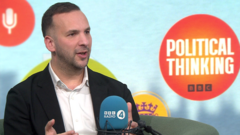
I want to hold balance of power at next general election, says Zack Polanski
#Zack Polanski #balance of power #general election #coalition #minority government #political influence #UK politics
📌 Key Takeaways
- Zack Polanski aims to hold the balance of power in the next UK general election.
- He is positioning himself as a key figure in potential coalition or minority government scenarios.
- This statement reflects strategic political ambitions ahead of the election.
- It highlights the potential influence of smaller parties or independent candidates in shaping government.
📖 Full Retelling
🏷️ Themes
UK Politics, Election Strategy
📚 Related People & Topics

Zack Polanski
British politician (born 1982)
Zack Polanski (born David Paulden; 2 November 1982) is a British politician who has been the Leader of the Green Party of England and Wales since September 2025, succeeding the joint leadership of Carla Denyer and Adrian Ramsay, and a member of the London Assembly (AM) since May 2021. Before being e...
Entity Intersection Graph
Connections for Zack Polanski:
Mentioned Entities
Deep Analysis
Why It Matters
This statement matters because it signals a potential shift in UK political dynamics, where smaller parties like the Greens could become kingmakers in a hung parliament. It affects voters considering tactical voting, major political parties needing to negotiate, and the overall direction of environmental and social policies. If successful, this could give the Green Party unprecedented influence over government formation and policy agendas.
Context & Background
- The UK operates under a first-past-the-post electoral system that traditionally favors two major parties (Conservative and Labour)
- The Green Party currently has one MP in the House of Commons but has seen growing support in local elections and European elections
- The 2010 general election resulted in a coalition government between Conservatives and Liberal Democrats after no party won a majority
- Recent polling suggests the next election could produce another hung parliament with no single party achieving 326 seats
What Happens Next
The Green Party will likely intensify campaigning in target constituencies while positioning themselves as potential coalition partners. Expect increased media scrutiny of their policy positions and potential 'deal-breaker' demands. If polls continue showing a tight race, both Labour and Conservatives may begin informal discussions with smaller parties about post-election scenarios ahead of the expected 2024 general election.
Frequently Asked Questions
Balance of power refers to a situation where no single party has a parliamentary majority, giving smaller parties decisive influence over which major party forms a government. This typically involves coalition agreements or confidence-and-supply arrangements where smaller parties support a government in exchange for policy concessions.
While ambitious, it's plausible given current polling showing potential for a hung parliament. The Greens would need to significantly increase their parliamentary representation from one to likely 10+ MPs to have meaningful leverage, which would require breakthroughs in specific constituencies where they have strong local support.
The Greens would likely demand stronger climate action, including faster net-zero timelines and renewable energy investment, plus progressive social policies like improved renters' rights and wealth taxation. Their specific demands would depend on which major party they're negotiating with and the parliamentary arithmetic.
Yes, smaller parties have held balance of power several times, most notably when Liberal Democrats formed a coalition with Conservatives in 2010. The Democratic Unionist Party also provided confidence-and-supply to Theresa May's government in 2017-19. However, the Greens have never been in this position at Westminster.
Green Party influence would likely accelerate climate legislation and environmental protections, potentially including more ambitious emissions targets, nature restoration requirements, and restrictions on fossil fuel development. Their leverage could make environmental policy a central component of any government agreement.