
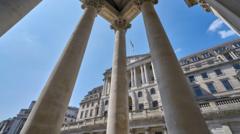
Impact of Iran war expected to bring hold in interest rates
#Iran war #interest rates #Bank of England #monetary policy #economic uncertainty #rate hold #geopolitical impact
📌 Key Takeaways
- Bank of England kept interest rates unchanged despite expectations for a cut
- Analysts had predicted a rate reduction before Iran conflict escalated
- Geopolitical tensions from Iran war influenced monetary policy decision
- Central bank prioritized economic stability amid uncertainty
📖 Full Retelling
🏷️ Themes
Monetary Policy, Geopolitical Economics, Economic Uncertainty
📚 Related People & Topics
List of wars involving Iran
This is a list of wars involving the Islamic Republic of Iran and its predecessor states. It is an unfinished historical overview.

Bank of England
Central bank of the United Kingdom
The Bank of England is the central bank of the United Kingdom and the model on which most modern central banks have been based. Established in 1694 to act as the English Government's banker and debt manager, and still one of the bankers for the government of the United Kingdom, it is the world's sec...
Entity Intersection Graph
Connections for List of wars involving Iran:
Mentioned Entities
Deep Analysis
Why It Matters
The Bank of England's decision to hold interest rates impacts millions of UK borrowers and savers, potentially keeping mortgage and loan costs higher than expected. This demonstrates how geopolitical events can override domestic economic indicators when setting monetary policy. The Iran conflict has introduced new economic uncertainties that are affecting central bank decisions globally, with ripple effects throughout the financial system.
Context & Background
- The Bank of England had been gradually increasing interest rates since late 2021 to combat high inflation
- Prior to the Iran conflict escalation, UK inflation had shown signs of cooling from recent peaks
- Global oil prices are particularly sensitive to geopolitical tensions in the Middle East, a major oil-producing region
- Central banks typically balance inflation control with economic growth considerations when setting rates
- The UK economy had been experiencing modest growth, which would normally suggest accommodative monetary policy
- Geopolitical events have historically impacted financial markets and central bank decisions
What Happens Next
The Bank of England is likely to maintain a wait-and-see approach, closely monitoring the geopolitical situation and its economic impacts. Financial markets may adjust their expectations for future rate cuts, potentially leading to higher mortgage and loan rates in the near term. If the Iran conflict escalates further or disrupts oil supplies significantly, the central bank may hold rates for an extended period. The next monetary policy meeting is scheduled for August 1, 2024, where policymakers will reassess the economic landscape.
Frequently Asked Questions
The central bank maintained rates due to escalating tensions with Iran, which introduced new economic uncertainties that policymakers deemed too significant to address with monetary easing at this time.
The decision to hold rates means mortgage rates and other borrowing costs are likely to remain higher than they would have been if a rate cut had occurred, potentially increasing monthly payments for homeowners and businesses.
The Iran conflict introduces potential disruptions to oil supplies and heightened market volatility, which could impact consumer and business confidence, making the central bank more cautious about easing monetary policy.
Higher-than-expected interest rates could cool the UK housing market by making mortgages more expensive, potentially reducing demand and slowing price growth in the property sector.
The central bank will likely monitor oil prices, inflation data, economic growth indicators, and the evolution of the geopolitical situation in the Middle East to determine future monetary policy decisions.