
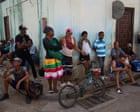
In the other US target of regime change, Cuba, I saw real hardship – and resilience | Sara Kozameh
#Cuba #US sanctions #regime change #economic hardship #resilience #Sara Kozameh #foreign policy
📌 Key Takeaways
- Cuba faces significant economic hardship due to US sanctions and regime change policies.
- Despite challenges, Cuban society demonstrates notable resilience and adaptability.
- The article highlights the daily struggles of Cubans, including shortages and economic instability.
- Sara Kozameh's firsthand observations provide a human perspective on the impact of US foreign policy.
📖 Full Retelling
🏷️ Themes
Economic Hardship, Resilience
Entity Intersection Graph
No entity connections available yet for this article.
Deep Analysis
Why It Matters
This article matters because it provides firsthand insight into the human impact of U.S. sanctions and regime change policies on ordinary Cubans, challenging simplistic political narratives. It affects Cuban citizens living under economic hardship, U.S. policymakers shaping foreign relations, and global observers of international diplomacy. The perspective highlights how geopolitical conflicts translate into daily struggles for resilience, making it crucial for understanding the real-world consequences of foreign policy decisions.
Context & Background
- The U.S. has maintained an economic embargo against Cuba since 1960, making it one of the longest-standing sanctions in modern history.
- Cuba experienced a 'Special Period' of extreme economic crisis in the 1990s following the collapse of the Soviet Union, its main ally and trading partner.
- The U.S. has attempted multiple regime change operations against Cuba, including the failed Bay of Pigs invasion in 1961 and ongoing covert activities.
- Recent years have seen fluctuating U.S.-Cuba relations, with Obama-era openings partially reversed by subsequent administrations.
- Cuba faces chronic shortages of food, medicine, and basic goods exacerbated by U.S. sanctions and internal economic challenges.
What Happens Next
Continued economic pressure on Cuba may intensify migration flows to the U.S. and regional instability. Upcoming U.S. elections could bring policy shifts depending on which party controls foreign policy. Cuba's government will likely pursue closer ties with alternative partners like Russia, China, and Venezuela to mitigate sanctions impacts. International calls for lifting the embargo may grow louder as humanitarian concerns mount.
Frequently Asked Questions
Sanctions severely limit access to medicine, food imports, and essential goods, creating daily hardships. They restrict Cuba's ability to engage in international trade and finance, crippling economic development. Ordinary citizens bear the brunt through shortages, inflation, and limited opportunities.
The policy persists due to historical Cold War animosities, powerful Cuban-American political constituencies in Florida, and ideological opposition to Cuba's socialist system. Successive administrations have feared political backlash from changing course, despite changing global dynamics and humanitarian concerns.
Cubans demonstrate resilience through informal economies, community support networks, and creative problem-solving with limited resources. Many maintain strong social connections and cultural traditions despite material hardships, adapting to constant scarcity with ingenuity and collective effort.
Alternatives include gradual normalization of relations, targeted sanctions relief for humanitarian sectors, or complete embargo removal. Some advocate for engagement similar to Obama-era policies, while others suggest multilateral approaches through regional organizations.
The government implements rationing systems, promotes import substitution, and seeks alternative trading partners. It emphasizes self-sufficiency rhetoric while making limited economic reforms, though these often fail to address systemic issues exacerbated by external sanctions.