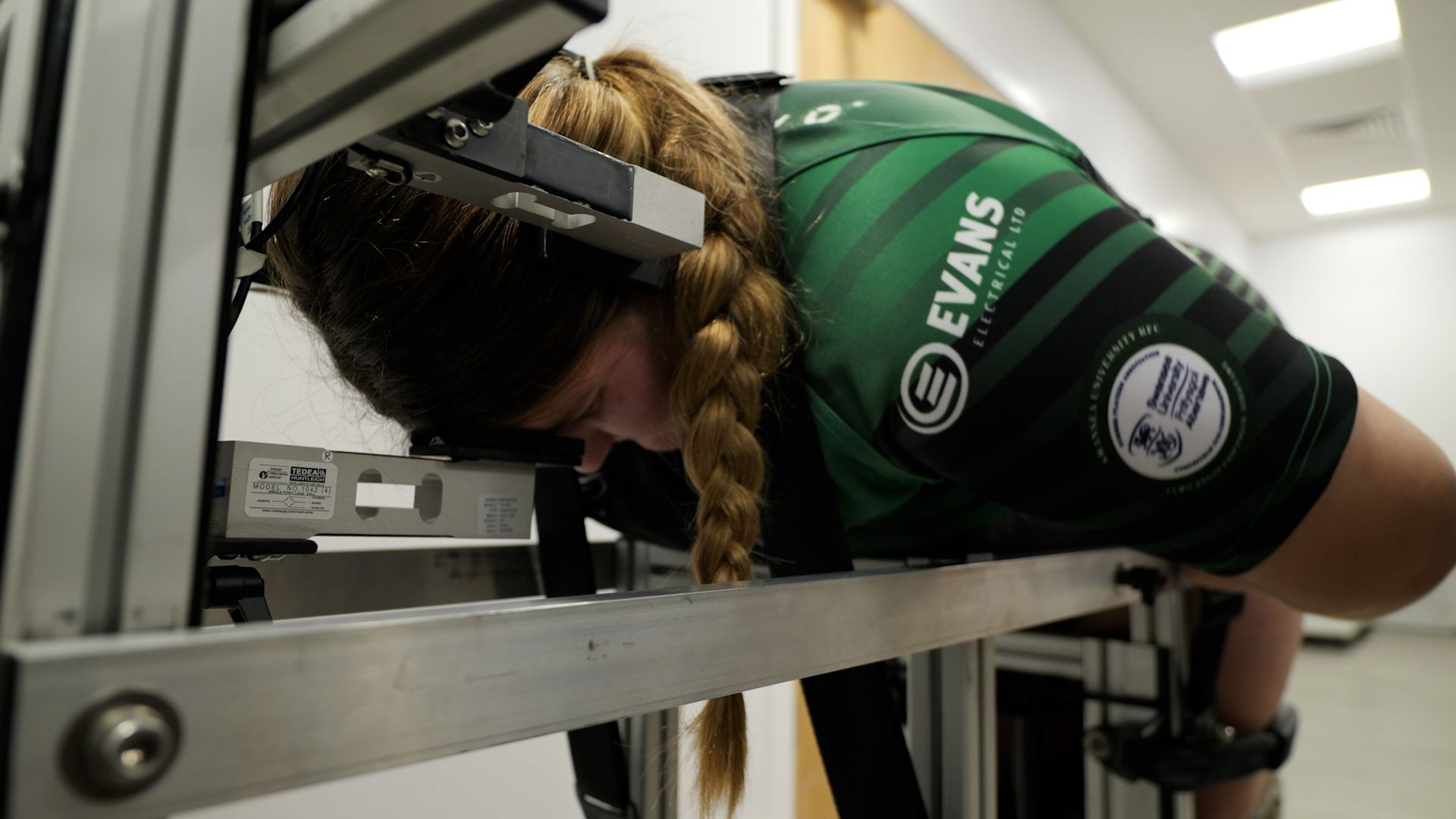
Swansea University is researching neck strength in female rugby players to prevent concussions
Research has revealed women experience different head trauma patterns than men in rugby
Former players like Non Evans are experiencing neurological symptoms from their careers
World Rugby has made women's player welfare research a top priority
Despite concussion risks, the sport offers significant benefits to young women
📖 Full Retelling
At Swansea University laboratory in Wales, researchers led by Dr. Elisabeth Williams are conducting groundbreaking studies on neck strength in female rugby players to address concussion risks, with funding from World Rugby, as the women's game experiences unprecedented growth following England's 'Red Roses' World Cup victory in 2025. Four female student rugby players strapped face-down onto specialized machines that test neck strength in multiple directions represent the human element of this crucial research, which aims to fill a significant gap in sports medicine. The laboratory work has revealed that female rugby players experience different types of head trauma compared to their male counterparts, particularly the frequent head-to-ground impacts that cause whiplash injuries not well-documented in previous research primarily focused on elite male players. 'Fifteen or 20 times a game, for university women, we saw these direct head-to-ground impacts, where the head would just whiplash and hit the ground very hard,' Dr. Williams explained, highlighting how the different biomechanics of female necks make them more susceptible to concussion under similar forces. This research comes amid growing concerns about long-term neurological damage in rugby, with former Welsh international Non Evans joining the hundreds of players who have filed lawsuits against rugby governing bodies, describing how she initially attributed her symptoms of forgetfulness, headaches, and emotional distress to menopause before realizing they were likely concussion-related. World Rugby has responded to these concerns by making women's specific player welfare research a top priority and implementing a policy requiring any funded research to include at least 50% female players, recognizing that 'the women's game and women player welfare are very different to men.' At the grassroots level, clubs like Winnington Park Rugby Club are witnessing firsthand the changing attitudes toward concussion, with parents and coaches showing increased awareness about the potential repercussions of head injuries while still recognizing the immense benefits the sport provides for young women's physical and mental development.
🏷️ Themes
Women's rugby safety, Concussion research, Gender differences in sports medicine, Player welfare
Public university in Swansea, Wales, United Kingdom
Swansea University (Welsh: Prifysgol Abertawe) is a public research university located in Swansea, Wales, United Kingdom. It was established as University College of Swansea in 1920, as the fourth college of the University of Wales. In 1996, it changed its name to the University of Wales Swansea fol...
International governing body of rugby union and its variants
World Rugby is the governing body for the sport of rugby union. World Rugby organises the Rugby World Cup every four years, the sport's most recognised and most profitable competition. It also organises a number of other international competitions, such as the World Rugby Sevens Series, the Rugby Wo...
The study addresses a critical gap in women's rugby safety by linking neck strength to concussion risk, offering a science‑based way to protect players. It also highlights the need for gender‑specific research and could influence training, equipment and regulations for the growing women's game.
Context & Background
Women's rugby popularity surged after the 2025 World Cup
Neck strength is key to preventing concussions
Past safety research focused mainly on men
Swansea University lab tests neck strength in female players
World Rugby is funding women‑specific player welfare studies
What Happens Next
The findings will be used to develop targeted neck‑strengthening programs for female players at all levels. Rugby authorities may revise training guidelines and consider equipment changes to reduce head impacts. Continued research will monitor long‑term health outcomes and inform policy updates.
Frequently Asked Questions
Why is neck strength important for rugby players?
A stronger neck reduces the force transferred to the brain during a collision, lowering the likelihood of concussions and long‑term neurological damage.
How will this research affect women's rugby?
It will lead to tailored conditioning programs, safer play protocols, and could prompt rule changes that protect female athletes.
What steps are being taken to improve safety?
World Rugby is funding studies with at least 50% female participants, and clubs are adopting neck‑strengthening drills and better concussion monitoring.
Will there be changes to training or equipment?
Yes, coaches will incorporate neck‑strength exercises, and future gear may include protective headgear designed for women's biomechanics.
}
Original Source
'I'd have headaches. I felt sick, emotional': Inside the lab tackling the head trauma imbalance in women's rugby The success of England's 'Red Roses' in last year's Women's Rugby World Cup fuelled a boom in the sport's popularity. But safety research has, until now, been heavily focused on the men's game. Greg Milam Chief North of England correspondent @GregMilamSky Saturday 21 February 2026 02:56, UK 8:22 Share Is rugby safe for women and girls? Why you can trust Sky News In a white-walled university laboratory, four female student rugby players are strapped face-down onto what look like upside-down rowing machines. As belts are tightened across their backs, sensors are adjusted to fit snugly around their heads. It isn't the most dignified way to spend a Thursday afternoon, but the research at Swansea University could be fundamental to the future of women's rugby . The machines test the strength of the players' necks, both forward and back, and side-to-side. Neck strength in women players has emerged as a significant factor in preventing concussions and any resulting neurological damage. Sky News has been given exclusive access to the university's work, which is funded by the governing body World Rugby, at a time when the sport is growing in popularity among women and girls. The success of England's 'Red Roses' in last year's World Cup fuelled a boom in the sport's popularity. But safety research has, until now, been heavily focused on the men's game. "Fifteen or 20 times a game, for university women, we saw these direct head-to-ground impacts, where the head would just whiplash and hit the ground very hard," said Dr Elisabeth Williams, the university's programme director for sport and exercise science. "That hadn't previously been documented as a primary mechanism of head trauma in rugby because most of those studies were done at the elite level and mostly in males." That imbalance in research between the men's and women's game is now being corrected. "Males tend ...