
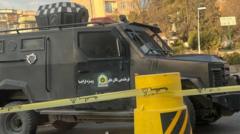
Iran taking steps to prevent anti-establishment protests, Tehran residents tell BBC
#Iran #protests #Tehran #surveillance #internet restrictions #dissent #BBC
📌 Key Takeaways
- Iran is implementing measures to prevent anti-establishment protests
- Tehran residents report increased security presence and surveillance
- Authorities are restricting internet access and social media platforms
- The government aims to suppress dissent following recent unrest
📖 Full Retelling
🏷️ Themes
Political repression, Civil unrest
Entity Intersection Graph
No entity connections available yet for this article.
Deep Analysis
Why It Matters
This news matters because it reveals ongoing government efforts to suppress dissent in Iran, affecting citizens' fundamental rights to free expression and assembly. It highlights the persistent tension between the Iranian establishment and segments of the population dissatisfied with political and economic conditions. The situation impacts Iran's internal stability and its international reputation regarding human rights. This also concerns global observers monitoring civil liberties and potential social unrest in a strategically important region.
Context & Background
- Iran has experienced periodic waves of anti-government protests, notably in 2009 (Green Movement), 2017-2018 (economic protests), and 2022-2023 (following Mahsa Amini's death).
- The Iranian government maintains strict control over public gatherings and online expression through entities like the Islamic Revolutionary Guard Corps (IRGC) and cyber police.
- International human rights organizations have repeatedly criticized Iran for suppressing dissent, with reports of internet shutdowns, arrests, and use of force during protests.
What Happens Next
Increased surveillance and preventive arrests may occur around sensitive dates or anniversaries of past protests. The government might implement temporary internet restrictions or block social media platforms. If protests nonetheless emerge, there could be renewed international condemnation and potential sanctions discussions in bodies like the UN Human Rights Council.
Frequently Asked Questions
The government views organized protests as threats to national security and stability, fearing they could escalate into broader challenges to the political system. Authorities often cite foreign interference as justification for preventive measures.
Typical measures include increased police presence, internet throttling or shutdowns, preemptive arrests of activists, and monitoring social media. The government may also deploy Basij militia forces in public spaces.
Citizens face restricted freedom of expression, fear of retaliation for dissent, and limited access to information. Economic impacts may worsen if international sanctions intensify due to human rights concerns.
As an international broadcaster, the BBC provides external reporting on Iran when local media face restrictions. Such reporting brings global attention to issues that state-controlled Iranian media might not cover.