
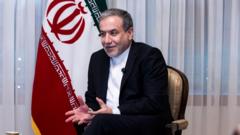
Iran warns UK letting US use bases is 'participation in aggression'
#Iran #UK #US #military bases #aggression #warning #regional tensions
📌 Key Takeaways
- Iran warns the UK that allowing US use of its military bases constitutes participation in aggression.
- The warning follows reports of the UK permitting US access to its bases for potential operations.
- Iran frames the action as escalatory and a direct involvement in hostile activities.
- The statement reflects heightened regional tensions and Iran's stance against perceived Western military threats.
🏷️ Themes
International Tensions, Military Diplomacy
📚 Related People & Topics

Iran
Country in West Asia
# Iran **Iran**, officially the **Islamic Republic of Iran** and historically known as **Persia**, is a sovereign country situated in West Asia. It is a major regional power, ranking as the 17th-largest country in the world by both land area and population. Combining a rich historical legacy with a...

United States
Country primarily in North America
The United States of America (USA), also known as the United States (U.S.) or America, is a country primarily located in North America. It is a federal republic of 50 states and a federal capital district, Washington, D.C. The 48 contiguous states border Canada to the north and Mexico to the south, ...

United Kingdom
Country in northwestern Europe
The United Kingdom of Great Britain and Northern Ireland, commonly known as the United Kingdom (UK) or Britain, is a country in northwestern Europe, off the coast of the continental mainland. It comprises England, Scotland, Wales and Northern Ireland, with a population of over 69 million in 2024. Th...
Entity Intersection Graph
Connections for Iran:
Mentioned Entities
Deep Analysis
Why It Matters
This warning escalates tensions in the Middle East and directly threatens UK interests, potentially drawing Britain into regional conflicts it seeks to avoid. It affects UK foreign policy decisions, military personnel stationed in the region, and commercial interests operating near Persian Gulf shipping lanes. The statement also impacts global energy markets concerned about potential disruptions to oil transit through the Strait of Hormuz, through which 20% of the world's oil passes.
Context & Background
- Iran and the US have been adversaries since the 1979 Iranian Revolution, with tensions escalating after the US withdrawal from the 2015 nuclear deal in 2018
- The UK maintains military bases in Cyprus, Bahrain, and Oman that could potentially support US operations in the region
- Iran has previously threatened regional neighbors who host US forces, including Iraq and Gulf Arab states
- The UK-Iran relationship has been strained since 2019 when Iran seized a British-flagged tanker in the Strait of Hormuz
- Iran possesses missile capabilities that can reach US bases throughout the Middle East, creating regional security concerns
What Happens Next
The UK will likely issue a diplomatic response reaffirming its sovereign right to determine base usage while attempting to de-escalate tensions. Security around UK bases in the region will probably be enhanced, and the UK may conduct additional naval patrols in the Persian Gulf. If regional tensions escalate further, the UK could face difficult choices between supporting its US ally and avoiding direct confrontation with Iran.
Frequently Asked Questions
Iran is likely referring to UK bases in Cyprus (RAF Akrotiri), Bahrain (UK Naval Support Facility), and Oman, which have historically supported US and allied operations in the Middle East. These strategic locations provide logistical support and intelligence capabilities for regional military activities.
Iran's warning represents a significant escalation in rhetoric that could precede concrete actions like missile tests or naval provocations. While Iran frequently uses aggressive rhetoric, their capability to target regional bases and disrupt shipping makes this more than empty threats, particularly given their history of asymmetric warfare.
The UK has longstanding defense agreements with the US through NATO and bilateral arrangements that include intelligence sharing and logistical support. However, the UK maintains sovereign control over its bases and can restrict their usage, though doing so would strain the 'special relationship' between the two allies.
Increased tensions could lead to higher insurance premiums for ships transiting the Persian Gulf and potential rerouting of cargo. Iran has previously seized commercial vessels in retaliation for perceived Western aggression, creating risks for the approximately 30% of global seaborne oil that passes through the Strait of Hormuz.
The UK can engage Iran through remaining Joint Comprehensive Plan of Action (nuclear deal) participants like France and Germany, or through Oman which has historically mediated between Iran and Western nations. Direct UK-Iran diplomatic relations exist but are currently limited following multiple incidents in recent years.