
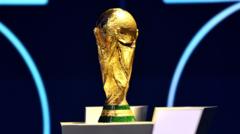
Iranian minister says country will not play in World Cup
#Iran #World Cup #sports minister #boycott #international sports #political decision #withdrawal
📌 Key Takeaways
- Iran's sports minister announced the country will not participate in the upcoming World Cup.
- The decision reflects a political stance, though specific reasons were not detailed in the article.
- This withdrawal impacts Iran's international sports presence and World Cup tournament dynamics.
- The announcement highlights ongoing tensions between Iran and global sporting bodies.
📖 Full Retelling
🏷️ Themes
Sports boycott, International relations
📚 Related People & Topics

World cup
International sports competition where competitors represent their nation
A world cup is a global sporting competition in which the participant entities – usually international teams or individuals representing their countries – compete for the title of world champion. The event most associated with the name is the FIFA World Cup for association football, which dates back...

Iran
Country in West Asia
# Iran **Iran**, officially the **Islamic Republic of Iran** and historically known as **Persia**, is a sovereign country situated in West Asia. It is a major regional power, ranking as the 17th-largest country in the world by both land area and population. Combining a rich historical legacy with a...
Entity Intersection Graph
Connections for World cup:
View full profileMentioned Entities
Deep Analysis
Why It Matters
This announcement matters because it represents a significant political statement through sports, potentially affecting Iran's international relations and the global sporting community. It impacts Iranian athletes who have trained for this opportunity, FIFA's tournament planning, and fans worldwide who anticipated seeing Iran compete. The decision also signals how geopolitical tensions can spill into international sporting events, setting a precedent for other nations considering similar boycotts.
Context & Background
- Iran has participated in six FIFA World Cup tournaments since 1978, with their best performance reaching the group stage.
- Sports boycotts have historical precedents, such as the 1980 Moscow Olympics boycott led by the United States and the 1976 African boycott of the Montreal Olympics.
- Iran's national football team has previously faced political controversies, including protests during the 2022 World Cup in Qatar related to domestic unrest in Iran.
What Happens Next
FIFA will likely need to adjust tournament brackets and schedules, potentially allowing another team to qualify. Iranian players may seek individual opportunities with international clubs. Diplomatic efforts might emerge to reverse the decision before the tournament begins. The announcement could inspire other nations to consider similar political statements through sports boycotts.
Frequently Asked Questions
FIFA must reorganize the tournament format, potentially promoting another team from qualifying rounds or inviting a replacement nation. This affects group compositions, scheduling, and broadcasting arrangements for the entire event.
Iranian players lose their highest-profile international platform, potentially damaging career opportunities and visibility. Some players might consider representing other nations or focusing exclusively on club careers abroad.
Yes, political decisions involving sports boycotts sometimes change with diplomatic negotiations or domestic pressure. However, such reversals typically require significant political concessions or changes in circumstances.
Iran has previously boycotted events involving Israeli participation due to political tensions, but this would be their first boycott of a FIFA World Cup tournament since beginning participation in 1978.
This demonstrates Iran's willingness to use sports as political leverage, potentially encouraging other nations to follow similar approaches. It also highlights how geopolitical conflicts increasingly impact international sporting events.