
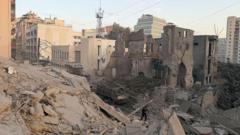
Israel strikes and destroys building in heart of Beirut
#Israel #Beirut #airstrike #building destruction #urban attack #Middle East #escalation
📌 Key Takeaways
- Israeli military conducted a strike in central Beirut, destroying a building.
- The attack targeted a specific structure in a densely populated urban area.
- No immediate reports of casualties or broader damage were provided.
- The incident escalates regional tensions amid ongoing conflicts.
📖 Full Retelling
🏷️ Themes
Military Conflict, Regional Tensions
Entity Intersection Graph
No entity connections available yet for this article.
Deep Analysis
Why It Matters
This strike represents a significant escalation in regional tensions, directly threatening civilian infrastructure in a major Middle Eastern capital. It affects Lebanese civilians living in Beirut, regional stability across the Israel-Lebanon border, and international diplomatic efforts to prevent wider conflict. The attack could trigger retaliatory actions from Hezbollah or other militant groups based in Lebanon, potentially spiraling into broader regional warfare. It also undermines Lebanon's fragile sovereignty and economic recovery efforts amid ongoing political and financial crises.
Context & Background
- Israel and Hezbollah have engaged in periodic cross-border clashes since the 2006 Lebanon War, which killed approximately 1,200 Lebanese and 165 Israelis
- Beirut has been targeted by Israeli airstrikes before, including the 2006 bombing that destroyed much of the city's southern suburbs (Dahiyeh)
- Lebanon has been experiencing severe political and economic crises since 2019, with its currency losing over 95% of its value and government institutions barely functional
- Hezbollah maintains significant military infrastructure in Beirut, including command centers and weapons depots, despite UN resolutions calling for its disarmament
- The current tensions follow Hamas's October 7 attack on Israel and subsequent Gaza war, with Hezbollah launching rockets in support of Hamas
What Happens Next
Hezbollah will likely retaliate with rocket attacks on northern Israel within 24-48 hours, potentially targeting military or civilian infrastructure. The United Nations and international mediators (particularly the U.S. and France) will urgently call for de-escalation and may propose diplomatic interventions. Lebanon may file a complaint with the UN Security Council, though previous such actions have yielded limited results. If retaliation escalates, Israel could launch broader strikes against Hezbollah targets across Lebanon, risking full-scale war.
Frequently Asked Questions
Israel likely targeted a building housing Hezbollah military infrastructure, command centers, or weapons storage. Previous strikes have focused on eliminating specific threats or retaliating for attacks from Lebanese territory, though targeting central Beirut represents an escalation beyond typical border-area strikes.
Civilians face immediate danger from explosions, collapsing buildings, and potential follow-up strikes. The attack will deepen economic crisis by discouraging investment and tourism, while potentially displacing residents near targeted areas and straining Lebanon's already overwhelmed infrastructure.
While both sides have previously avoided all-out war since 2006, this escalation increases that risk significantly. Much depends on Hezbollah's response scale and whether international mediators can secure rapid de-escalation, but the current regional context makes miscalculation more likely.
Hezbollah will almost certainly retaliate with rocket and drone attacks on northern Israel, potentially targeting military bases or civilian areas. Their response scale will signal whether they seek controlled escalation or are willing to risk broader conflict, with possibilities ranging from symbolic strikes to major barrages.
The U.S. and European allies will urge restraint while likely supporting Israel's right to self-defense against Hezbollah threats. Arab states will condemn the strike as violation of Lebanese sovereignty, while Iran may pledge increased support for Hezbollah, further complicating regional diplomacy.