
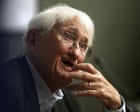
Jürgen Habermas, German philosopher and sociologist, dies aged 96
#Jürgen Habermas #German philosopher #sociologist #critical theory #communication theory #political philosophy #obituary
📌 Key Takeaways
- Jürgen Habermas, a leading German philosopher and sociologist, has died at age 96.
- He was a central figure in contemporary social theory and philosophy.
- His work significantly influenced critical theory, communication theory, and political philosophy.
- His death marks the end of an era for modern European intellectual thought.
📖 Full Retelling
🏷️ Themes
Philosophy, Sociology, Obituary
Entity Intersection Graph
No entity connections available yet for this article.
Deep Analysis
Why It Matters
Habermas's death marks the loss of one of the most influential public intellectuals of the 20th and 21st centuries, whose work on communicative action, deliberative democracy, and the public sphere fundamentally shaped political philosophy, sociology, and critical theory. His ideas on rational discourse and democratic legitimacy remain essential for understanding modern societies, media, and governance, affecting academics, policymakers, and activists globally. This event prompts reflection on his enduring legacy in debates about truth, ethics, and social cohesion in an increasingly fragmented world.
Context & Background
- Jürgen Habermas was a leading figure of the Frankfurt School of critical theory, succeeding thinkers like Theodor Adorno and Max Horkheimer.
- He developed the theory of communicative action, emphasizing rational discourse and consensus-building as foundations for democracy and social progress.
- Habermas's concept of the public sphere, introduced in his 1962 work 'The Structural Transformation of the Public Sphere,' analyzes how media and communication shape democratic participation.
- He was a prominent public intellectual in post-war Germany, engaging in debates on issues like European integration, secularism, and human rights.
- His work bridged philosophy and sociology, influencing fields such as political science, law, education, and media studies worldwide.
- Habermas received numerous accolades, including the Kyoto Prize and the Prince of Asturias Award, cementing his status as a global thought leader.
What Happens Next
In the coming weeks, tributes, academic conferences, and publications will likely honor Habermas's legacy, with obituaries and analyses from institutions like the University of Frankfurt and the Goethe University. His death may spur renewed interest in his works, potentially leading to new translations, critical editions, or interdisciplinary studies applying his theories to contemporary issues like digital media, populism, and climate change. Long-term, his ideas will continue to be debated and integrated into scholarly and public discourse, influencing future generations of thinkers.
Frequently Asked Questions
Habermas is best known for his theories of communicative action and the public sphere, which argue that rational discourse and open communication are essential for democracy and social cohesion. He also advanced deliberative democracy, emphasizing that legitimate political decisions arise from inclusive, reasoned debate among citizens. His work critiqued instrumental rationality and sought to reconcile modernity with ethical and democratic values.
Habermas's ideas have shaped debates on democracy, media, and civil society, influencing political movements, constitutional law, and educational policies. His concepts are used to analyze the role of social media, public opinion, and institutional trust in contemporary governance. In Europe, his advocacy for a cosmopolitan public sphere contributed to discussions on European Union integration and global justice.
The Frankfurt School was a group of German critical theorists associated with the Institute for Social Research, known for critiquing capitalism, culture, and authoritarianism. Habermas was a second-generation member who expanded its focus to include language, communication, and democracy, moving beyond the more pessimistic views of earlier thinkers like Adorno. He helped renew critical theory by integrating insights from pragmatism, linguistics, and developmental psychology.
Habermas actively engaged in public debates on issues like German reunification, European politics, bioethics, and religion in modern society, writing for newspapers and participating in dialogues. He believed philosophers should contribute to societal enlightenment and democratic discourse, not just academic scholarship. His interventions often addressed urgent political and ethical questions, making his work accessible and relevant to a broad audience.
His theories on communicative action and the public sphere offer tools to analyze challenges like misinformation, polarization, and digital communication in democracies. They provide a framework for promoting deliberative processes in addressing global issues such as climate change, migration, and human rights. Scholars continue to apply his ideas to critique neoliberal economics, technological surveillance, and the erosion of public discourse.