
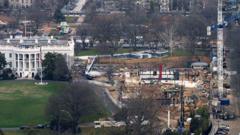
Judge temporarily halts construction of Trump's White House ballroom
#judge #temporary halt #construction #White House ballroom #Trump #lawsuit #legal review
📌 Key Takeaways
- A judge has issued a temporary halt to construction of a ballroom at the White House during the Trump administration.
- The legal action was taken in response to concerns or a lawsuit regarding the project.
- The ruling pauses the building process pending further legal review or resolution.
- The case involves the use of official property and potential procedural or legal violations.
📖 Full Retelling
🏷️ Themes
Legal Intervention, Government Construction
📚 Related People & Topics

White House
Residence and workplace of the US president
# The White House The **White House** is the official residence and principal workplace of the president of the United States. Located at **1600 Pennsylvania Avenue NW** in Washington, D.C., it stands as one of the most recognizable symbols of the American presidency and the United States governmen...

Donald Trump
President of the United States (2017–2021; since 2025)
Donald John Trump (born June 14, 1946) is an American politician, media personality, and businessman who is the 47th president of the United States. A member of the Republican Party, he served as the 45th president from 2017 to 2021. Born into a wealthy New York City family, Trump graduated from the...
Entity Intersection Graph
Connections for White House:
Mentioned Entities
Deep Analysis
Why It Matters
This judicial action matters because it represents a significant check on presidential authority during a transition period, potentially affecting the historical preservation of the White House and setting precedents for executive branch construction projects. It impacts the Trump administration's ability to modify federal property, preservation groups advocating for historical integrity, and taxpayers who fund such projects. The ruling also highlights ongoing tensions between presidential prerogatives and legal/regulatory constraints during administration changes.
Context & Background
- The White House is protected under the National Historic Preservation Act and various executive orders governing federal property modifications
- Presidents have historically made modifications to White House spaces, with some projects like the Truman Balcony and Situation Room becoming permanent fixtures
- The General Services Administration typically oversees federal building projects including presidential residences
- Previous administrations have faced legal challenges over modifications to federal properties, including environmental and historical preservation concerns
- The Trump administration has pursued numerous construction projects on federal properties during its tenure
What Happens Next
The temporary halt will likely lead to expedited court proceedings to determine if construction can resume, with possible appeals regardless of the initial ruling. Preservation groups may seek permanent injunctions, while the administration could attempt to fast-track approvals through alternative regulatory channels. The outcome may influence similar challenges to federal construction projects during future presidential transitions.
Frequently Asked Questions
Federal judges can issue temporary restraining orders and injunctions when plaintiffs demonstrate likely violations of federal laws, such as historic preservation statutes or environmental regulations. The authority stems from the judiciary's role in interpreting and enforcing compliance with existing laws governing federal properties.
Yes, various administrations have faced legal challenges over White House modifications. Most notably, the Truman Balcony addition faced controversy and legal scrutiny, though it ultimately proceeded. Modern presidents typically consult with preservation authorities but aren't immune to legal challenges.
Completed work typically remains in place during legal proceedings, though courts can order restoration if violations are proven. The temporary halt primarily affects ongoing and future construction, with completed portions subject to potential remediation if the project is found non-compliant.
While the article doesn't specify plaintiffs, such cases are typically brought by preservation organizations, historical societies, or sometimes congressional oversight committees. These groups must demonstrate standing by showing how the construction affects their legal interests or the public trust.
The president cannot unilaterally override a federal court order, though the administration can appeal to higher courts or seek emergency stays. Executive branch compliance with judicial orders is fundamental to constitutional separation of powers, though tensions occasionally arise during implementation.