
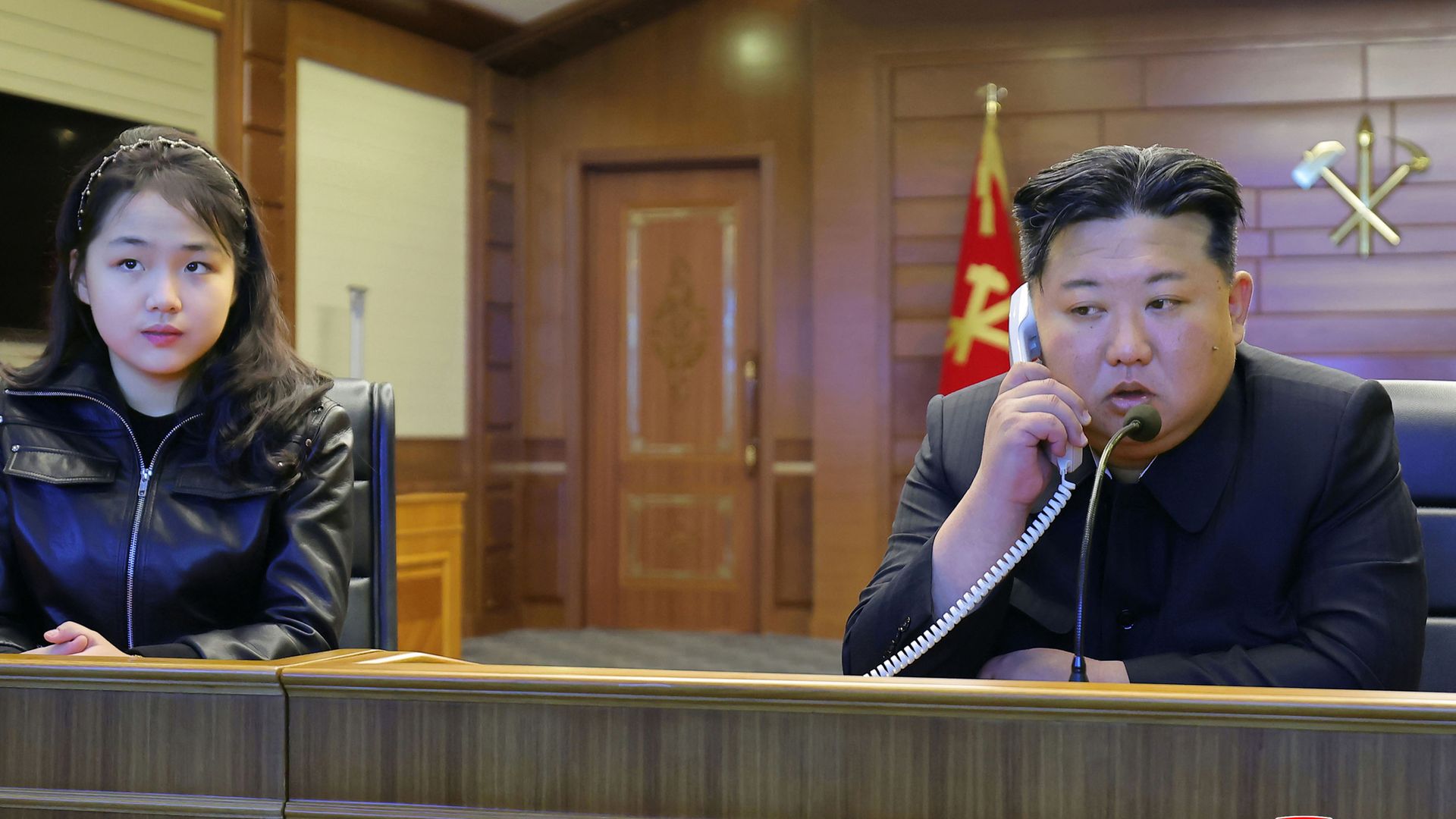
Kim Jong Un watches missile tests with daughter touted as heir
#Kim Jong Un #daughter #missile tests #heir #succession #North Korea #military
📌 Key Takeaways
- Kim Jong Un observed missile tests with his daughter, signaling her potential as his successor.
- The event suggests a possible hereditary succession plan within North Korea's leadership.
- The missile tests demonstrate ongoing military development and show of strength.
- The presence of Kim's daughter at a military event highlights her growing political role.
📖 Full Retelling
🏷️ Themes
North Korean Leadership, Military Display
📚 Related People & Topics

Kim Jong Un
Leader of North Korea since 2011
Kim Jong Un (born 8 January 1983 or 1984) is a North Korean politician who serves as both the general secretary of the Workers' Party of Korea (WPK) and the president of the State Affairs Commission. A member of the Kim family, he is the third supreme leader and dictator of North Korea, as well as t...
Entity Intersection Graph
Connections for Kim Jong Un:
Mentioned Entities
Deep Analysis
Why It Matters
This development is significant because it suggests North Korea may be preparing for a dynastic succession, which could impact the country's future leadership stability and policy direction. It matters to regional security as it signals continuity in North Korea's missile development program despite international sanctions. The international community, particularly South Korea, Japan, and the United States, must monitor this potential succession as it could affect diplomatic negotiations and security calculations on the Korean Peninsula.
Context & Background
- North Korea has been ruled by the Kim dynasty since its founding in 1948, with Kim Il-sung, Kim Jong-il, and Kim Jong-un as successive leaders.
- Kim Jong-un's daughter, believed to be named Kim Ju-ae, first appeared publicly in November 2022 and has since been featured in state media at military and political events.
- North Korea has conducted numerous missile tests in recent years, including intercontinental ballistic missiles capable of reaching the United States mainland.
- Previous leadership transitions in North Korea have been carefully orchestrated over several years with the heir apparent gradually assuming more public roles.
- The country faces extensive international sanctions due to its nuclear weapons and ballistic missile programs.
What Happens Next
We can expect increased appearances by Kim's daughter at state functions throughout 2024, with North Korean media likely building her public profile. The international community will analyze her involvement for clues about succession timing and potential policy directions. Additional missile tests are probable as North Korea continues weapons development while showcasing military achievements to domestic audiences.
Frequently Asked Questions
This serves multiple purposes: it introduces her to the military establishment, demonstrates dynastic continuity to both domestic and international audiences, and reinforces the connection between the Kim family and North Korea's military capabilities. Such appearances help legitimize her potential future role while maintaining the regime's focus on military strength.
Based on available information, Kim Ju-ae is believed to be approximately 10-11 years old. North Korean state media has not officially confirmed her name or exact age, but analysts have identified her through multiple public appearances since late 2022.
While her presence at significant events strongly suggests succession planning, nothing is definitive in North Korean politics until officially announced. The regime may be testing domestic and international reactions while preparing multiple contingency plans, including potential regency arrangements if succession occurs while she's still young.
Succession preparations typically make North Korea more cautious in international negotiations as the regime focuses on internal stability. This development suggests continuity in weapons development priorities and may delay serious diplomatic engagement until leadership transitions are more firmly established.
Most governments have noted the developments without formal comment, while analysts and media extensively discuss the implications. Regional neighbors like South Korea and Japan are monitoring closely for security implications, while China likely views dynastic continuity as preferable to potential instability in a neighboring nuclear state.