
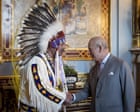
King Charles concerned about Alberta separatist movement, First Nation chief says
#King Charles #Alberta #separatist movement #First Nation #Canada #Indigenous rights #political tension
📌 Key Takeaways
- King Charles expressed concern about Alberta's separatist movement during a meeting with a First Nation chief.
- The chief shared this information publicly, highlighting the King's engagement with Canadian Indigenous issues.
- The discussion underscores the ongoing political tensions around Alberta's potential separation from Canada.
- The King's interest reflects the broader implications of separatist movements on national unity and Indigenous rights.
📖 Full Retelling
🏷️ Themes
Royal Engagement, Separatism
📚 Related People & Topics

Alberta
Province of Canada
Alberta is a province in Canada. It is a part of Western Canada and is one of the three prairie provinces. Alberta is bordered by British Columbia to its west, Saskatchewan to its east, the Northwest Territories to its north, and the U.S. state of Montana to its south.
Indigenous rights
Legal, social, or ethical principles pertaining to indigenous peoples
Indigenous rights are those rights that exist in recognition of the specific condition of indigenous peoples. This includes not only the most basic human rights of physical survival and integrity, but also the rights over their land (including native title), language, religion, and other elements of...
Canada
Country in North America
Canada is a country in North America. Its ten provinces and three territories extend from the Atlantic Ocean to the Pacific Ocean and northward into the Arctic Ocean, making it the second-largest country by total area, with the longest coastline of any country. Its border with the United States is t...
Entity Intersection Graph
Connections for Alberta:
Mentioned Entities
Deep Analysis
Why It Matters
This news matters because it highlights constitutional tensions within Canada that could threaten national unity. It affects Alberta residents, Indigenous communities, federal policymakers, and the monarchy's symbolic role in Canadian governance. The King's reported concern elevates what might otherwise be a provincial issue to one with potential Commonwealth implications, signaling that separatist movements could destabilize Canada's federal structure and international relationships.
Context & Background
- Alberta has a history of Western alienation and separatist sentiment dating back to the 1980s with movements like the Western Canada Concept and Alberta Independence Party.
- The Canadian monarchy, represented by the Governor General and Lieutenant Governors, is constitutionally the head of state, but the King's direct involvement in domestic politics is exceptionally rare.
- First Nations in Alberta, including those with treaty rights, have complex relationships with both provincial and federal governments, often viewing themselves as distinct nations within Canada.
- Recent tensions include disputes over federal climate policies, equalization payments, and resource development that have fueled Alberta's separatist rhetoric.
- The Constitution Act of 1982 and the Clarity Act of 2000 set legal frameworks for secession, requiring federal negotiation if a province clearly votes to leave, but no province has successfully pursued this path.
What Happens Next
Expect increased scrutiny of Alberta's separatist groups and potential statements from federal officials reaffirming national unity. The monarchy may issue clarifying remarks about its role, while Indigenous leaders could seek assurances about treaty rights in any constitutional discussions. Political debates in Alberta's legislature will likely intensify, especially around the 'Alberta Sovereignty Act' and related policies.
Frequently Asked Questions
As Canada's head of state, the King has a constitutional interest in national unity and stability. His concern reflects the monarchy's symbolic role in preserving the federation and the potential for separatist movements to trigger constitutional crises affecting the Commonwealth.
Many First Nations oppose separatism due to treaty relationships with the federal Crown, fearing provincial independence could undermine their rights and land claims. Indigenous leaders often emphasize that their sovereignty predates Confederation and must be respected in any constitutional changes.
While separatist sentiment exists, practical barriers are high, including economic interdependence, legal hurdles under the Clarity Act, and lack of broad public support. Most analysts view separation as unlikely in the near term, though political tensions may persist.
Passed in 2022, this provincial law allows Alberta to refuse enforcement of federal laws deemed harmful to its interests. It's seen as a symbolic challenge to federal authority but has not been used to trigger secession, instead fueling debates about provincial autonomy.
Separatist talk can undermine Canada's image as a stable federation, potentially affecting investment and diplomatic relations. The King's concern signals to allies that internal divisions could have wider implications for governance and trade.