
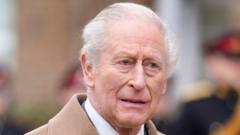
King reflects on 'pressures of conflict' in Commonwealth message
#King Charles III #Commonwealth #conflict #unity #peace #message #pressures
📌 Key Takeaways
- King Charles III addressed the Commonwealth in a reflective message.
- He highlighted the ongoing pressures and impacts of global conflicts.
- The message emphasized unity and shared values among Commonwealth nations.
- It called for collective efforts towards peace and understanding.
🏷️ Themes
Royal Address, Global Conflict
📚 Related People & Topics
Commonwealth
Political community established for common good
A commonwealth is a traditional English term for a political community founded for the common good. The noun "commonwealth", meaning "public welfare, general good or advantage", dates from the 15th century. Originally a phrase (the common-wealth or the common wealth – echoed in the modern synonym "p...

Charles III
King of the United Kingdom since 2022
Charles III (Charles Philip Arthur George; born 14 November 1948) is King of the United Kingdom and 14 other Commonwealth realms since 8 September 2022. Charles was born during the reign of his maternal grandfather, King George VI, and became heir apparent when his mother, Queen Elizabeth II, accede...
Entity Intersection Graph
Connections for Commonwealth:
Mentioned Entities
Deep Analysis
Why It Matters
This statement matters because it represents the King's first major public reflection on global conflicts since ascending to the throne, potentially signaling a shift in the monarchy's diplomatic approach. It affects Commonwealth nations currently experiencing or recovering from conflicts, international diplomatic relations, and citizens looking for symbolic leadership during turbulent times. The message carries weight as the King serves as Head of the Commonwealth, an organization representing 2.5 billion people across 56 countries, making his words particularly influential in international discourse about peace and conflict resolution.
Context & Background
- The Commonwealth is a voluntary association of 56 independent countries, most of which were formerly territories of the British Empire, established in its modern form in 1949.
- King Charles III became Head of the Commonwealth upon Queen Elizabeth II's death in September 2022, though this role is not hereditary and was confirmed by Commonwealth leaders.
- The Commonwealth has faced increasing relevance questions in recent decades, with some member states considering becoming republics while others value the connection for diplomatic and economic networks.
- Previous monarchs have traditionally avoided direct commentary on political conflicts, maintaining constitutional neutrality, making this statement potentially significant in tone or content.
- Multiple Commonwealth nations are currently experiencing conflicts or political instability, including parts of Africa, the Caribbean, and the Pacific region.
What Happens Next
Commonwealth leaders will likely analyze the message's implications for upcoming meetings, particularly the Commonwealth Heads of Government Meeting (CHOGM) scheduled for 2024. Diplomatic circles will watch for whether this signals a more interventionist monarchy regarding international conflicts. The King's upcoming Commonwealth visits in 2024 may expand on these themes, particularly to regions experiencing tensions.
Frequently Asked Questions
The Commonwealth is a political association of 56 member states, mostly former British territories, that cooperate on economic, political, and cultural matters. The British monarch serves as Head of the Commonwealth, a symbolic role established in 1949 and confirmed by member states for each new monarch.
The King may be addressing current global tensions affecting multiple Commonwealth nations while establishing his own approach to the role. This comes amid increasing international conflicts and growing discussions about the Commonwealth's relevance in peacebuilding efforts.
Reactions will likely vary between nations valuing royal leadership on global issues and those preferring the monarchy remain strictly neutral. Nations experiencing conflict may welcome the attention, while others might view it as overstepping traditional constitutional boundaries.
Queen Elizabeth II generally avoided direct commentary on political conflicts during her 70-year reign, maintaining careful neutrality. While too early to confirm a permanent shift, this message suggests King Charles may take a more explicitly engaged approach to global issues.
While the monarch has no direct political power over Commonwealth nations, the symbolic weight of the position can influence international attention and diplomatic priorities. The message may encourage dialogue and raise the profile of conflict resolution within Commonwealth institutions.