
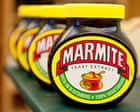
Marmite maker Unilever in talks to merge food business with US-based McCormick
#Unilever #McCormick #Marmite #food business #merger #spices #consumer goods
📌 Key Takeaways
- Unilever is negotiating to merge its food division with McCormick & Company.
- The deal would combine Unilever's brands like Marmite with McCormick's spice portfolio.
- This merger aims to create a stronger global food and seasoning entity.
- The talks reflect ongoing consolidation trends in the consumer goods industry.
📖 Full Retelling
🏷️ Themes
Business Merger, Food Industry
📚 Related People & Topics
Marmite
Savoury spread
Marmite ( MAR-myte) is a British savoury spread based on yeast extract invented by the Marmite Food Company in 1902. It is made from by-products of beer brewing (lees) and is produced by the British company Unilever. Marmite is a vegan source of B vitamins, including supplementary vitamin B12.

Unilever
British multinational consumer goods company
Unilever PLC () is a British multinational consumer packaged goods company headquartered in London, England. It was founded in 1930 following the merger of Dutch margarine producer Margarine Unie with British soap maker Lever Brothers. The company's products include baby food, beauty products, bott...
Entity Intersection Graph
Connections for Marmite:
Mentioned Entities
Deep Analysis
Why It Matters
This potential merger is significant because it could reshape the global food industry by combining Unilever's strong European brand portfolio, including Marmite and Hellmann's, with McCormick's dominant position in spices and seasonings in the U.S. It affects consumers through potential changes in product availability and pricing, employees of both companies due to possible restructuring, and investors as it signals Unilever's strategic shift to focus on core areas like beauty and home care. The deal highlights ongoing consolidation in the food sector as companies seek scale and efficiency amid rising costs and competitive pressures.
Context & Background
- Unilever, a British-Dutch multinational, has been streamlining its portfolio under CEO Hein Schumacher, recently spinning off its ice cream division to focus on higher-growth segments.
- McCormick & Company is a U.S.-based leader in spices, seasonings, and flavors, with brands like McCormick spices and Frank's RedHot sauce, and has expanded through acquisitions such as French's mustard in 2017.
- The global food industry has seen increased merger activity, with companies like Kraft Heinz and Nestlé making strategic moves to consolidate market share and reduce operational costs in response to inflation and supply chain challenges.
What Happens Next
If talks progress, a formal merger agreement could be announced in the coming months, subject to regulatory approvals in multiple jurisdictions, which may involve antitrust scrutiny due to the combined market power. Post-merger, integration efforts would likely include brand rationalization, supply chain optimization, and potential workforce adjustments. Unilever may use proceeds from the deal to invest in its remaining beauty, home care, and personal care divisions, while McCormick could gain enhanced international distribution for its products.
Frequently Asked Questions
Unilever's food portfolio includes iconic brands like Marmite, Hellmann's mayonnaise, Knorr soups and seasonings, and Pot Noodle. These are primarily focused on condiments, snacks, and meal solutions, with a strong presence in Europe and emerging markets.
Unilever is likely seeking to streamline operations and focus on faster-growing segments such as beauty and home care, where it sees higher margins and innovation potential. Merging with McCormick could unlock value by combining complementary product lines and achieving cost savings through shared resources and expanded market reach.
Consumers could see changes in product formulations, packaging, or availability as the merged entity optimizes its brand portfolio. In the long term, it might lead to more integrated product offerings, such as McCormick spices paired with Unilever's condiments, but could also reduce competition in certain categories, potentially impacting prices.
The merger would require approval from antitrust authorities in key markets like the U.S., EU, and UK, who will assess whether the combined entity could reduce competition in the food and seasoning sectors. Given both companies' large market shares, regulators might demand divestitures of overlapping brands or other concessions to approve the deal.
This move aligns with a trend of consolidation in the food industry, where companies are merging to gain scale, improve efficiency, and better compete against private labels and disruptors. It also reflects a shift toward portfolio optimization, with multinationals like Unilever focusing on fewer, higher-growth categories to enhance shareholder value.