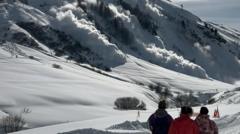
More than 90 avalanche deaths reported this season in the northern hemisphere
California and Europe experiencing different but dangerous avalanche conditions
Climate change may be contributing to more intense precipitation patterns
Resorts are implementing safety measures but experts emphasize personal responsibility
📖 Full Retelling
Northern hemisphere winter sports enthusiasts are facing heightened avalanche risks as more than 90 people have been killed in avalanche incidents this season, following a deadly avalanche in California that claimed eight lives and left one skier missing, while Europe's Alpine region is experiencing its deadliest winter in years due to extreme weather patterns including snow droughts followed by intense precipitation and major snowstorms. The California incident, occurring during a period when the state was emerging from a snow drought, saw new snow unable to bind properly with the underlying layers, creating dangerous conditions. Meanwhile, Europe has been hit by two major storms within a week, depositing heavy snow combined with strong winds across an unusually large area of the Alps, leading to high avalanche warnings and multiple fatalities including three British citizens. Experts suggest that climate change may be contributing to these unstable weather patterns, with evidence indicating sharper, more intense precipitation events followed by longer dry periods, though multiple factors influence avalanche risk beyond just precipitation patterns. The current Alpine winter conditions, marked by a weak snowpack with persistent weak layers caused by extended periods without new snow and low temperatures, have been described by some experts as potentially the worst this century, forcing evacuations of communities in Switzerland and northern Italy and causing infrastructure disruptions including power outages and a train derailment.
The Alps () are some of the highest and most extensive mountain ranges in Europe, stretching approximately 1,200 km (750 mi) across several Alpine countries (from west to east): Monaco, France, Switzerland, Italy, Liechtenstein, Germany, Austria, Slovenia.
The Alpine arch extends from Nice on the we...
The recent avalanche season has seen an unusually high death toll, raising concerns about the safety of winter sports and the potential impact of climate change on snow stability. Understanding these risks is crucial for skiers, resort operators, and emergency services to prevent future tragedies.
Context & Background
Seasonal avalanche fatalities exceed usual levels
California incident shows drought-snow interaction
Europe experienced heavy storms and weak snowpack
Resorts rely on warning systems and safety gear
Climate change may increase wet snow avalanches
What Happens Next
Resorts are expected to intensify safety measures and use advanced monitoring as weather improves, while sunny slopes may still pose risks for off-piste skiers. Continued research into wet snow behavior and better forecasting tools will help reduce future casualties.
Frequently Asked Questions
What factors are increasing avalanche risk this season?
Drought followed by heavy snowfall, weak snowpack layers, wet snow conditions, and higher off-piste activity all contribute to the elevated risk.
How are resorts mitigating the danger?
They use avalanche blasting, issue safety advisories, require safety gear, offer professional guides, and employ drones for detection.
Will the death toll likely rise?
While weather is improving, sunny slopes may create new hazards, so vigilance remains essential.
}
Original Source
More than 90 deaths this season: Are we seeing more avalanches? 4 hours ago Share Save Robert Greenall BBC News Share Save It is not unusual for avalanches to be in the news in the northern hemisphere at this time of year, the height of the annual ski season. But Tuesday's deadly incident in California , which took the lives of eight skiers and left one more unaccounted for, and the difficult situation in much of the Alps - where there have been more fatalities than usual this year - has put a spotlight on avalanches and how prepared winter sports enthusiasts should be for them. The two situations would seem to be very different. California has been coming out of a so-called snow drought and experts do not consider the latest snowfall exceptional. But droughts followed by intense snow can cause problems - the new snow is unable to bind to old snow underneath, which can either be very hard or non-existent, and therefore remains loose. Europe, however, has seen two major storms in a week and a large amount of heavy snow combined with strong winds, leading to high avalanche warning levels across an unusually large part of the Alps. Three Britons were among dozens killed in incidents so far over the season. One Alpine resort suggested that the current conditions could be the worst there this century. Recent snows have also led to evacuations of several communities in Switzerland and northern Italy, as well as power outages and a train derailment at Goppenstein in the south-western Swiss canton of Valais. But is there a connection between events in Europe and California? Is climate change to blame? Climate change might seem an obvious culprit for the unstable weather conditions that have brought them about. "There is evidence that climate change will lead to sharper, more intense precipitation followed by long periods without," Simon Mason, senior scientist at SEI US, told the BBC. This would seem to be the case in Europe, which has recently had several seasons with lowe...