
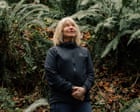
‘My ideas are a little revolutionary’: ecologist Suzanne Simard on intelligent forests, the climate and her critics
#Suzanne Simard #forest intelligence #mycorrhizal networks #climate resilience #ecological criticism
📌 Key Takeaways
- Suzanne Simard discusses her revolutionary ideas on forest ecology and intelligence.
- She highlights the interconnectedness of trees through fungal networks, termed the 'Wood Wide Web'.
- Simard addresses criticism from traditional forestry sectors regarding her findings.
- Her research emphasizes forests' role in climate resilience and carbon sequestration.
📖 Full Retelling
🏷️ Themes
Forest Ecology, Climate Science
📚 Related People & Topics

Suzanne Simard
Canadian forest ecologist (born 1960)
Suzanne Simard (born 1960) is a Canadian forestry scientist and conservationist who is best known for her research on forest ecology and plant intelligence. Simard is a Professor in the Department of Forest and Conservation Sciences at the University of British Columbia. After growing up in the Mo...
Entity Intersection Graph
Connections for Suzanne Simard:
Mentioned Entities
Deep Analysis
Why It Matters
This news matters because Suzanne Simard's research challenges traditional forestry practices by revealing forests as interconnected, intelligent systems, which could transform how we manage ecosystems amid climate change. It affects environmental policymakers, logging industries, and conservationists by advocating for sustainable approaches that prioritize biodiversity and carbon sequestration. Her work also resonates with the public, fostering a deeper appreciation for forests' role in mitigating climate crises and supporting ecological resilience.
Context & Background
- Suzanne Simard is a Canadian ecologist known for her groundbreaking research on mycorrhizal networks, often called the 'Wood Wide Web,' which shows how trees communicate and share resources underground.
- Her ideas, popularized in books like 'Finding the Mother Tree' and media such as the documentary 'Intelligent Trees,' have faced skepticism from some traditional scientists who view them as anthropomorphic or lacking rigorous evidence.
- Forest management has historically focused on monoculture planting and clear-cutting, practices Simard criticizes for harming ecosystem health and carbon storage capacity.
- Climate change has intensified debates over forest conservation, with old-growth forests being recognized as vital carbon sinks and biodiversity hotspots.
- Simard's work builds on earlier ecological concepts like symbiosis and plant intelligence, challenging reductionist views in biology and forestry.
What Happens Next
Expect increased adoption of Simard's principles in sustainable forestry projects and climate policy, with potential for more research funding into mycorrhizal networks. Upcoming developments may include collaborations between ecologists and Indigenous communities, who have long-held similar views on forest interconnectedness, and possible regulatory shifts in logging practices in regions like Canada and the Pacific Northwest. Critics will likely continue to debate the evidence, leading to further scientific studies and public discussions in 2024-2025.
Frequently Asked Questions
The 'Wood Wide Web' refers to underground mycorrhizal fungal networks that connect trees, allowing them to exchange nutrients, water, and chemical signals. This system enables forests to function as cooperative communities, supporting seedling growth and resilience against threats like pests or drought.
Critics argue that Simard's concepts, such as forest 'intelligence' or 'mother trees,' may anthropomorphize plants and lack sufficient empirical data. They caution against overinterpreting findings, emphasizing the need for more controlled experiments to validate these ecological interactions.
By showing that diverse, old-growth forests store more carbon and are more resilient, her research advocates for preserving natural ecosystems rather than replanting monocultures. This could influence policies to protect forests as critical carbon sinks, aligning with global climate goals like the Paris Agreement.
Forestry practices could shift toward selective logging, maintaining mycorrhizal networks, and planting diverse species to enhance ecosystem health. This approach may improve long-term timber yields, soil quality, and wildfire resistance, benefiting both industry and conservation.
Simard's findings often align with Indigenous perspectives that view forests as living, interconnected entities. This synergy is fostering collaborations that integrate scientific research with traditional ecological knowledge for more holistic land management.