
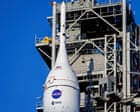
Nasa ‘on track’ for Artemis II moon mission launch as soon as 1 April
#NASA #Artemis II #moon mission #crew launch #space exploration #lunar orbit #April 2025
📌 Key Takeaways
- NASA confirms Artemis II mission is on schedule for a potential launch as early as April 1.
- Artemis II is a crewed mission that will orbit the moon, a key step before a lunar landing.
- The mission aims to test systems and pave the way for future human exploration, including Mars.
- This launch represents NASA's continued commitment to returning humans to the moon.
📖 Full Retelling
🏷️ Themes
Space Exploration, NASA Missions
📚 Related People & Topics

NASA
American space and aeronautics agency
The National Aeronautics and Space Administration (NASA ) is an independent agency of the U.S. federal government responsible for the United States' civil space program and for research in aeronautics and space exploration. Headquartered in Washington, D.C., NASA operates ten field centers across th...

Artemis II
Artemis program's second lunar flight
Artemis II is a planned lunar spaceflight mission under the Artemis program, led by NASA. It is intended to be the second flight of the Space Launch System (SLS), and the first crewed mission of the Orion spacecraft. It is the first crewed mission around the Moon, and beyond low Earth orbit, since A...
Entity Intersection Graph
Connections for NASA:
Mentioned Entities
Deep Analysis
Why It Matters
This news is important because it marks a significant step toward returning humans to the Moon for the first time since 1972, advancing scientific exploration and international space collaboration. It affects NASA, international space agencies like the Canadian Space Agency (which is contributing to the mission), and the global aerospace industry, while inspiring public interest in space. The mission also tests critical technologies for future Mars missions, impacting long-term space exploration goals.
Context & Background
- Artemis II is part of NASA's Artemis program, which aims to establish a sustainable human presence on the Moon by the late 2020s.
- The previous mission, Artemis I, was an uncrewed test flight that launched in November 2022 and successfully orbited the Moon.
- This will be the first crewed mission to the Moon since Apollo 17 in 1972, carrying astronauts including the first woman and first person of color to lunar orbit.
What Happens Next
If the launch proceeds as planned on or after April 1, the crew will conduct a 10-day mission orbiting the Moon, testing systems for future lunar landings. Following Artemis II, NASA aims to launch Artemis III for a crewed lunar landing by 2026, pending technical and funding developments. Upcoming milestones include final spacecraft testing, crew training, and potential adjustments based on weather or technical reviews.
Frequently Asked Questions
Artemis II aims to test NASA's Orion spacecraft and Space Launch System rocket with a crew aboard, orbiting the Moon to validate systems for future lunar landings and deep space missions. It focuses on crew safety and operational procedures in cislunar space.
The crew includes NASA astronauts Reid Wiseman, Victor Glover, Christina Koch, and Canadian Space Agency astronaut Jeremy Hansen. This marks the first time a non-U.S. astronaut will travel to lunar orbit.
The April 2025 target follows extensive testing and delays from earlier plans, ensuring systems are safe for crewed flight. It aligns with NASA's schedule to meet technical milestones and coordinate with international partners.
Artemis I was an uncrewed test flight to validate spacecraft performance, while Artemis II carries astronauts to test life support and crew operations. Artemis II involves a longer duration with human factors, paving the way for lunar landings.