
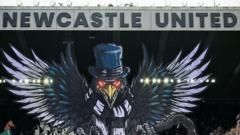
Newcastle-Sunderland halted after discrimination reports
#Newcastle #Sunderland #match #halted #discrimination #reports #spectators
📌 Key Takeaways
- The Newcastle-Sunderland match was stopped due to reports of discrimination.
- The incident involved discriminatory behavior from spectators.
- Match officials took action to address the situation during the game.
- The event highlights ongoing issues with discrimination in sports.
📖 Full Retelling
🏷️ Themes
Discrimination, Sports
📚 Related People & Topics

Sunderland
City in Tyne and Wear, England
Sunderland ( ) is a port city and metropolitan borough in Tyne and Wear, England. It is a port at the mouth of the River Wear on the North Sea, approximately 10 miles (16 km) south-east of Newcastle upon Tyne. It is the most populous settlement in the Wearside conurbation and the second-most populou...
Entity Intersection Graph
Connections for Newcastle:
Mentioned Entities
Deep Analysis
Why It Matters
This incident matters because it highlights ongoing discrimination issues in professional sports, affecting players, fans, and the reputation of both clubs. It demonstrates how discrimination can disrupt major sporting events and force authorities to take immediate action. The halt affects thousands of spectators, broadcast audiences, and raises questions about safety and inclusion at sporting venues. This could lead to significant consequences for both clubs including potential fines, sanctions, or mandatory anti-discrimination measures.
Context & Background
- Newcastle United and Sunderland AFC have a historic rivalry known as the Tyne-Wear derby dating back to 1883
- English football has faced multiple discrimination incidents in recent years involving racism, homophobia, and other forms of abuse
- The Football Association and Premier League have implemented strict anti-discrimination policies including reporting systems and sanctions for clubs
- Previous high-profile discrimination cases in UK football have resulted in stadium closures, fines, and educational programs
What Happens Next
An immediate investigation will be launched by match officials and football authorities to identify the nature and source of discrimination. Both clubs will likely issue statements and cooperate with investigations. Depending on findings, the FA could impose sanctions including fines, partial stadium closures, or mandatory anti-discrimination training. The match may be rescheduled or completed under different conditions, with potential security enhancements for future derby matches.
Frequently Asked Questions
Common forms include racial abuse, homophobic chants, religious discrimination, and sexist remarks directed at players, officials, or other fans. These often involve coordinated chants, individual shouts, or offensive banners displayed in stadiums.
Match officials can halt play temporarily or abandon matches entirely. Clubs face investigations that may lead to fines, points deductions, or stadium restrictions. Individual perpetrators can receive stadium bans and potential criminal charges.
Players experience psychological harm and distraction from performance. Teams face disrupted preparation and potential points deductions. Both clubs' reputations suffer, affecting sponsorship deals and fan relationships long-term.
While still relatively rare in top-tier English football, incidents have increased in recent years. Most cases involve temporary stoppages rather than full abandonments, making this a significant escalation in response.
Clubs use stewarding, surveillance, reporting systems, and education programs. The 'Kick It Out' campaign promotes inclusion, while new technologies help identify offenders through audio detection and facial recognition.