
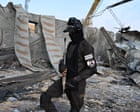
Pakistan hopes steep cost of airstrikes on Taliban targets will protect against terror attacks
#Pakistan #airstrikes #Taliban #terror attacks #security #military #counter-terrorism
📌 Key Takeaways
- Pakistan conducted airstrikes on Taliban targets with significant financial cost.
- The operation aims to enhance national security against terror threats.
- The government expects these measures to deter future terrorist attacks.
- The strategy reflects a proactive military approach to counter-terrorism.
📖 Full Retelling
🏷️ Themes
Counter-terrorism, Military strategy
Entity Intersection Graph
No entity connections available yet for this article.
Deep Analysis
Why It Matters
This news matters because Pakistan's military escalation against Taliban targets represents a significant shift in counterterrorism strategy with major implications for regional security. The operation affects millions of civilians in border regions who face both terrorist threats and potential collateral damage from airstrikes. It impacts Pakistan's strained economy through substantial military expenditures and could influence diplomatic relations with neighboring Afghanistan and international partners. The success or failure of this approach will determine whether Pakistan can reduce domestic terror attacks that have plagued the country for decades.
Context & Background
- Pakistan has faced persistent Taliban insurgency since the group's resurgence in 2007, particularly in tribal regions bordering Afghanistan
- The Pakistani Taliban (TTP) is distinct from but ideologically aligned with the Afghan Taliban, with TTP responsible for numerous deadly attacks including the 2014 Peshawar school massacre
- Pakistan's military has conducted multiple operations against militant groups since 2001, with varying degrees of success and significant civilian displacement
- Recent months have seen increased TTP attacks following the Afghan Taliban's takeover of Afghanistan in August 2021
- Pakistan has historically employed both military operations and peace negotiations in its counterterrorism approach, with mixed results
What Happens Next
Pakistan will likely continue airstrikes in the short term while monitoring whether TTP attack frequency decreases. Military assessments in the coming weeks will determine if ground operations supplement air campaigns. Diplomatic pressure may increase on Afghanistan's Taliban government to restrain TTP elements operating from Afghan territory. The economic impact of sustained military operations could force Pakistan to seek additional international support or reconsider strategy if costs become unsustainable.
Frequently Asked Questions
Airstrikes allow Pakistan to target remote militant positions with reduced risk to Pakistani ground troops. This approach may also minimize immediate civilian casualties in populated areas while demonstrating military capability.
The airstrikes could strain relations with Afghanistan's Taliban government, which has historical ties to TTP elements. Pakistan may pressure Afghanistan to control cross-border militant activity or risk further military escalation.
Sustained airstrikes require significant financial resources for aircraft, munitions, and intelligence gathering. This strains Pakistan's already troubled economy and could divert funds from development programs in affected regions.
While airstrikes may disrupt militant operations temporarily, long-term success depends on addressing root causes including poverty, governance gaps, and ideological appeal. Historical patterns show militant groups often adapt to aerial campaigns.
Civilians typically face difficult choices between supporting military operations for security and opposing them due to displacement and economic disruption. Many communities have experienced cycles of military action and militant retaliation for years.