
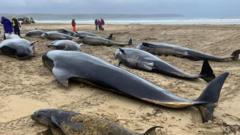
Pilot whale's difficult birth may have triggered mass stranding
#pilot whale #mass stranding #difficult birth #marine mammals #animal distress #pod behavior #wildlife conservation
📌 Key Takeaways
- A pilot whale's difficult birth likely caused a mass stranding event.
- The birthing complications may have disoriented the whale, leading it ashore.
- Other whales in the pod followed the distressed mother, resulting in multiple strandings.
- This incident highlights how individual health issues can impact entire marine mammal groups.
🏷️ Themes
Marine Biology, Animal Behavior
Entity Intersection Graph
No entity connections available yet for this article.
Deep Analysis
Why It Matters
This news matters because it provides crucial insights into marine mammal behavior and conservation. Understanding the triggers for mass strandings helps scientists develop better prevention and rescue strategies. It affects marine biologists, conservation organizations, and coastal communities who respond to these events. The findings could lead to improved monitoring of pregnant whales and early intervention protocols.
Context & Background
- Mass strandings of pilot whales occur periodically worldwide, with some events involving hundreds of animals
- Pilot whales are highly social cetaceans that live in tight-knit family groups called pods
- Previous theories for mass strandings include navigation errors, illness, following distressed leaders, or geomagnetic disturbances
- Newborn pilot whales are approximately 6 feet long at birth and require immediate assistance to reach the surface for their first breath
What Happens Next
Marine biologists will likely conduct further analysis of the stranded whales' reproductive states and health records. Conservation groups may develop new protocols for monitoring pregnant whales in known pilot whale habitats. Research teams will probably investigate whether similar birth complications have triggered other unexplained mass strandings in different locations.
Frequently Asked Questions
Pilot whales have extremely strong social bonds and often follow distressed pod members into danger. Their tight social structure means if one whale becomes disoriented or ill, others may follow it ashore despite the risk to themselves.
While exact statistics are limited, difficult births (dystocia) occur in marine mammals as they do in terrestrial animals. Factors like first-time mothers, fetal malposition, or maternal health issues can complicate deliveries in wild populations.
Complete prevention is challenging, but early detection systems and rapid response teams can reduce mortality. Understanding triggers like difficult births allows rescuers to prioritize assistance to vulnerable individuals during stranding events.
Healthy survivors are refloated during high tide with assistance from trained responders. Rescuers keep them upright and oriented seaward until they regain strength, then monitor their departure to ensure they don't re-strand.
Some research suggests strandings may be increasing due to factors like ocean noise pollution, climate change affecting prey distribution, and increased human activity in coastal waters, though reporting has also improved.