
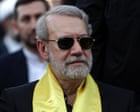
Pivotal Iran leader Ali Larijani killed in airstrike, Israel says
#Ali Larijani #airstrike #Iran #Israel #assassination #political leader #Middle East #tensions
📌 Key Takeaways
- Ali Larijani, a pivotal Iranian political figure, has been killed in an airstrike.
- Israel has claimed responsibility for the airstrike that resulted in Larijani's death.
- The incident marks a significant escalation in regional tensions involving Iran and Israel.
- Larijani's death could have major implications for Iran's domestic and foreign policy.
📖 Full Retelling
🏷️ Themes
Geopolitical Conflict, Assassination
📚 Related People & Topics

Iran
Country in West Asia
# Iran **Iran**, officially the **Islamic Republic of Iran** and historically known as **Persia**, is a sovereign country situated in West Asia. It is a major regional power, ranking as the 17th-largest country in the world by both land area and population. Combining a rich historical legacy with a...

Middle East
Transcontinental geopolitical region
The Middle East is a geopolitical region encompassing the Arabian Peninsula, Egypt, Iran, Iraq, the Levant, and Turkey. The term came into widespread usage by Western European nations in the early 20th century as a replacement of the term Near East (both were in contrast to the Far East). The term ...

Ali Larijani
Iranian politician (born 1958)
Ali Ardashir Larijani (born 3 June 1958) is an Iranian politician and former military officer in the Islamic Revolutionary Guard Corps, who serves as Secretary of Supreme National Security Council since 2025. He served as the Speaker of the Parliament of Iran from 2008 to 2020. He has been a member ...

Israel
Country in West Asia
Israel, officially the State of Israel, is a country in the Southern Levant region of West Asia. It is bordered by Lebanon to the north, Syria to the northeast, Jordan to the east, and Egypt to the southwest. Israel occupies the West Bank and the Gaza Strip of the Palestinian territories, as well as...
Entity Intersection Graph
Connections for Iran:
Mentioned Entities
Deep Analysis
Why It Matters
The killing of Ali Larijani represents a significant escalation in regional tensions, as he was a key political figure who served as Speaker of Parliament and held senior national security roles. This assassination directly impacts Iran's political stability and could trigger retaliatory measures against Israel and its allies. The event matters to global energy markets and international security, as it increases the risk of broader conflict in the Middle East involving proxy forces and potentially direct military confrontation.
Context & Background
- Ali Larijani served as Speaker of Iran's Parliament (Majlis) from 2008 to 2020 and was a senior advisor to Supreme Leader Ali Khamenei
- Larijani previously headed Iran's Supreme National Security Council and was chief nuclear negotiator during critical periods of international negotiations
- Israel has conducted numerous airstrikes against Iranian targets in Syria and elsewhere, targeting both military assets and key figures
- Tensions between Iran and Israel have escalated significantly since the October 7 Hamas attacks and subsequent Gaza conflict
- Larijani came from a prominent political family - his brother Sadeq Larijani previously headed Iran's judiciary and currently chairs the Expediency Council
What Happens Next
Iran will likely announce official mourning periods and vow retaliation, potentially through proxy attacks on Israeli or U.S. interests in the region. Israel will increase security alerts and may conduct preemptive strikes against Iranian assets in Syria or Lebanon. The UN Security Council will likely convene emergency meetings, with Russia and China criticizing Israel while Western nations express concern about regional escalation. Oil prices may spike due to fears of supply disruptions from potential Iranian responses targeting Gulf shipping lanes.
Frequently Asked Questions
Ali Larijani was one of Iran's most influential political figures, having served as Parliament Speaker for 12 years and as head of the Supreme National Security Council. He was considered a pragmatic conservative who maintained relationships across Iran's political spectrum and was a key advisor to Supreme Leader Khamenei on strategic matters.
Targeting senior political figures represents an escalation in Israel's campaign against Iran, aiming to disrupt decision-making at the highest levels. Larijani's extensive experience in national security and nuclear negotiations made him particularly significant in shaping Iran's strategic direction and regional policies.
Iran will likely respond through its regional proxy networks, potentially targeting Israeli diplomatic missions, commercial interests, or military assets abroad. They may also accelerate their nuclear program development or conduct cyber attacks against critical Israeli infrastructure while maintaining plausible deniability.
This assassination will almost certainly freeze any remaining prospects for nuclear diplomacy in the near term. Iran will likely harden its position and may accelerate nuclear activities in response, while Western nations will face increased pressure to condemn Israel's actions despite their own tensions with Tehran.
Arab Gulf states will face difficult balancing acts between their security relationships with the U.S./Israel and avoiding direct confrontation with Iran. Russia and China may strengthen their political and military cooperation with Iran, while European nations will likely call for restraint while increasing their own regional security measures.