
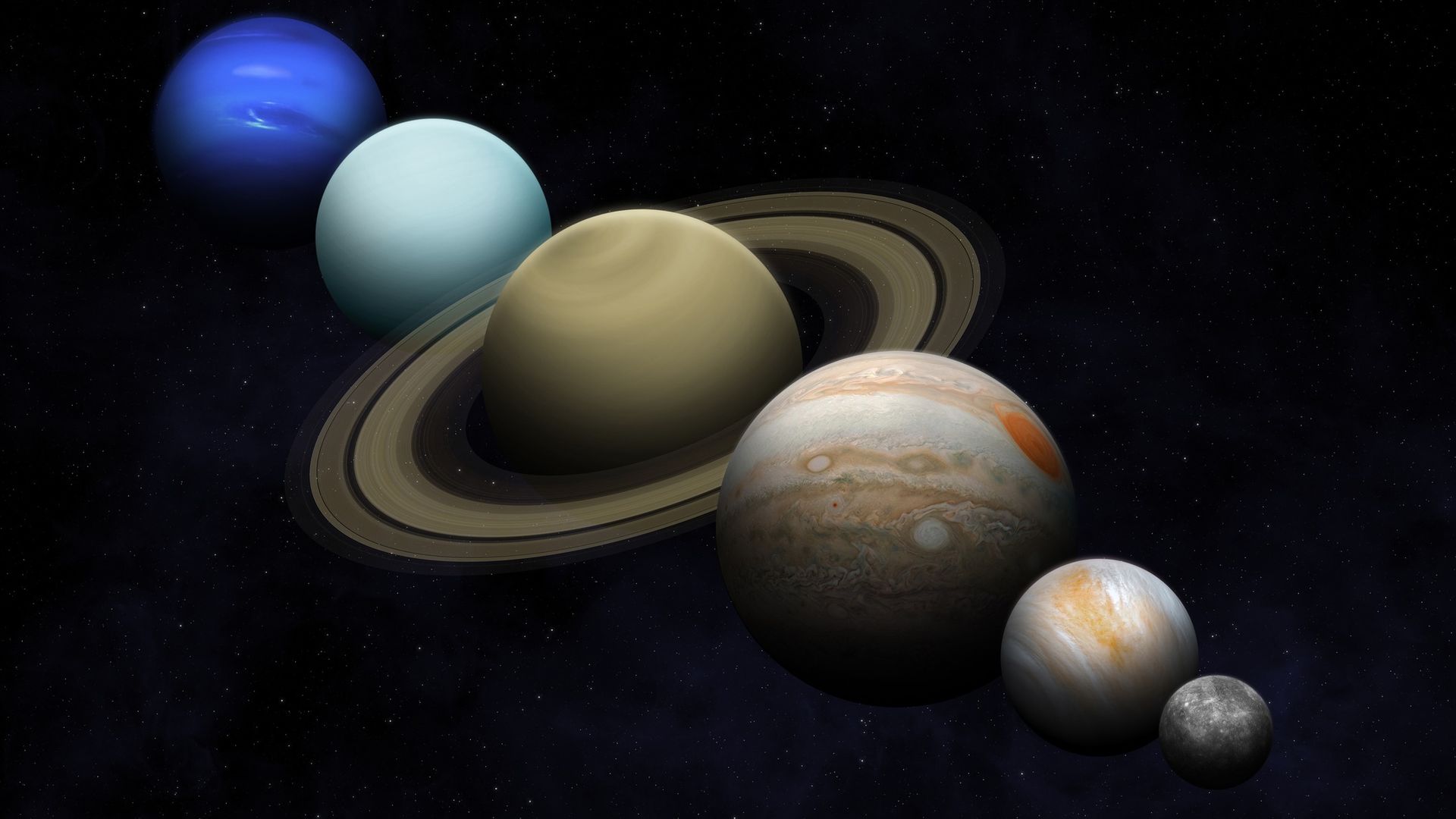
Planetary parade: How and when to spot six planets align in UK skies
#planetary alignment #UK skies #six planets #rare celestial event #stargazing #astronomy #planetary parade #2026
📌 Key Takeaways
- Six planets will align in UK skies on February 28-29, 2026
- Mercury, Venus, Jupiter, and Saturn visible to naked eye, Uranus and Neptune require optical aids
- Sunday offers best viewing opportunities in the UK
- Such alignments occur approximately every few decades
📖 Full Retelling
Stargazers across the UK will have the opportunity to witness a rare celestial event this weekend as six planets—Mercury, Venus, Saturn, Jupiter, Uranus, and Neptune—align in the night skies on Saturday 28 February and Sunday 1 March 2026, a phenomenon occurring as the planets orbit the sun and periodically line up in space. According to the Greenwich Royal Observatory, this planetary parade will potentially display all six planets simultaneously, though visibility conditions will vary. After sunset on both dates, Mercury, Venus, Jupiter, and Saturn will be visible to the naked eye globally under clear skies, while Uranus and Neptune will require binoculars or telescopes for observation. For UK observers, Sunday is expected to offer the best viewing opportunities, with optimal times around 6.10pm in London and 6.16pm in Manchester according to astronomy website Star Walk. Jupiter will be the easiest planet to spot as it will remain highest in the sky throughout most of the night, while the other planets will be closer to the western horizon, potentially obstructed by sunlight and skyline elements. Dr. Shyam Balaji, a researcher at King's College London, notes that alignments of six or more planets happen approximately every few decades, making this event relatively rare. While the alignment is a visual phenomenon from Earth's perspective, the planets are not actually in a straight line but appear close together on one side of the sun.
🏷️ Themes
Astronomy, Celestial Events, Space Science
Entity Intersection Graph
No entity connections available yet for this article.
Original Source
Explainer Explainer Planetary parade: How and when to spot six planets in UK skies in rare alignment The occasion will see Mercury, Venus, Saturn, Jupiter, Uranus and Neptune align, with some of the planets visible to the naked eye. Saturday 28 February 2026 02:29, UK Why you can trust Sky News Not one, not two, but six planets are due to line up in the night skies this weekend in a relatively rare planetary parade. The phenomenon will see Mercury, Venus, Saturn, Jupiter, Uranus and Neptune align, with some of the planets visible to the naked eye. This will mean a potential of six planets on display at once, the Greenwich Royal Observatory says. Here is everything you need to know ahead of the phenomenon and how to maximise your chances of spotting all six planets. When will planets be visible? After sunset on Saturday 28 February and Sunday 1 March , Mercury, Venus, Jupiter and Saturn will be visible to the naked eye to people across the globe, if clear skies allow. The Royal Observatory says Uranus and Neptune will only be spotted with binoculars and telescopes. Mercury, Venus, Saturn and Neptune will be visible in the west very close to the horizon, making sunlight and anything on your skyline additional obstacles to spotting these planets. Jupiter will be highest planet in the sky for most of the night and, according to the Royal Observatory, will be the easiest of the six to find. Even in light-polluted areas it will be a bright point of light visible to the naked eye. For people in the UK, Sunday will be the best day to spot the planets, according to astronomy website Star Walk. It states 6.10pm in London and 6.16pm in Manchester are expected to be the best times to look up to the skies. How do you know you've seen a planet? At least one bright planet will be visible on most nights, according to NASA. Planetary scientist Sara Mazrouei with Humber Polytechnic in Canada, said to remember this simple tip: "If it is twinkling, it's a star. If it is not twinkling, ...
Read full article at source