
‘Putting on a brave face’: why royal fashion has never been more arresting
#royal fashion #dress diplomacy #soft power #crisis communication #political messaging #royal protocol #symbolism in clothing #monarchy
📌 Key Takeaways
- Royal family uses fashion as diplomatic tool during crises
- King Charles and Princess of Wales coordinate outfits to project unity
- Historical pattern of royals using clothing as political messaging
- Dress diplomacy serves as soft power in international relations
📖 Full Retelling
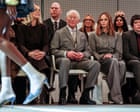
King Charles made a strategic appearance at London Fashion Week last week while his brother Prince Andrew faced police custody, demonstrating the royal family's use of fashion as a diplomatic tool during times of crisis. Styled in his signature jaunty tie, clashing pocket handkerchief and British-made suit, the monarch sent a clear message of business as usual, a tactic reminiscent of the royal family's historical approach to managing public perception during turmoil. Meanwhile, Prince and Princess of Wales presented a united front at the Baftas awards in coordinated burgundy velvet outfits, a strategy fashion commentators have dubbed 'Pantone diplomacy,' with Catherine's repeated wearing of a blush Gucci gown signaling both solidarity and sustainability amid the family's ongoing troubles. According to Justine Picardie, author of 'Fashioning the Crown: A Story of Power, Conflict and Couture,' the royal family has long wielded fashion as a weapon during crises, pointing to similar tactics used after the 1936 abdication crisis when Queen Elizabeth (the Queen Mother) was dressed by Norman Hartnell in an idealized vision of traditional Englishness to counteract the pro-Nazi Duke and Duchess of Windsor. The concept of 'dress diplomacy' reveals how royals strategically deploy fashion as soft power on international visits, with Catherine wearing New Zealand's silver fern emblem, Canadian red during Commonwealth events, and Diana incorporating elements of host countries' flags into her outfits during state visits.
🏷️ Themes
Royal Fashion, Diplomacy, Crisis Communication, Political Messaging
Entity Intersection Graph
No entity connections available yet for this article.
Original Source
‘Putting on a brave face’: why royal fashion has never been more arresting Could the royal family’s latest troubles usher in a new era of diplomatic dressing? A s Andrew Mountbatten-Windsor was taken into police custody last week, his brother King Charles made a “surprise” appearance on the front row at the opening of London fashion week . Styled in one of his staple jaunty ties, clashing pocket handkerchief and British-made suit, it sent the message loud and clear: this was business as usual. That message persisted when, at the Baftas at the weekend, the Prince and Princess of Wales showed a united front in coordinated burgundy velvet ( “Pantone diplomacy” , as the New York Times put it). Catherine’s blush Gucci gown showed not just solidarity in hue but also, arguably, signalled her ethics in a week when the royal family’s came under fire: she’d worn the dress before, on a previous outing. “The king’s whole look – with his British bespoke tailored suit – might be construed as putting on a brave face, and keeping calm and carrying on during yet another existential crisis,” says Justine Picardie, former editor-in-chief of Harper’s Bazaar UK and author of a new book, Fashioning the Crown: A Story of Power, Conflict and Couture . “For Catherine, it is another expression of her taking a sustainable approach, and showing restraint, rather than excess.” The house of Windsor has long wielded fashion as a weapon during times of crisis, says Picardie, pointing out the “similar tactics used after the crisis of the abdication in 1936, when Queen Elizabeth (the Queen Mother) was dressed by Norman Hartnell in an idealised vision of traditional Englishness, to counteract the hard chic of the pro-Nazi Duke and Duchess of Windsor.” “Clothes are used to express power and many other things – emotion, vulnerability, grief, birth, death, loss … whether it’s a wedding dress or at a funeral.” But what Picardie, who previously documented the hidden histories of Chanel and Dior, hadn’t be...
Read full article at source