
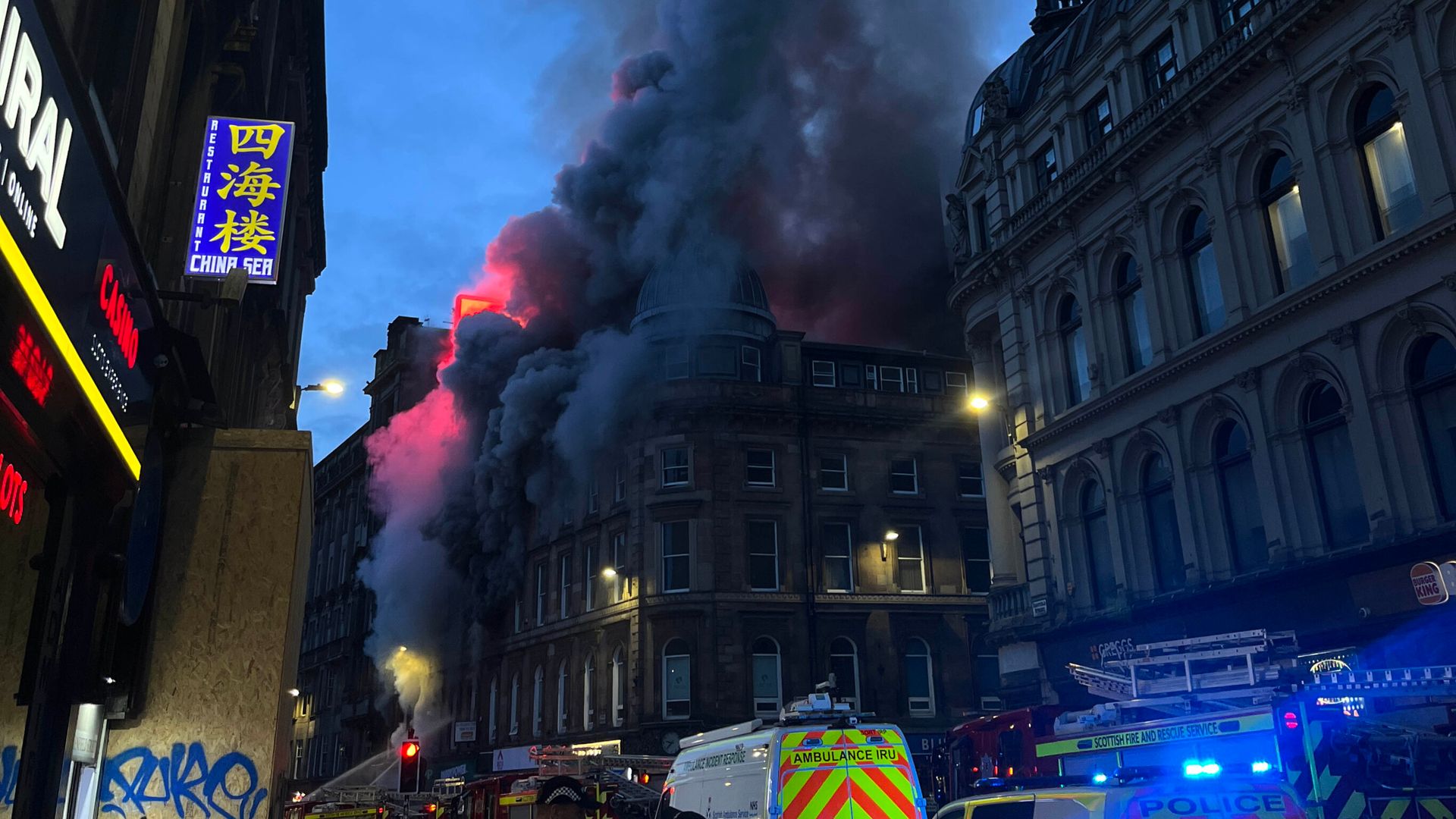
Scotland's busiest station still closed after 'Blitz-like' fire
#Glasgow Central Station #fire #railway closure #Scotland #travel disruption #Blitz #infrastructure
📌 Key Takeaways
- Glasgow Central Station remains closed following a major fire
- The fire is described as having 'Blitz-like' intensity and damage
- The closure disrupts travel as it is Scotland's busiest railway station
- No reopening timeline has been provided yet
📖 Full Retelling
🏷️ Themes
Transport Disruption, Infrastructure Damage
📚 Related People & Topics

Glasgow Central railway station
Principal railway station in Glasgow, Scotland
Glasgow Central (Scottish Gaelic: Glaschu Mheadhain), usually referred to in Scotland as just Central or Central Station, is one of two principal main line rail terminals in Glasgow, Scotland. With 25 million passengers in 2023–2024, it is the fifteenth-busiest railway station in Britain and the bus...

Scotland
Country within the United Kingdom
Scotland is a country that is part of the United Kingdom. It contains nearly one-third of the United Kingdom's land area, consisting of the northern part of the island of Great Britain and more than 790 adjacent islands, principally in the archipelagos of the Hebrides and the Northern Isles. In 2022...
Entity Intersection Graph
Connections for Glasgow Central railway station:
View full profileMentioned Entities
Deep Analysis
Why It Matters
This closure of Scotland's busiest station disrupts daily commutes for tens of thousands of passengers, impacting regional transportation networks and local businesses that depend on foot traffic. The 'Blitz-like' comparison suggests severe structural damage requiring extensive repairs, which could strain public transportation budgets and emergency services. This event highlights vulnerabilities in critical infrastructure and may prompt safety reviews at other major transit hubs across the UK.
Context & Background
- Glasgow Central Station serves approximately 32 million passengers annually, making it Scotland's busiest railway station
- The station first opened in 1879 and has undergone several major renovations, most recently in the early 2000s
- During World War II, Glasgow experienced significant bombing during the Clydebank Blitz in March 1941, which damaged infrastructure across the city
- Major UK station fires have occurred before, including the 1985 King's Cross fire in London that killed 31 people and led to major safety reforms
What Happens Next
Transport authorities will likely announce a phased reopening plan within days, beginning with limited services as safety inspections continue. Commuters should expect extended bus replacement services for several weeks while structural assessments determine repair timelines. An official investigation into the fire's cause will begin immediately, with preliminary findings expected within 2-4 weeks.
Frequently Asked Questions
While no official timeline has been announced, similar major station fires have resulted in closures lasting from several days to multiple weeks depending on structural damage. Transport authorities will provide updates as safety assessments progress.
Rail operators have implemented bus replacement services between affected stations, while other Glasgow stations like Queen Street are accepting redirected passengers. Travelers should check National Rail Enquiries for real-time alternative route planning.
The cause remains under investigation by fire authorities and British Transport Police. Initial reports suggest the fire may have originated in commercial premises within the station, but official determination will follow complete examination of the scene.
Most intercity services to/from Glasgow are being redirected to other stations or terminated at alternative locations. CrossCountry, Avanti West Coast, and ScotRail services are all affected with revised timetables and connection points.
While this appears to be an isolated incident, rail networks typically conduct immediate safety reviews following major fires. Other stations may implement additional fire prevention checks as a precautionary measure.