
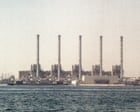
‘Severe water stress’: why desalination plants are the Gulf’s greatest weakness
#desalination #water stress #Gulf #climate change #energy #infrastructure #geopolitical risk
📌 Key Takeaways
- Gulf nations face severe water stress due to limited freshwater resources.
- Desalination plants are critical for water supply but pose strategic vulnerabilities.
- These facilities are energy-intensive and reliant on stable power and infrastructure.
- Climate change and geopolitical risks threaten the security of desalinated water.
📖 Full Retelling
🏷️ Themes
Water Security, Infrastructure Vulnerability
📚 Related People & Topics

Bay
Recessed, coastal body of water connected to an ocean or lake
A bay is a recessed, coastal body of water that directly connects to a larger main body of water, such as an ocean, a lake, or another bay. A large bay is usually called a gulf, sea, sound, or bight. A cove is a small, circular bay with a narrow entrance.
Entity Intersection Graph
Connections for Bay:
Mentioned Entities
Deep Analysis
Why It Matters
This news matters because desalination plants are critical infrastructure for Gulf nations that rely on them for up to 90% of their drinking water, making them vulnerable to disruptions. The region's extreme water scarcity and growing populations create dependency on these energy-intensive facilities. Any operational failure, attack, or environmental damage could trigger humanitarian crises in countries like Saudi Arabia, UAE, Qatar, and Bahrain, while also affecting global energy markets since these nations are major oil exporters.
Context & Background
- The Arabian Peninsula is one of the world's most water-scarce regions, receiving less than 100mm of rainfall annually in most areas
- Gulf Cooperation Council (GCC) countries operate approximately 50% of the world's desalination capacity, with Saudi Arabia alone producing about 22% of global desalinated water
- Traditional groundwater sources have been severely depleted, with some aquifers at less than 10% of their original capacity after decades of over-extraction
- Desalination technology in the region dates to the 1950s but expanded dramatically during the 1970s oil boom as populations and economies grew
- Most Gulf desalination plants use thermal distillation methods that require significant energy, typically from fossil fuels
What Happens Next
Gulf nations will likely accelerate investments in renewable energy-powered desalination and water recycling technologies to reduce vulnerability. Regional cooperation on water security may increase, potentially including shared desalination infrastructure. Climate change will exacerbate water stress, forcing more difficult decisions about water-intensive agriculture and industrial activities. Security measures around desalination facilities will probably be enhanced given their critical nature.
Frequently Asked Questions
Groundwater reserves have been severely depleted through decades of overuse, with many aquifers now containing brackish water unsuitable for drinking. Natural recharge rates are extremely low in the arid climate, making groundwater a non-renewable resource at current extraction levels.
Desalination plants are concentrated coastal facilities that process seawater into drinking water for entire cities. Their location makes them susceptible to physical attacks, cyber disruptions, environmental disasters like oil spills, and climate impacts such as sea-level rise and extreme temperatures affecting operations.
Desalination discharges highly saline brine and chemicals back into the sea, which can create dead zones and harm marine ecosystems. Thermal desalination also releases warm water that affects local sea temperatures, while intake systems can trap and kill marine organisms.
Yes, alternatives include solar-powered desalination, forward osmosis, and membrane distillation that use less energy. Water conservation, wastewater recycling, and cloud seeding are also being pursued, though none currently match the scale of conventional desalination.
Kuwait is the most dependent, with desalination providing nearly 100% of its drinking water. The UAE follows closely at about 90% dependence, while Saudi Arabia has the largest total desalination capacity but also maintains some groundwater reserves.