
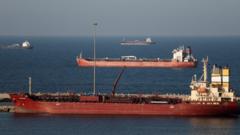
Starmer speaks to Trump about importance of reopening Strait of Hormuz
#Strait of Hormuz #Keir Starmer #Donald Trump #maritime security #oil trade #diplomacy #global shipping
📌 Key Takeaways
- Keir Starmer discussed reopening the Strait of Hormuz with Donald Trump
- The conversation highlights international concern over the strategic waterway
- The Strait's closure impacts global oil supply and trade routes
- Diplomatic efforts are underway to address the maritime blockage
🏷️ Themes
Geopolitics, Trade Security
📚 Related People & Topics

Strait of Hormuz
Strait between the Gulf of Oman and the Persian Gulf
The Strait of Hormuz ( Persian: تنگهٔ هُرمُز Tangeh-ye Hormoz , Arabic: مَضيق هُرمُز Maḍīq Hurmuz) is a strait between the Persian Gulf and the Gulf of Oman. It provides the only sea passage from the Persian Gulf to the open ocean and is one of the world's most strategically important choke points. ...

Keir Starmer
Prime Minister of the United Kingdom since 2024
# Sir Keir Starmer **Sir Keir Rodney Starmer** (born 2 September 1962) is a British politician and lawyer serving as Prime Minister of the United Kingdom since July 2024. A member of the Labour Party, he has served as Leader of the Labour Party since 2020 and has been the Member of Parliament (MP) ...

Donald Trump
President of the United States (2017–2021; since 2025)
Donald John Trump (born June 14, 1946) is an American politician, media personality, and businessman who is the 47th president of the United States. A member of the Republican Party, he served as the 45th president from 2017 to 2021. Born into a wealthy New York City family, Trump graduated from the...
Entity Intersection Graph
Connections for Strait of Hormuz:
Mentioned Entities
Deep Analysis
Why It Matters
This news matters because the Strait of Hormuz is a critical global chokepoint for oil transportation, with about 20% of the world's oil passing through it daily. Any disruption affects global energy prices, economic stability, and geopolitical tensions in the Middle East. The conversation between Starmer and Trump highlights international diplomatic efforts to maintain open sea lanes, which is crucial for energy security worldwide.
Context & Background
- The Strait of Hormuz connects the Persian Gulf with the Gulf of Oman and the Arabian Sea, serving as the only sea passage for oil exports from major producers like Saudi Arabia, Iran, and the UAE.
- Tensions in the region have periodically led to threats of closure, most notably during the Iran-Iraq War in the 1980s and more recently due to U.S.-Iran confrontations.
- The U.S. has historically maintained a naval presence in the area to ensure freedom of navigation, often collaborating with allies like the UK.
What Happens Next
Diplomatic efforts will likely intensify to de-escalate regional tensions, with potential multilateral talks involving Gulf states and international partners. Increased naval patrols or security measures may be deployed to safeguard shipping lanes. Monitoring of Iran's actions and statements will be crucial, as any move to block the strait could trigger a broader conflict.
Frequently Asked Questions
It is a vital maritime chokepoint through which approximately 20% of the world's oil supply passes daily. Closure would disrupt global energy markets, spike prices, and threaten economic stability.
Major stakeholders include Iran, which controls parts of the strait; Gulf oil exporters like Saudi Arabia and the UAE; and global powers like the U.S. and UK, which seek to ensure open navigation.
Escalating conflicts, such as a direct military confrontation involving Iran, or retaliatory actions in response to sanctions or attacks, could lead Iran to threaten or attempt closure.
Oil prices would likely surge, increasing costs for transportation, heating, and goods production. This could lead to higher inflation and economic strain globally.