| United Kingdom
| business
| ✓ Verified - bbc.com
States sue Trump administration over new 'unlawful' global tariffs
#Trump tariffs#Supreme Court#Trade Act#State lawsuit#Global tariffs#Section 122#Trade policy#Executive power
📌 Key Takeaways
Twenty-four states, led by Democratic officials, have sued to block Trump's new 10% global tariffs
The lawsuit argues the tariffs are unconstitutional because only Congress has the power to impose sweeping tariffs
The new tariffs were implemented after the Supreme Court struck down Trump's previous tariffs
The administration defends the tariffs as legitimate use of Section 122 authority
States are seeking both to block implementation and obtain refunds for the levies
📖 Full Retelling
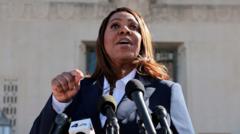
Twenty-four US states, led by New York, California, Oregon and Arizona and represented by Democratic officials, sued the Trump administration in the US Court of International Trade on Thursday to block new global tariffs, arguing the 10% duties imposed under Section 122 of the Trade Act of 1974 are unconstitutional and illegal because Congress, not the president, holds the power to impose sweeping tariffs on imports. The lawsuit comes after the US Supreme Court ruled last month that many of the duties President Donald Trump had announced previously were illegal, prompting the White House to swiftly implement the new tariffs under a different legal provision. The state officials contend that the administration's use of Section 122 is improper, as the law was not intended to address trade imbalances but rather specific international payment problems. Arizona Attorney General Kris Mayes dismissed the administration's claim that this new tariff represents a fix, stating 'It is the same illegal power-grab under a different statute than he used the last time.' The lawsuit mirrors a previous legal challenge brought by 12 state attorneys general over tariffs Trump introduced under the International Emergency Economic Powers Act, which had reached rates exceeding 40% for goods from some countries and triggered extensive trade negotiations. In response, White House spokesman Kush Desai defended the tariffs as legitimate, asserting that President Trump was 'using his authority granted by Congress to address fundamental international payments problems and to deal with our country's large and serious balance-of-payments deficits.' Meanwhile, US Treasury Secretary Scott Bessent indicated that the administration plans to potentially raise the tariff rate to the maximum 15% allowed under Section 122. The states have requested the court to block implementation of the tariffs and are seeking refunds for the levies already collected, with California Attorney General Rob Bonta suggesting legal relief could come 'very soon' for businesses and consumers affected by the trade measures.
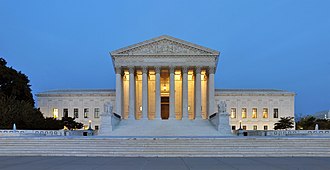
In most legal jurisdictions, a supreme court, also known as a court of last resort, apex court, high (or final) court of appeal, and court of final appeal, is the highest court within the hierarchy of courts. Broadly speaking, the decisions of a supreme court are binding on all other courts in a nat...
States sue Trump administration over new 'unlawful' global tariffs 11 hours ago Share Save Danielle Kaye Business reporter Share Save Two dozen states in the US have sued the Trump administration, seeking to block the latest tariffs announced by the White House. The lawsuit, filed on Thursday, adds to the uncertainties surrounding trade policy, after the US Supreme Court ruled that many of the duties President Donald Trump had announced last year were illegal. The White House swiftly responded by imposing a temporary 10% tariff under a different law - Section 122 of the Trade Act of 1974. But the state officials, all Democrats, say that tariff is also illegal, arguing that the law was not meant to address trade imbalances. According to the lawsuit, which is led by New York, California, Oregon and Arizona, the Trump administration's imposition of tariffs also violates the US Constitution because Congress, not the president, has the power to impose sweeping tariffs, which are taxes on imports. "He's calling it a fix. It is not," Arizona Attorney General Kris Mayes told a news conference announcing the lawsuit. "It is the same illegal power-grab under a different statute than he used the last time." White House spokesman Kush Desai said the use of the law was legitimate and that the administration would "vigorously" defend the tariffs in court. The president was "using his authority granted by Congress to address fundamental international payments problems and to deal with our country's large and serious balance-of-payments deficits", he added. The complaint was filed in the US Court of International Trade by 22 state prosecutors and two Democratic governors. It mirrors a previous lawsuit filed by a smaller group of 12 state attorneys general over tariffs Trump introduced last year under the International Emergency Economic Powers Act . Those duties, which started at 10% but hit more than 40% for goods from some countries, kicked off a flurry of trade negotiations as c...