
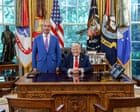
The greatest challenge Farage has ever faced – convincing the world he was never besties with Donald Trump | Marina Hyde
#Nigel Farage #Donald Trump #political alliance #public image #Marina Hyde #hypocrisy #media analysis
📌 Key Takeaways
- Nigel Farage is attempting to distance himself from his past close association with Donald Trump.
- Marina Hyde critiques Farage's efforts to rewrite his public image and political history.
- The article highlights the perceived hypocrisy in Farage's shifting political narratives.
- It underscores the broader theme of political figures managing controversial alliances for credibility.
📖 Full Retelling
🏷️ Themes
Political Image, Media Critique
📚 Related People & Topics

Nigel Farage
British politician and broadcaster (born 1964)
Nigel Paul Farage (born 3 April 1964) is a British politician who has been the Member of Parliament (MP) for Clacton and Leader of Reform UK since 2024, having previously been its leader from 2019 to 2021. He was the leader of the UK Independence Party (UKIP) from 2006 to 2009 and 2010 to 2016. Fara...

Marina Hyde
British journalist
Marina Hyde (born Marina Elizabeth Catherine Dudley-Williams; 13 May 1974) is an English journalist. She has been a columnist for The Guardian since 2000.

Donald Trump
President of the United States (2017–2021; since 2025)
Donald John Trump (born June 14, 1946) is an American politician, media personality, and businessman who is the 47th president of the United States. A member of the Republican Party, he served as the 45th president from 2017 to 2021. Born into a wealthy New York City family, Trump graduated from the...
Entity Intersection Graph
Connections for Nigel Farage:
Mentioned Entities
Deep Analysis
Why It Matters
This news matters because it highlights the political repositioning of Nigel Farage, a key figure in Brexit and right-wing politics, as he distances himself from Donald Trump ahead of potential political moves. It affects British politics, the Reform UK party's credibility, and international perceptions of Farage's alliances. The article underscores how political figures may reshape their public image to align with changing electoral landscapes, particularly as Trump's legal troubles and controversial statements create liabilities for allies.
Context & Background
- Nigel Farage was a leading figure in the Brexit campaign and former leader of UKIP and the Brexit Party.
- Farage has historically been a vocal supporter of Donald Trump, appearing at rallies and praising his policies during and after the 2016 US election.
- Trump's presidency and post-presidency have been marked by legal challenges, including indictments related to the 2020 election and classified documents.
- Farage now leads Reform UK, a party positioning itself as an alternative to the Conservatives, and may seek greater political influence in the UK.
What Happens Next
Farage will likely continue to downplay his Trump ties in media appearances and political campaigns, especially as the UK general election approaches. If Trump wins the 2024 US election, Farage may face pressure to clarify his stance, potentially affecting Reform UK's support. Watch for Farage's statements in interviews and whether he addresses past Trump associations directly.
Frequently Asked Questions
Farage is likely distancing himself because Trump's legal issues and polarizing reputation could harm Reform UK's appeal to moderate voters in the UK. As Farage seeks to expand his political influence, aligning too closely with a controversial figure like Trump may be seen as a liability.
Farage has been portrayed as a close ally of Trump, meeting with him multiple times, including at Trump Tower after the 2016 election, and publicly endorsing his policies. Media often depicted them as ideological partners in populist movements.
If Farage successfully distances himself from Trump, it might help Reform UK attract voters wary of Trump's influence, potentially increasing their support in UK elections. However, if the connection remains salient, it could alienate moderates and limit the party's growth.
Yes, politicians often rebrand or distance themselves from controversial figures when seeking broader appeal, especially during election cycles. This involves emphasizing policy over personal ties and reframing past associations as circumstantial rather than ideological.